


The Most Interesting Facts About How the Internet Works: What's Actually Happening

Here's a number that might stop you mid-scroll: every Google search you run travels about 2,400 kilometers before the answer appears on your screen. That round trip takes less than half a second. If you've ever wondered how does technology facts interesting work in practice, the real answer is stranger than most science fiction.
We're surrounded by devices we barely understand. Your phone pings cell towers, Wi-Fi routers, and satellites dozens of times per minute. Your laptop fires data through fiber-optic cables sitting on the ocean floor, some stretching clear across the Atlantic. And those invisible signals bouncing around your house? They're a form of electromagnetic radiation. Same broad category as visible light and X-rays.
I spent a frankly unreasonable number of hours pulling together the most interesting, verifiable technology facts I could find. Not the fluffy "wow, cool" trivia that falls apart when you actually look it up. Real numbers from real institutions. Some of this will genuinely surprise you.
This post covers everything from undersea internet cables to how your smartphone's processor stacks up against the computers that landed humans on the moon. We'll also talk about what all these wireless signals are actually doing to the space around you, and what you can do about it. Ready? Let's go.

How Does the Internet Actually Travel Around the World?
Most people assume the internet is floating around in the sky somewhere, bouncing off satellites. Reasonable guess. Almost entirely wrong. According to TeleGeography, a telecommunications research firm, over 550 submarine cables carry roughly 99% of all intercontinental internet traffic [1]. These are fiber-optic cables, some thinner than a garden hose, resting on the ocean floor. They cross the Atlantic, the Pacific, and just about every other major body of water you can think of.
The total length is staggering. Approximately 1.4 million kilometers of undersea cabling. That's enough to wrap around the Earth more than 35 times. And companies like Google, Meta, and Microsoft are spending billions to lay even more.
So what about satellites? They handle a small slice of traffic, mostly serving remote areas where running a cable isn't practical. SpaceX's Starlink constellation, for instance, had over 6,000 satellites in orbit by early 2025. But the backbone of the global internet, the part doing all the heavy lifting, is literally bolted to the seafloor. When a shark bites through one of these cables (which actually happens), engineers have to send a specialized ship to find and repair the break. I'm not making that up.
Quick Q&A
Q: Do satellites carry most of the world's internet traffic?
A: No. Over 99% of intercontinental internet data travels through submarine fiber-optic cables on the ocean floor, not through satellites.
If this kind of hidden-in-plain-sight tech fascinates you, you'd probably enjoy our post on 10 Fascinating Facts About Electromagnetic Radiation: That Will Change How You See the World. The physics of light traveling through glass fibers under the ocean is closely related to how electromagnetic waves behave everywhere around us.
What Happens in a Single Second on the Internet?
The scale of internet activity is one of those things your brain just refuses to process. According to Domo's "Data Never Sleeps" report for 2024, every single second the internet sees roughly 6,000 tweets, 740 Instagram posts, and over 100,000 Google searches. YouTube users upload about 500 hours of new video every minute. Every. Single. Minute.
And here's where the interesting digital technology facts get truly wild. The total amount of data created globally in 2024 was projected to hit approximately 147 zettabytes, according to Statista. A zettabyte is a trillion gigabytes. If you stored 147 zettabytes on standard Blu-ray discs and stacked them up, that pile would reach the moon and back multiple times over.
All of that data rides on the infrastructure we just talked about. Cables, routers, data centers the size of warehouses. Google alone operates over 30 data centers across 20 countries. Amazon Web Services manages millions of servers. The physical reality of the internet is enormous, even though we experience it as weightless and instant on our screens.
Tim Berners-Lee launched the very first website at CERN on August 6, 1991. It was a simple page explaining what the World Wide Web was. From that single page to 147 zettabytes of annual data in just over 30 years. Nothing else in human history has moved that fast.
Your smartphone is roughly 100,000 times more powerful than the computer that guided Apollo 11 to the moon, yet most of us never think about the invisible electromagnetic signals it's constantly broadcasting right next to our bodies.
Is Your Smartphone Really More Powerful Than Apollo 11's Computer?
Yes. And it's not even close.
The Apollo Guidance Computer that helped NASA land astronauts on the moon in 1969 had about 74 kilobytes of memory and ran at a clock speed of roughly 2 MHz. A modern iPhone 15 Pro has 8 gigabytes of RAM and a processor clocked around 3.78 GHz. Your phone is roughly 100,000 times more powerful in processing capability than the computer that got Apollo 11 to the lunar surface.
But raw power is only part of the story. Your smartphone contains a GPS receiver, an accelerometer, a gyroscope, a magnetometer, a barometer, multiple cameras, and several wireless radios including Wi-Fi, Bluetooth, 5G cellular, and NFC. It's a pocket-sized Swiss Army knife of sensors and transmitters. And every one of those wireless radios is emitting electromagnetic radiation.
That's something worth sitting with for a second. The FCC limits cell phone RF emissions to a specific absorption rate (SAR) of 1.6 watts per kilogram averaged over 1 gram of tissue [2]. Every phone sold in the United States has to meet that threshold. But your phone isn't the only source of wireless signals around you. Wi-Fi routers, smart speakers, smart TVs, Bluetooth headphones, and more, all broadcasting simultaneously.
Curious about what all those signals actually mean for you? Check out our breakdown of 7 Mind-Blowing Facts About Electromagnetic Radiation: That Will Change How You See the World. And if you want practical solutions, the Faraday Collection from Proteck'd EMF Protection offers wearable shielding designed for everyday use.
How Fast Can the Internet Actually Go?
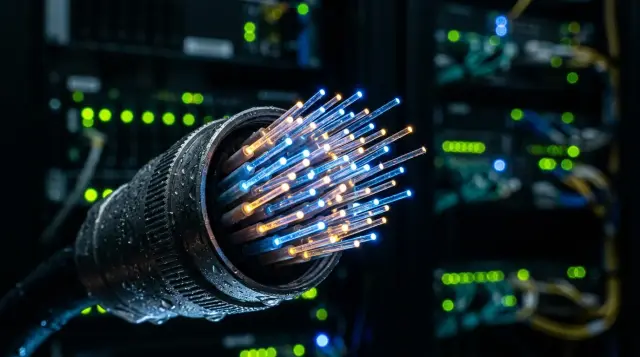
Most of us are happy if our home Wi-Fi lets us stream a movie without buffering. Fair enough. But the fastest recorded internet speed would make your jaw hit the floor. In 2021, researchers at Japan's National Institute of Information and Communications Technology (NICT) hit 319 terabits per second over a distance of 3,001 kilometers [3]. At that speed, you could download the entire Netflix library in under a second.
For context, the average global internet speed in 2024 was about 51 Mbps for mobile connections and around 100 Mbps for fixed broadband, according to Ookla's Speedtest Global Index. Japan's experimental speed was roughly 6 million times faster than what the average person experiences day to day. Six million times. The gap between lab capability and real-world access is hard to overstate.
South Korea, Singapore, and several Scandinavian countries consistently rank among the fastest for consumer internet. The United States typically lands somewhere around 10th to 15th globally. And there are still over 2 billion people on Earth who don't have reliable internet access at all, according to the International Telecommunication Union (ITU).
Speed records grab headlines, but how does technology facts interesting work for ordinary people? Honestly, the more meaningful story is latency and infrastructure. Getting fiber-optic connections into rural areas. Reducing the lag that makes video calls choppy. Building networks that don't collapse when everyone in a neighborhood is streaming at once. That's the real engineering challenge, and it's being fought kilometer by kilometer, cable by cable.

What Are Wireless Signals Actually Doing to the Space Around You?
Walk through any modern home and you're moving through an invisible soup of radio frequency signals. Your Wi-Fi router alone might be broadcasting at 2.4 GHz or 5 GHz, continuously. Add your phone's cellular connection, Bluetooth from your earbuds, maybe a smart thermostat or two, and there's a lot of electromagnetic energy bouncing around your living room.
The World Health Organization classifies RF electromagnetic fields as "possibly carcinogenic to humans" (Group 2B), a classification made by the International Agency for Research on Cancer (IARC) in 2011 [4]. That's the same category as pickled vegetables and talcum powder, so nobody's sounding a five-alarm warning. But it does mean the question isn't fully settled.
The National Institutes of Health funded a major study through the National Toxicology Program (NTP), completed in 2018, which found "clear evidence" of tumors in the hearts of male rats exposed to high levels of RF radiation similar to 2G and 3G cell phone emissions [2]. How relevant that is to humans remains debated. But the study prompted renewed interest in how we manage daily EMF exposure.
Quick Q&A
Q: Does the WHO consider Wi-Fi and cell phone radiation dangerous?
A: The WHO's IARC classifies RF electromagnetic fields as "possibly carcinogenic" (Group 2B), meaning evidence is limited but the possibility hasn't been ruled out.
This is exactly why companies like Proteck'd exist. Their apparel uses conductive silver-fiber fabric to create a wearable shield against everyday EMF. You can Learn About EMF Protection on their FAQ page, or browse the Faraday Collection to see the full range. It's the kind of tech trivia that's both interesting and immediately practical.
How Did We Get from Aristotle to AI in the First Place?
The word "technology" itself is ancient. Aristotle used "techne" around 330 BC, a Greek term meaning craft, skill, or the art of making things. The modern word evolved from combining "techne" with "logos," meaning study or discourse. So technology, at its root, literally means "the study of craft." That's a surprisingly humble origin for a concept that now includes quantum computing and artificial intelligence.
Fast forward to the 20th century, and the timeline goes haywire. ENIAC, often considered the first general-purpose electronic computer, was completed at the University of Pennsylvania in 1945. It weighed 30 tons and filled an entire room. By 1971, Intel released the 4004 microprocessor, putting computing power on a chip smaller than a fingernail. By 2024, NVIDIA's H100 GPU contained 80 billion transistors.
Artificial intelligence has its own wild arc. Alan Turing proposed the idea of machine intelligence in 1950 with his famous Turing Test paper. The term "artificial intelligence" was coined at a Dartmouth College workshop in 1956. But it took until 2022, when OpenAI launched ChatGPT, for AI to truly enter mainstream consciousness. Within two months of launch, ChatGPT reached 100 million users, making it the fastest-growing consumer application in history at that time.
Understanding how does technology facts interesting work across history helps you see that innovation isn't linear. It comes in bursts, often triggered by a single breakthrough nobody saw coming. For more on how invisible forces behind tech shape our perception of the world, check out How Animals See the World: Fascinating Facts. It's a reminder that even biological systems run on electromagnetic signals.
What Tech Facts Sound Fake but Are Completely True?
Let's have some fun with this one.
Motorola produced the first portable mobile phone in 1973. The DynaTAC 8000x weighed about 1.1 kilograms, had 30 minutes of talk time, and took 10 hours to charge. Martin Cooper, a Motorola engineer, made the first public cell phone call on April 3, 1973, and reportedly called a rival at Bell Labs just to rub it in. That's the kind of competitive energy I respect.
Here's another one. The QWERTY keyboard layout, the one almost everyone uses, was actually designed in the 1870s to slow typists down. Christopher Latham Sholes arranged the keys to reduce jamming on mechanical typewriters by separating commonly paired letters. We're still using that layout 150 years later, even though the jamming problem disappeared decades ago.
Bitcoin's creator is still anonymous. Satoshi Nakamoto published the Bitcoin whitepaper in 2008 and launched the network in January 2009, then vanished. Nakamoto's Bitcoin wallet holds an estimated 1.1 million BTC. As of early 2025, that stash was worth over $60 billion. Nobody has confirmed whether Nakamoto is a single person, a group, or even still alive.
And then there are the less fun facts. The average American checks their phone 96 times a day, according to Asurion research from 2023. That's once every 10 minutes during waking hours. Every check means another burst of RF emissions right next to your body. If that stat gives you pause, it might be worth exploring how wearable EMF shielding from Proteck'd EMF Protection can fit into your daily routine. Also, for more weird-but-true tech trivia, don't miss 12 Fascinating Tech Facts That Sound Too Weird to Be True: The Complete List.
Why Should You Care About Any of This?
Knowing interesting tech facts isn't just cocktail party ammunition. Understanding how digital technology works changes how you interact with it. When you know that 99% of your data travels through undersea cables, you appreciate how fragile the system actually is. When you know your phone is constantly emitting RF signals, you can make informed choices about exposure.
The gap between what technology can do and what most people understand about it keeps growing wider. According to a 2023 Pew Research Center survey, only 28% of American adults could correctly identify that "an algorithm is a set of steps for accomplishing a task." Less than a third. That's the population's grasp on one of the most fundamental concepts driving their daily digital experience.
This is why asking how does technology facts interesting work is more than idle curiosity. It's digital literacy. It's knowing what your devices are doing when you're not looking. It's understanding that the wireless technology surrounding you involves real electromagnetic fields with measurable properties.
Whether you respond to that knowledge by putting your phone on airplane mode more often, using a wired connection when possible, or wearing EMF-shielding clothing from the Faraday Collection, you're making a choice based on information rather than ignorance. And honestly? That's the most powerful thing technology can give anyone.
Key Takeaways
Frequently Asked Questions
How does the internet physically travel between continents?
Through submarine fiber-optic cables laid on the ocean floor. Over 550 of these cables span approximately 1.4 million kilometers worldwide, carrying about 99% of intercontinental data traffic. Satellites handle a small fraction, mostly serving remote areas.
Is a modern smartphone really more powerful than early NASA computers?
Dramatically so. The Apollo 11 guidance computer had about 74 KB of memory and ran at 2 MHz. A modern smartphone has roughly 8 GB of RAM and a multi-GHz processor, making it approximately 100,000 times more powerful in raw computing capability.
What is the fastest internet speed ever recorded?
319 terabits per second, achieved by Japan's National Institute of Information and Communications Technology (NICT) in 2021. This was an experimental result using advanced fiber-optic technology over 3,001 kilometers, far beyond any consumer connection available today.
Does Wi-Fi emit radiation?
Yes. Wi-Fi routers emit non-ionizing radio frequency (RF) radiation, a form of electromagnetic radiation. The WHO's IARC classifies RF fields as possibly carcinogenic (Group 2B). Power levels are low, but exposure is continuous in most modern homes and offices.
What does SAR mean for cell phones?
SAR stands for Specific Absorption Rate. It measures how much radio frequency energy from a phone is absorbed by the body, expressed in watts per kilogram. The FCC requires all phones sold in the U.S. to have a SAR below 1.6 W/kg averaged over 1 gram of tissue.
Who invented the first portable cell phone?
Martin Cooper, an engineer at Motorola, made the first public call on a portable cell phone on April 3, 1973. The phone was the Motorola DynaTAC 8000x. It weighed about 1.1 kilograms and offered only 30 minutes of talk time with a 10-hour recharge.
How much data is created on the internet every day?
Global data creation was projected to reach approximately 147 zettabytes in 2024, according to Statista. That works out to roughly 402 million terabytes of new data every single day, driven by video streaming, social media, IoT devices, and cloud computing.
What is Faraday shielding and how does it block EMF?
Faraday shielding uses conductive materials like silver-fiber fabric or metal mesh to create a barrier that reflects and absorbs electromagnetic fields. Named after Michael Faraday, who demonstrated the principle in 1836, companies like Proteck'd use this technology in wearable clothing to reduce everyday RF exposure from phones, routers, and other devices.
Who is Satoshi Nakamoto?
Satoshi Nakamoto is the pseudonymous creator of Bitcoin, who published the whitepaper in 2008 and launched the network in January 2009. Their identity has never been verified. Nakamoto's Bitcoin wallet holds an estimated 1.1 million BTC, worth over $60 billion as of early 2025.
Why was the QWERTY keyboard designed to slow typists down?
Christopher Latham Sholes created the QWERTY layout in the 1870s to prevent mechanical typewriter keys from jamming. Separating frequently paired letters reduced collisions between adjacent hammers. We still use that layout 150 years later, even though the original problem disappeared decades ago.
How many people in the world use the internet?
As of early 2025, approximately 5.56 billion people used the internet globally, about 68% of the world's population. Over 2 billion people still lack reliable access, with the largest gaps in Sub-Saharan Africa and parts of South Asia.
References
- Nature - Submarine Cable Infrastructure – Over 550 submarine fiber-optic cables carry approximately 99% of intercontinental internet data traffic
- National Institutes of Health - National Toxicology Program – The NTP study found clear evidence of tumors in hearts of male rats exposed to high levels of RF radiation, and the FCC SAR limit is 1.6 W/kg
- Nature - Record Internet Speed Achievement – Japan's NICT achieved a record internet speed of 319 terabits per second in 2021
- IARC / World Health Organization - RF Fields Classification – The IARC classified radiofrequency electromagnetic fields as possibly carcinogenic to humans (Group 2B) in 2011
About the Author
Proteck'd EMF Apparel
Health & EMF Specialists
The Proteck'd team covers EMF protection, silver-fiber apparel, and practical ways to reduce everyday radiation exposure. Every piece Proteck'd ships is designed, tested, and worn by the people who build it.
Protect Yourself Today
Proteck'd Faraday and silver fiber apparel is engineered to shield your body from everyday EMF exposure. Built for real life, tested for real results.
Shop EMF Protection →✓30-day returns✓Free shipping✓Free returns✓Silver fiber shielding


Laissez un commentaire