


10 Fascinating Facts About Planet Earth: That Sound Too Strange to Be True

A salamander that regrows its own brain. A shrimp that punches with the force of a bullet. A bacterium that laughs off radiation levels that would vaporize human DNA. If you've ever wondered how does animal facts mind blowing work, the answer is simpler than you'd expect: evolution has had billions of years to get weird. And it absolutely has.
I spent months collecting the strangest verified facts about our planet's wildlife, the invisible radiation that bathes every living thing, and the biological adaptations that seem like they were ripped from a comic book. None of these are exaggerated. They're all backed by published research, peer-reviewed journals, and the kind of evidence that makes you sit back and say, "Wait, seriously?"
What makes these bizarre animal facts so compelling is that they reveal a version of Earth most of us never learned about in school. We live on a planet where natural electromagnetic radiation is everywhere, where creatures have evolved to detect fields we can't even perceive, and where some organisms have become, for all practical purposes, indestructible.
So let's get into it. Here are 10 facts about Planet Earth's creatures and natural phenomena that sound too strange to be true. Every single one is real. If you enjoyed our earlier piece on 12 Mind-Blowing Facts About Planet Earth: That Sound Too Strange to Be True, you're going to love where this one goes.
We live on a planet where a bacterium survives 1,000 times the radiation that would kill a human, a frog freezes solid and hops away in spring, and a shrimp punches with the force of a bullet. The real world doesn't need science fiction. It already is science fiction.
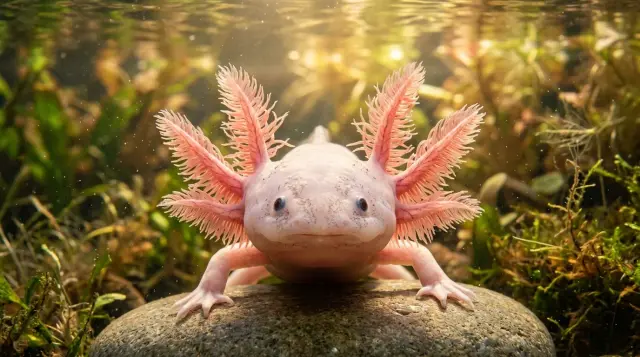
- Axolotls can regenerate limbs, spinal cords, and brain tissue through cellular reprogramming, a process actively studied by Harvard and Karolinska Institute researchers.
- The platypus uses 40,000 electroreceptors to detect prey through electromagnetic fields, and many other animals navigate using Earth's natural EM radiation.
- Deinococcus radiodurans survives radiation doses 1,000 times the lethal level for humans by rapidly repairing its own shattered DNA.
- Natural background radiation exposes the average American to 3.01 mSv per year, mostly from radon gas, cosmic rays, and radioactive elements in soil.
- Mind-blowing animal facts work because they violate our brain's mental models, triggering a dopamine-driven surprise response that makes the information memorable.
How Does the Axolotl Regrow Its Entire Brain?
Let's start with the animal that breaks the most basic rule of biology as we know it. The axolotl, a neotenic salamander native to Lake Xochimilco near Mexico City, can regenerate entire limbs, its spinal cord, heart tissue, and parts of its brain. Not scar tissue. Functional, original tissue. Researchers at the Karolinska Institute in Sweden confirmed in 2022 that axolotls rebuild neurons and reconnect neural circuits after brain injury [1].
Think about that for a second. You lose a finger, and your body seals the wound and moves on. An axolotl loses a leg and grows it back, bones, muscles, nerves, and all, in a matter of weeks. Scientists at Harvard University's Wyss Institute are actively studying axolotl regeneration to figure out whether similar dormant pathways exist in human DNA.
This is one of those incredible animal abilities that perfectly shows how does animal facts mind blowing work in practice. It's not magic. It's cellular reprogramming at a level we haven't unlocked yet. The axolotl's cells "de-differentiate," reverting to a stem-cell-like state before rebuilding the missing structure from scratch.
Quick Q&A
Q: Can axolotls really regenerate their brains?
A: Yes, axolotls can regenerate functional brain tissue, including neurons and neural circuits, as confirmed by researchers at the Karolinska Institute in 2022.
Here's the bittersweet part. The axolotl is critically endangered in the wild, with fewer than 1,000 estimated to remain in their native habitat. Yet they thrive in laboratories worldwide. We're learning to decode their regenerative secrets while their natural home disappears.
Can Animals Actually Detect Electromagnetic Fields?
This is where things get truly strange. The platypus, that odd duck-billed mammal from Australia, hunts with its eyes closed. Literally. When it dives underwater, it shuts its eyes, ears, and nostrils. So how does it find food? It uses roughly 40,000 electroreceptors embedded in its bill to detect the tiny electrical fields generated by the muscle contractions of shrimp and insect larvae [2].
This ability, called electroreception, means the platypus is reading the electromagnetic signatures of living things. According to research published by the University of Queensland, these receptors are so sensitive they can pick up electrical impulses as faint as 50 microvolts. That's like detecting a watch battery from across a swimming pool.
And the platypus isn't alone. Sharks use similar electroreceptive organs called ampullae of Lorenzini. Bees steer by Earth's magnetic field. Migrating birds have magnetite crystals in their beaks that function like tiny biological compasses. Nature is saturated with electromagnetic fields, and animals have evolved ingenious ways to use them.
What's fascinating is that creatures evolved to interact with EM radiation long before we even understood what it was. If you're curious about the electromagnetic fields we encounter daily and how to think about protection, you can Learn About EMF Protection to get a solid primer on the subject. Electromagnetic radiation isn't just a modern concern. It's a fundamental feature of our planet's biology.
What Organism Survives 1,000 Times the Lethal Radiation Dose for Humans?
Meet Deinococcus radiodurans, sometimes nicknamed "Conan the Bacterium." This tiny organism can survive radiation doses of up to 5,000 grays. For context, a dose of just 5 grays is typically lethal for a human. That means this bacterium shrugs off roughly 1,000 times the radiation that would kill you or me [3].
Discovered in 1956 by Arthur Anderson at the Oregon Agricultural Experiment Station, D. radiodurans was found thriving inside a can of meat that had been "sterilized" with gamma radiation. The radiation destroyed everything else. This bacterium didn't care. It has an extraordinary DNA repair mechanism that can reassemble its own shattered genome in hours.
According to the U.S. Environmental Protection Agency, the average American is exposed to about 3.01 millisieverts (mSv) of natural background radiation per year from sources like radon gas, cosmic rays, and radioactive elements in soil [4]. We live in a world full of natural radiation, and most organisms have adapted to handle baseline levels. But D. radiodurans operates on a completely different scale.
This connects to the broader conversation about radiation in our everyday environment. Natural electromagnetic radiation is everywhere, from the UV light of the sun to the radon seeping from bedrock. Some of us also encounter human-made sources from electronics and wireless devices. That's one reason companies like Proteck'd EMF Protection have developed clothing designed to shield against certain electromagnetic frequencies. We can't regenerate our DNA like Conan the Bacterium, so awareness matters.
Do Dolphins Really Have Names for Each Other?
Yes. And honestly, this one still gets me every time. Bottlenose dolphins develop unique "signature whistles" that function as names. A 2013 study led by Dr. Vincent Janik at the University of St Andrews in Scotland showed that dolphins respond selectively when they hear a recording of their own signature whistle played back to them. They don't respond to the whistles of strangers the same way.
So dolphins are doing something we once assumed was exclusively human: using abstract labels to identify individuals. They'll call out a specific dolphin's whistle to get its attention. Basically saying, "Hey, Steve!" across the ocean. Research published in the Proceedings of the National Academy of Sciences (PNAS) confirmed this naming behavior in wild dolphin populations.
But their intelligence goes further. Dolphins have been observed using toxic pufferfish as a sort of recreational drug, gently passing the puffer between pod members and entering what appears to be a trance-like state. BBC documentary crews captured this behavior on film in 2014. Whether you call it "getting high" or "self-medicating," it's a deliberate, repeated behavior. Strange wildlife biology at its finest.
Dolphin communication is one of those bizarre animal facts that reshapes how we think about intelligence. If you're a fan of these kinds of revelations, check out 10 Surprising Facts About Nature: That Science Just Discovered for more recent findings that challenge what we thought we knew.
Why Does the Mantis Shrimp See Colors We Can't Even Imagine?
Humans have three types of color photoreceptor cells, called cones. We see the world through combinations of red, green, and blue. The mantis shrimp? It has 16 types of photoreceptors. Sixteen. A 2014 study published in Nature by researchers at the University of Queensland confirmed this extraordinary visual system, though the way mantis shrimp process color turns out to be different from what anyone expected.
Rather than blending colors the way our brains do, mantis shrimp appear to recognize colors in a more binary, band-by-band manner. Think of it less like a painter's palette and more like a barcode scanner for the electromagnetic spectrum. They can detect ultraviolet light, polarized light, and potentially even circular polarized light, which no other animal is confirmed to perceive.
Oh, and they punch. The peacock mantis shrimp strikes with its club-like appendages at speeds up to 50 mph, generating cavitation bubbles that produce a secondary shockwave. The force is comparable to a .22 caliber bullet. Aquariums have reported mantis shrimp cracking the glass of their tanks.
Quick Q&A
Q: How many types of color receptors does a mantis shrimp have?
A: Mantis shrimp have 16 types of photoreceptor cells, compared to just 3 in humans, allowing them to detect ultraviolet and polarized light.
The mantis shrimp is a walking argument for why animal adaptations that seem impossible are often just natural engineering we haven't caught up with yet. These creatures perceive parts of the electromagnetic spectrum that are completely invisible to us.
How Do Crows Use Tools Better Than Some Primates?
New Caledonian crows don't just use tools. They manufacture them. Researchers at the University of Auckland documented crows crafting hook-shaped tools from twigs and barbed leaf edges to extract grubs from tree bark. A landmark 2002 study by Dr. Alex Kacelnik at Oxford University filmed a crow named Betty spontaneously bending a straight piece of wire into a hook to retrieve food from a tube. She'd never seen a hook before.
This wasn't trained behavior. Betty invented a solution on the spot, demonstrating what cognitive scientists call "causal reasoning." That's the ability to understand that one action will produce a specific result, even without prior experience. Some great apes struggle with this in controlled experiments.
Crows also hold grudges. Research from the University of Washington in 2011 showed that crows can remember the faces of individual humans who threatened them and will teach other crows to mob that person. The grudge-holding lasted at least five years in the study, and the "enemy recognition" spread through the crow population socially. Five years. Let that sink in.
Understanding how does animal facts mind blowing work often comes down to realizing that intelligence isn't unique to big brains. A crow's brain weighs about 7.5 grams. Yet it outperforms animals with brains hundreds of times larger. When people ask about astonishing creature facts, crow cognition should be near the top of every list.
Is There Really a Frog That Survives Being Frozen Solid?
The wood frog (Rana sylvatica), found across North America from Georgia to Alaska, freezes solid every winter. Its heart stops. Its blood stops flowing. Up to 65% of its body water turns to ice. Then spring arrives, and it thaws out and hops away like nothing happened. Researchers at Miami University in Ohio have studied this process for decades.
According to work by Dr. Jon Costanzo and Dr. Richard Lee at Miami University, the wood frog floods its cells with glucose, which acts as a cryoprotectant. This sugar solution prevents ice crystals from forming inside cells, which is what causes fatal tissue damage during freezing in most organisms. The glucose concentration in a freezing wood frog's organs can be 10 times the normal level.
NASA has expressed interest in this biological antifreeze for potential applications in cryopreservation of human organs for transplant. Currently, donated organs have a very short viability window. If scientists could replicate the wood frog's glucose-based preservation, it could revolutionize organ transplantation logistics.
This is nature solving a problem that human medicine hasn't cracked yet. The wood frog doesn't need a lab or a freezer. It just does it. Every year. If that doesn't qualify as one of the most astonishing creature facts on the planet, I don't know what does. For more on how nature continues to surprise scientists, take a look at Interesting Facts About Green Tea Health Benefits, where natural compounds also turn out to have unexpected powers.
What Makes the Octopus One of Earth's Most Alien Creatures?
If you designed an alien in a lab, you'd probably end up with something like an octopus. Three hearts. Blue blood (it uses copper-based hemocyanin instead of iron-based hemoglobin). A decentralized nervous system where two-thirds of its neurons live in its arms, not its brain. Each arm can, in effect, "think" on its own.
Octopuses at the Seattle Aquarium have been documented opening childproof jars from the inside, solving mazes after a single trial, and escaping through gaps no bigger than a quarter if their beak can fit through it. A famous octopus named Inky escaped from New Zealand's National Aquarium in 2016 by climbing out of his tank, crossing the floor, and squeezing down a drain pipe to the ocean.
Their camouflage is equally staggering. Cuttlefish, their close relatives, can change color and texture in milliseconds using specialized cells called chromatophores. According to research by Dr. Roger Hanlon at the Marine Biological Laboratory in Woods Hole, Massachusetts, cuttlefish can match patterns they've never seen before, including checkerboards that don't exist in nature.
The octopus family reminds us that intelligence and awareness may take forms we barely recognize. When considering how does animal facts mind blowing work, the octopus is almost the poster child. It's so different from us that studying it feels like studying life from another planet. If you love these kinds of deep-cut facts, our piece on The Most Surprising Facts About How the Internet Works: The Numbers offers similarly surprising revelations, just about the digital world instead of the biological one.
How Much Natural Radiation Are You Exposed to Every Day?
Here's a fact that catches most people off guard. You're being irradiated right now. Cosmic rays are passing through your body as you read this. Radon gas from the ground beneath your home is the single largest source of natural radiation exposure for most Americans. According to the EPA, radon accounts for about 2.0 mSv of the average American's 3.01 mSv annual natural background radiation dose [4].
Bananas contain potassium-40, a naturally radioactive isotope. Eating one banana gives you roughly 0.01 mSv of radiation. It's a tiny amount, completely harmless, but it shows how radiation is woven into the fabric of daily life. Granite countertops, Brazil nuts, even the carbon-14 in your own body contribute to your personal radiation profile.
The difference between natural background radiation and the electromagnetic fields from modern technology comes down to frequency and exposure patterns. Natural radiation has been a constant since life began. But the exponential growth of wireless devices, cell towers, and smart meters over the past 25 years has introduced new sources of non-ionizing electromagnetic radiation that our biology has never encountered at these levels before.
This is why some people are paying closer attention to their daily EMF exposure. The Faraday Collection from Proteck'd, for example, uses silver-infused fabrics to shield the body from certain radio frequencies. Whether you're casually curious or genuinely concerned, understanding the radiation environment around you, both natural and artificial, is a good starting point for making informed choices.
Why Do These Facts Challenge What We Think We Know?
So why do these facts hit so hard? The reason how does animal facts mind blowing work is fundamentally about expectation violation. Our brains build mental models of how the world works based on our limited daily experience. When a fact violates that model, like a frog surviving being frozen or a bacterium shrugging off lethal radiation, it triggers genuine cognitive surprise. Neuroscientists at MIT have shown that surprise activates the brain's dopamine system, which is why learning astonishing creature facts feels genuinely pleasurable.
There's also an element of humility. We tend to think of humans as the pinnacle of evolution. The smartest, the most capable. But a crow can manufacture tools. A dolphin has a name. An octopus can solve puzzles with arms that think for themselves. These bizarre animal facts remind us that intelligence and adaptation take thousands of forms we haven't even cataloged yet.
And then there's the radiation angle, which connects everything in ways most people don't consider. Every living thing on Earth exists within a bath of natural electromagnetic radiation. Some organisms, like D. radiodurans, have evolved to be nearly invincible against it. Others, like the platypus, have evolved to weaponize it for hunting. We're only starting to appreciate how deeply EM radiation shapes life on this planet.
The natural world isn't just beautiful or interesting. It's profoundly strange. And the more you learn, the stranger it gets. That's what makes these facts stick with you long after you've finished reading. If this article sparked your curiosity, I'd encourage you to keep going. The rabbit hole is deep, and the real world is far weirder than fiction ever could be.
Frequently Asked Questions
Mind-blowing animal facts work by violating your brain's mental models of how the world operates. When you encounter information that contradicts your expectations, like a frog surviving being frozen solid, your dopamine system fires, creating a rush of surprise and pleasure. Neuroscientists at MIT have linked this surprise response to stronger memory formation, which is why these facts tend to stick with you.
Yes. Axolotls can regenerate functional brain tissue, including neurons and neural circuits. A 2022 study from the Karolinska Institute in Sweden confirmed that axolotls rebuild lost brain tissue through a process of cellular de-differentiation, where mature cells revert to stem-cell-like states. This ability is being studied for potential human medical applications.
The platypus uses approximately 40,000 electroreceptors in its bill to detect the faint electrical fields generated by the muscle contractions of prey. Research from the University of Queensland shows these receptors can detect impulses as faint as 50 microvolts. This is why the platypus closes its eyes, ears, and nostrils while diving. It hunts entirely by electromagnetic sense.
Deinococcus radiodurans holds the record for radiation resistance among known organisms. It can survive doses of up to 5,000 grays of ionizing radiation. For comparison, just 5 grays is typically lethal for a human. It pulls this off through an extraordinarily efficient DNA repair system that reassembles its shattered genome within hours.
They do. Bottlenose dolphins develop unique signature whistles that work as individual identifiers. A 2013 study by Dr. Vincent Janik at the University of St Andrews, published in PNAS, showed that dolphins respond selectively to recordings of their own signature whistle. They'll also use another dolphin's whistle to call that specific individual.
According to the U.S. Environmental Protection Agency, the average American receives about 3.01 millisieverts (mSv) of natural background radiation per year. The largest single contributor is radon gas from the ground, which accounts for roughly 2.0 mSv. Additional sources include cosmic rays, radioactive elements in soil, and even trace amounts of radioactive potassium in food.
The wood frog survives freezing by flooding its cells with glucose, which acts as a cryoprotectant. This sugar solution prevents lethal ice crystal formation inside cells. Research by Dr. Jon Costanzo at Miami University showed glucose concentrations in freezing wood frogs can reach 10 times normal levels. When spring arrives, the frog thaws and resumes normal function.
New Caledonian crows demonstrate causal reasoning and spontaneous tool manufacturing, cognitive abilities that some great apes struggle with in lab settings. A famous 2002 study at Oxford University filmed a crow named Betty bending wire into a hook to retrieve food, a solution she invented without any prior training. Crows also recognize and remember human faces for years and teach other crows to identify threats.
Mantis shrimp have 16 types of photoreceptor cells, compared to just 3 in humans. However, according to 2014 research from the University of Queensland published in Nature, they don't blend colors the way we do. Instead, they process color in a band-by-band manner, more like a barcode scanner. They can also detect ultraviolet and polarized light.
EMF protection clothing uses conductive materials like silver-infused fabric to shield the body from certain radio frequencies and non-ionizing electromagnetic radiation. While natural background radiation has been constant throughout human evolution, modern wireless technology has introduced new EM sources at unprecedented levels. Companies like Proteck'd offer garments designed to reduce exposure from these human-made sources.
References
- National Institutes of Health (PubMed) – Axolotls can regenerate functional brain tissue, including neurons and neural circuits, through cellular de-differentiation.
- Nature – Platypuses use approximately 40,000 electroreceptors in their bills to detect electrical fields of prey, and mantis shrimp have 16 types of photoreceptor cells.
- National Center for Biotechnology Information (PubMed) – Deinococcus radiodurans can survive radiation doses of up to 5,000 grays through rapid DNA self-repair mechanisms.
- U.S. Environmental Protection Agency – The average American is exposed to approximately 3.01 millisieverts of natural background radiation per year, with radon accounting for about 2.0 mSv.
About the Author
Proteck'd EMF Apparel
Health & EMF Specialists
The Proteck'd team covers EMF protection, silver-fiber apparel, and practical ways to reduce everyday radiation exposure. Every piece Proteck'd ships is designed, tested, and worn by the people who build it.
Protect Yourself Today
Proteck'd Faraday and silver fiber apparel is engineered to shield your body from everyday EMF exposure. Built for real life, tested for real results.
Shop EMF Protection →✓30-day returns✓Free shipping✓Free returns✓Silver fiber shielding


Leave a comment