


12 Mind-Blowing Facts About Electromagnetic Radiation: That Will Change How You See the World

Right now, as you read this, electromagnetic radiation is hitting your body from at least a dozen sources. Your phone. Your WiFi router. That Bluetooth speaker on your desk. The cell tower a quarter mile down the road. It's invisible. It's constant. And most people have never stopped to think about what it's actually doing.
If you've been looking for how to reduce electromagnetic radiation facts that are grounded in real science, not fear-mongering conspiracy theories, you're in the right place. I've spent a long time sorting through peer-reviewed research, government reports, and physics textbooks to pull together the most genuinely surprising truths about EM radiation.
Some of these facts will make you rethink your daily habits. Others will just make you appreciate how wild the electromagnetic spectrum really is. A few might actually change how you set up your bedroom tonight.
Here's the thing, though: you don't need to become a technophobe to protect yourself. The science points to a handful of practical, physics-based strategies that can meaningfully lower your exposure without requiring you to move to a cabin in the woods. Let's get into it.
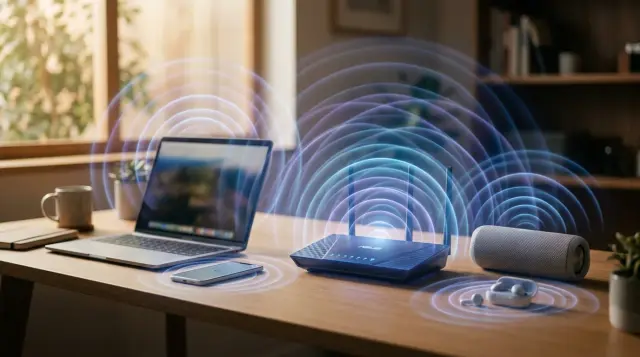
Every EMF reduction strategy boils down to three principles rooted in physics: distance, duration, and shielding. Master those three ideas, and you can meaningfully lower your exposure without giving up a single piece of technology you love.
What Exactly Is Electromagnetic Radiation, and Why Should You Care?
Electromagnetic radiation is energy that travels through space in waves. That's really all it is. It includes everything from visible light and radio waves to X-rays and gamma rays. The difference between harmless FM radio and a medical X-ray comes down to the frequency and energy level of the wave. They're all on the same spectrum.
Where it gets interesting is the range. The electromagnetic spectrum spans frequencies from about 3 Hz (extremely low frequency power lines) all the way up to 300 EHz (gamma rays). Your WiFi router operates at 2.4 GHz or 5 GHz. Your microwave oven? Also 2.4 GHz. Same frequency, vastly different power levels. Context matters enormously.
According to the World Health Organization, human exposure to non-ionizing electromagnetic fields has increased dramatically over the past 30 years, driven primarily by wireless communication technology [1]. That's not an opinion. It's a measurable reality. And it's exactly why more people are searching for how to reduce electromagnetic radiation facts that go beyond surface-level advice.
If you want a deeper look at how all these wireless signals actually move data around the planet, check out The Most Interesting Facts About How the Internet Works: What's Actually Happening. It's a fascinating rabbit hole.
Does the Inverse Square Law Really Make Distance Your Best Protection?
Yes. Without question. The inverse square law is the single most important concept for anyone trying to reduce EMF exposure, and it's pure physics. It states that the intensity of electromagnetic radiation decreases proportionally to the square of the distance from the source. In plain English: double your distance, and you cut your exposure by about 75%.
Think about what that actually means day to day. Holding your phone against your head during a call versus using speakerphone with the device 12 inches away is a massive difference. A study referenced by the National Institutes of Health showed that SAR (specific absorption rate) drops dramatically even at modest distances from the transmitting antenna [2]. The FCC's own SAR limit of 1.6 W/kg is measured with the phone pressed directly against tissue. Move it a few inches away and you're in a completely different ballpark.
Quick Q&A
Q: How much does moving my phone just one foot away reduce radiation exposure?
A: At one foot away, RF exposure from your phone can be reduced by over 80% compared to holding it directly against your head, thanks to the inverse square law.
This is why so many electromagnetic radiation reduction tips start with "create distance." It's free, it requires zero equipment, and the physics is rock-solid. Before you buy anything or rearrange your house, just start putting space between yourself and your devices. Sleep with your phone across the room instead of on the nightstand. Use a wired headset for calls. Small gaps, big results.
How Much EMF Does a WiFi Router Actually Emit?
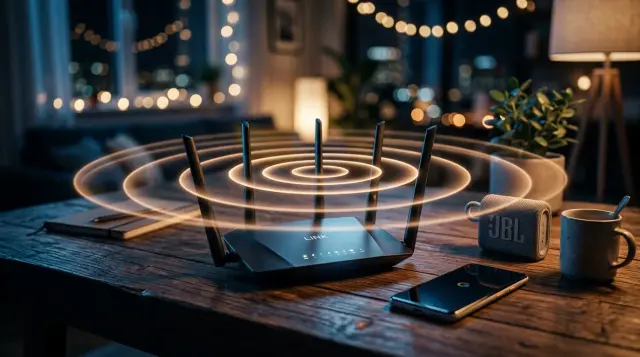
Your WiFi router is one of the most consistent sources of RF radiation in your home, because it never stops broadcasting. Even when nobody is streaming or checking email, the router sends out beacon frames roughly 10 times per second to announce its presence to nearby devices. That's continuous, round-the-clock electromagnetic radiation pumping through your living space.
A standard home router transmits at about 100 milliwatts, which is relatively low power. But here's the catch: proximity and duration matter just as much as raw power output. If your router sits on your desk three feet from your head for eight hours a day, that's a very different cumulative exposure than if it's mounted on a hallway wall 15 feet away.
One of the easiest no-cost moves you can make? Put your router on a timer so it shuts off while you sleep. You get roughly seven to eight hours of zero WiFi exposure per night. And honestly, you don't need WiFi while you're unconscious. Some routers have built-in scheduling features. A $5 outlet timer works just as well.
Router placement strategy comes up in every good EMF reduction guide, and for good reason. Moving your router out of the bedroom and away from areas where people spend prolonged time is a simple, science-backed way to cut your daily exposure. For more strange but true tech details like this, take a look at 12 Fascinating Tech Facts That Sound Too Weird to Be True: The Complete List.
What Did the National Toxicology Program's Landmark Study Actually Find?
The National Toxicology Program (NTP), a U.S. government research program under the National Institute of Environmental Health Sciences, completed a decade-long, $30 million study on radiofrequency radiation in 2018. It remains the most comprehensive animal study on RF and cancer ever conducted. The results were significant enough to reshape the conversation.
The NTP found "clear evidence" of malignant schwannomas (tumors of the heart) in male rats exposed to high levels of 2G and 3G cell phone radiation [3]. They also found "some evidence" of brain tumors in those same animals. The exposures were admittedly high, designed to simulate a worst-case scenario. But the tumor types were strikingly specific and consistent.
Critics point out that the rats were exposed to whole-body radiation at levels higher than what most humans experience. Fair point. But what made researchers sit up is that the tumor type, schwannomas, is the same type seen in some human epidemiological studies of heavy cell phone users. The Interphone study, coordinated by the International Agency for Research on Cancer (IARC), had flagged a similar pattern years earlier.
This doesn't mean your iPhone is giving you cancer. But it does mean the blanket claim that "non-ionizing radiation can't possibly cause biological effects" is outdated. The science has moved past that simplistic view, and understanding these findings is part of separating how to reduce electromagnetic radiation facts from fiction.
Why Did the WHO Classify RF Radiation as a Possible Carcinogen?
In 2011, the WHO's International Agency for Research on Cancer classified radiofrequency electromagnetic fields as Group 2B, meaning "possibly carcinogenic to humans" [1]. That puts it in the same category as lead, DDT, and pickled vegetables. It's not a declaration of danger. It's a scientific statement that there's enough evidence to warrant concern but not enough to draw firm conclusions.
The classification was based largely on data from the Interphone study and research by Swedish oncologist Dr. Lennart Hardell, which showed increased glioma and acoustic neuroma risk in heavy, long-term cell phone users. The working group included 31 scientists from 14 countries. They didn't reach this conclusion casually.
What's interesting is that some researchers have since pushed for an upgrade to Group 2A ("probably carcinogenic") or even Group 1, based on the NTP and Ramazzini Institute results that came after the 2011 classification. As of now, the classification hasn't been officially updated, but a reassessment has been discussed within IARC circles.
For a broader look at how electromagnetic waves interact with living organisms in ways most people never think about, I'd recommend reading How Animals See the World: Fascinating Facts. Some animals literally orient themselves using EM fields. We're not as separate from this energy as we might like to believe.
Can Your Body Actually Absorb Radio Waves?
Absolutely. Your body is essentially a big bag of saltwater, and saltwater absorbs radio frequency energy extremely well. When RF waves from your phone or router hit your body, that energy gets absorbed and converted into heat. That's the entire basis of the SAR measurement system the FCC uses to regulate cell phones.
SAR stands for Specific Absorption Rate. It measures how much RF energy is absorbed per kilogram of body tissue. The U.S. limit is 1.6 W/kg, set by the FCC based on guidelines from the 1990s. The European limit is slightly more permissive at 2.0 W/kg, averaged over 10 grams of tissue rather than 1 gram [2]. Different math, different thresholds, same underlying principle.
Quick Q&A
Q: Does my body absorb more radiation from a phone call than from WiFi?
A: Yes, because during a call your phone transmits at much higher power and is pressed directly against your head, resulting in significantly higher SAR than ambient WiFi exposure from a router across the room.
Here's an example that puts it in perspective. A phone transmitting at maximum power during a call in an area with poor signal can reach its SAR limit. That same phone sitting idle on a table, connected to a strong signal, emits a fraction of that energy. Signal strength, proximity, and active use all dramatically change how much radiation your body absorbs at any given moment.
Does Silver Fabric Actually Block EMF?
Silver is one of the most electrically conductive elements on earth. When you weave it into fabric, it creates what's basically a flexible Faraday cage. This isn't marketing spin. It's applied physics. A well-constructed silver-threaded textile can attenuate over 99% of RF radiation across frequencies used by WiFi, Bluetooth, and cellular networks.
The key is the density and quality of the silver threading. Cheap stickers or thin silver coatings might block some radiation, but they won't provide consistent, measurable shielding. Properly engineered EMF protection apparel uses tightly woven silver fibers that create a continuous conductive mesh. That's the difference between a real shield and a placebo.
This is where companies like Proteck'd EMF Protection come in. Their Faraday Collection uses silver-threaded fabrics in everyday clothing, so you get real RF shielding without looking like you're wearing a tinfoil hat. It's practical EMF reduction you can actually wear to work or the grocery store.
If you're curious about how EMF shielding technology works in more detail, or want to understand the testing behind these claims, Learn About EMF Protection on Proteck'd's FAQ page. They break down the science without the jargon.
What Are the Three Principles of Reducing EMF Exposure?
Every electromagnetic radiation reduction strategy boils down to three physics-based principles: distance, duration, and shielding. That's it. Everything else is a variation on one of these three ideas. Understanding them gives you a framework for making smart choices without getting overwhelmed by the hundreds of tips floating around online.
Distance, as we covered, uses the inverse square law. Duration is about minimizing the total time you spend near strong sources. Shielding involves placing a conductive or absorptive barrier between yourself and the source. Most experts recommend starting with distance and duration because they're free and immediately effective.
A real-world example: say you work from home with a laptop on your lap for six hours a day. You're violating all three principles at once. The device is touching you (zero distance), you're exposed for the majority of your waking hours (maximum duration), and there's nothing between the laptop's WiFi antenna and your body (no shielding). Put the laptop on a desk, use an external keyboard, and you've cut your exposure across all three dimensions simultaneously.
For anyone who wants to address the shielding piece with clothing they can wear all day, Proteck'd's silver-fiber apparel hits that third principle without changing your routine. We covered some of this in 10 Fascinating Facts About Electromagnetic Radiation That Will Change How You See the World if you want even more on the science side.
How Can You Optimize Your Bedroom for Lower EMF Exposure?
Your bedroom is the highest-impact room to address because you spend roughly a third of your life there. And you spend it unconscious, unable to move away from sources or limit your exposure through behavior. Whatever EM radiation is present in your bedroom while you sleep, you're soaking it up for seven or eight straight hours.
Start with the obvious stuff. Move your phone at least six feet from your pillow, or better yet, put it in another room entirely. If you use it as an alarm clock, buy a $10 battery-powered clock instead. Remove or unplug any electronics you don't need while sleeping: tablets, laptops, smart speakers. Each one is a source of RF or extremely low frequency (ELF) fields.
Here's one most people miss. The wiring inside your walls emits ELF electromagnetic fields whenever current flows through it. If your bed shares a wall with a breaker panel, refrigerator, or entertainment center on the other side, you might be sleeping in a surprisingly strong field. Dr. Sam Milham, an epidemiologist who has researched EMF since the 1980s, has written extensively about the health implications of chronic ELF exposure from household wiring.
Some people go further and install a kill switch (demand switch) that cuts power to the bedroom circuit at night. That eliminates both the electrical and magnetic fields from your bedroom wiring entirely. It costs around $200 to $400 installed by an electrician, and it's one of the more impactful upgrades for anyone serious about how to reduce electromagnetic radiation in their sleeping environment.
Do Smart Meters and Appliances Add Significant EMF to Your Home?
Smart meters are a hot topic in the EMF conversation, and the reality is more nuanced than either side usually admits. A typical smart electric meter transmits data for roughly 45 to 60 seconds per day in short bursts, using RF in the 900 MHz or 2.4 GHz range. That's not a lot of total transmission time. But the peak power during those bursts can be notable, especially if the meter is mounted on a wall directly behind your bed or home office.
According to the California Council on Science and Technology (CCST), the cumulative RF exposure from a smart meter is typically far below what you'd get from a cell phone call. However, the CCST report also acknowledged that some meters in mesh networks relay signals from neighboring meters, which can bump up the number of daily transmissions significantly.
Kitchen appliances are another underappreciated source. Microwave ovens, despite their shielding, can leak small amounts of RF radiation, especially if the door seal is worn. The FDA allows leakage of up to 5 milliwatts per square centimeter at a distance of 2 inches from the oven surface [4]. Just standing three feet back while your food heats up is a simple, physics-backed way to cut that exposure dramatically.
Smart home devices like voice assistants, smart plugs, and connected thermostats each add another layer of continuous wireless communication. They're individually low-power. But in a home with 15 or 20 smart devices, the cumulative RF environment is substantially different from even ten years ago. Being selective about which devices genuinely improve your life versus which ones just add convenience (and radiation) is a worthwhile exercise.
What Simple Daily Habits Lower Your EM Radiation Exposure the Most?
You don't need to spend a dime to meaningfully reduce your daily electromagnetic field exposure. The habits that make the biggest difference are almost laughably simple. Use speakerphone or a wired headset for calls. Don't carry your phone in your pocket pressed against your body. Turn off Bluetooth and WiFi when you're not actively using them. These tiny behavioral shifts tap into both the distance and duration principles.
At work, if you sit near a WiFi access point or network switch, ask to have your desk moved. In a 2015 survey by the Building Biology Institute, workstation proximity to wireless access points was flagged as one of the most common sources of elevated occupational RF exposure in office settings. Simply sitting 10 feet farther from the access point can make a measurable difference.
Another overlooked habit: switch to airplane mode when your phone is in your pocket or when you're sleeping. Your phone's cellular, WiFi, and Bluetooth radios all shut off instantly. You still have your alarm, your downloaded music, and your camera. You just don't have the RF emissions. I personally put my phone in airplane mode every night before it goes on the nightstand. Took about three days to become automatic.
For the times when you can't avoid close contact with devices, like commuting with your phone or working on a laptop, EMF-protective clothing provides that third principle of shielding. This is exactly where how to reduce electromagnetic radiation facts meets practical, wearable solutions. Proteck'd's silver-threaded shirts and jackets were designed for these everyday scenarios.
Is 5G More Dangerous Than Previous Wireless Generations?
This is probably the single most asked question about EMF right now, and the honest answer is: we don't fully know yet. 5G operates across a wider range of frequencies than 4G, including millimeter wave bands (24 GHz to 100 GHz) that haven't been used for widespread consumer communication before. These higher frequencies don't penetrate the body as deeply as lower ones, but they're absorbed more intensely by the skin and eyes.
The FDA stated in 2020 that the available scientific evidence does not support adverse health effects from RF exposure at or below current limits, including 5G. But the agency also acknowledged that few studies have specifically examined the biological effects of millimeter wave frequencies at the exposure levels relevant to 5G small cells.
What's different about 5G infrastructure is density. Because millimeter waves don't travel far or penetrate buildings well, carriers need many more small cell antennas placed much closer together, often on street light poles and building facades 300 to 500 feet apart. So while each individual antenna may emit less power than a traditional macro cell tower, the total number of antennas in your surroundings increases dramatically.
The precautionary principle applies here. You don't need to panic about 5G, but you also don't need to accept blanket assurances that decades of safety research on lower frequencies automatically applies to new ones. Being mindful of your total RF environment and using how to reduce electromagnetic radiation strategies like distance, duration, and shielding is reasonable regardless of which generation of wireless you're exposed to.
- The inverse square law means doubling your distance from an EMF source reduces exposure by roughly 75%, making distance the easiest and most effective protection strategy.
- Your bedroom is the highest-impact room to optimize because you spend 7 to 8 continuous hours there every night, unable to control your proximity to EMF sources.
- Silver-threaded fabrics provide real, measurable RF shielding by creating a flexible Faraday cage effect, blocking over 99% of common wireless frequencies.
- WiFi routers broadcast RF signals continuously, even when no devices are actively using them, so putting your router on a timer at night eliminates hours of unnecessary exposure.
- The three principles of EMF reduction, distance, duration, and shielding, provide a simple framework for every decision about your devices and environment.
Frequently Asked Questions
At minimum, keep your phone at least 6 to 12 inches from your body whenever you can. Even a few inches of distance reduces SAR dramatically because of the inverse square law. Many phone manufacturers actually include small-print recommendations in their safety manuals to maintain a separation distance of 5 to 15 mm during use.
Yes. It eliminates one of the most consistent sources of RF radiation in your home for 7 to 8 hours each night. Your router sends out beacon signals roughly 10 times per second even when no one is using it. A simple outlet timer or your router's built-in scheduling feature can automate this completely.
Most phone stickers have no measurable shielding effect. Phone cases with shielding material on one side can redirect RF radiation away from your head during calls, but they need to be designed carefully so they don't force your phone to increase its output power. Look for cases with independent lab testing, not just marketing claims.
The WHO's IARC classified RF electromagnetic fields as Group 2B (possibly carcinogenic) in 2011, and the National Toxicology Program found clear evidence of tumors in rats exposed to high RF levels in 2018. The evidence isn't conclusive for humans at typical exposure levels, but it's enough that many scientists recommend precautionary measures to limit unnecessary exposure.
Ionizing radiation (X-rays, gamma rays) carries enough energy to break chemical bonds and damage DNA directly. Non-ionizing radiation (radio waves, microwaves, visible light) has lower energy and was traditionally considered harmless beyond heating effects. Recent research, however, suggests some non-ionizing frequencies may cause biological effects through mechanisms other than heating.
Airplane mode turns off the cellular, WiFi, and Bluetooth radios, which are the primary sources of RF emissions from your phone. The phone still emits extremely low levels of ELF electromagnetic fields from its processor and battery. But for practical purposes, airplane mode reduces your phone's RF emissions to essentially zero.
Silver is highly electrically conductive. When woven into fabric at sufficient density, it creates a mesh that reflects and absorbs RF electromagnetic waves. Same principle behind a Faraday cage. High-quality silver-threaded garments can block over 99% of RF radiation across common wireless frequencies including WiFi, Bluetooth, and cellular bands.
5G uses a wider range of frequencies, including millimeter waves that haven't been widely used for consumer communication before. These higher frequencies are absorbed more superficially by skin and eyes rather than penetrating deep into the body. Long-term studies specific to 5G exposure levels are still limited, so applying precautionary principles like distance and shielding remains a reasonable approach.
Smart meters typically transmit RF data for only about 45 to 60 seconds per day in short bursts. Their cumulative RF exposure is generally far lower than a cell phone call. That said, meters in mesh networks that relay signals from neighboring meters may transmit more frequently, and placement directly behind living or sleeping areas can increase localized exposure.
The most effective free strategies include increasing distance from devices, turning off WiFi at night, using speakerphone for calls, switching to airplane mode while sleeping, and moving electronics out of the bedroom. Low-cost upgrades like outlet timers for routers (about $5) and wired ethernet adapters (about $15 to $30) offer excellent value. These behavioral changes tap into distance and duration, two of the three core EMF reduction principles.
References
- World Health Organization / IARC – IARC classified radiofrequency electromagnetic fields as Group 2B (possibly carcinogenic to humans) in 2011
- National Institutes of Health / NIEHS – Information on EMF exposure, SAR limits, and health research related to electromagnetic fields
- National Toxicology Program – The NTP found clear evidence of malignant schwannomas of the heart in male rats exposed to high levels of RF radiation in its 2018 study
- U.S. Food and Drug Administration – The FDA allows microwave oven leakage of up to 5 milliwatts per square centimeter at 2 inches from the oven surface
About the Author
Proteck'd EMF Apparel
Health & EMF Specialists
The Proteck'd team covers EMF protection, silver-fiber apparel, and practical ways to reduce everyday radiation exposure. Every piece Proteck'd ships is designed, tested, and worn by the people who build it.
Get the Free EMF Home Audit Checklist
A room-by-room PDF that walks you through the biggest EMF sources in your house and what to do about each one. No cost, no fluff.
Download the Checklist →✓30-day returns✓Free shipping✓Free returns✓Silver fiber shielding


Leave a comment