


How to Know If EMF Is Affecting You: The Connection You Might Be Missing

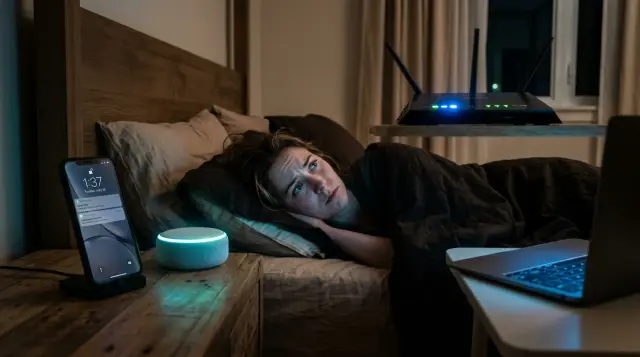
Here's something that might surprise you. The average person is now surrounded by more sources of electromagnetic radiation before they even leave the bedroom than a 1990s office worker encountered all day. Your phone on the nightstand, the Wi-Fi router down the hall, the smart speaker on your dresser, the baby monitor, the Bluetooth alarm clock. That's a lot of invisible energy bouncing around while you sleep. And if you've been searching for an emf eliminator because you suspect something in your environment is off, you're not alone.
Millions of people report symptoms they can't quite explain. Persistent headaches. Restless, unrefreshing sleep. A foggy feeling that coffee doesn't fix. They see doctors, get blood work done, and everything comes back "normal." So what gives?
The connection many people miss is electromagnetic field exposure. Not in some conspiracy-theory way, but in a measured, scientifically studied way. The World Health Organization has an entire research program dedicated to it. The U.S. National Institutes of Health have funded multi-year studies on it. This isn't fringe stuff anymore.
In this guide, I want to walk you through the signs that EMF might be affecting you, what the research actually shows (not what Reddit thinks), and what you can realistically do about it. Whether you're EMF-curious or already convinced you're sensitive, there's something here for you.
What Is EMF and Where Does It Come From in Your Home?
Electromagnetic fields are areas of energy produced by electrically charged objects. They exist on a spectrum, from extremely low frequency (ELF) fields created by power lines and home wiring, all the way up to radiofrequency (RF) radiation emitted by cell phones and Wi-Fi routers. The key distinction is between ionizing radiation (like X-rays) and non-ionizing radiation (like your microwave oven). Most household EMF falls in the non-ionizing category [1].
But "non-ionizing" doesn't automatically mean "no biological effect." That's the part people get wrong. According to the National Institute of Environmental Health Sciences (NIEHS), non-ionizing EMF can still produce measurable biological responses at certain exposure levels and durations [2]. It always comes back to dose, duration, and proximity.
So where is it all coming from? Walk through your house and count. Your Wi-Fi router operates at 2.4 GHz or 5 GHz continuously. Your cell phone emits RF radiation whenever it's searching for or connected to a signal. Smart meters on the side of your house pulse data to your utility company. Bluetooth devices, baby monitors, laptops, tablets, smart TVs, induction cooktops. Even the electrical wiring inside your walls creates low-frequency fields in every room.
Quick Q&A
Q: What household device emits the most electromagnetic radiation?
A: Your cell phone and Wi-Fi router are typically the highest RF sources in a home, with the phone producing the most exposure because it's held against your body.
I measured my own bedroom a few years ago with a basic EMF meter. The readings near my nightstand, where my phone charged and my smart speaker sat, were significantly higher than the center of the room. Moving those devices six feet away dropped the readings dramatically. Distance really is your friend. If you're curious about designing a lower-exposure living space, Low-EMF Home Design: A Complete Guide is a great starting point.
What Are the Signs That EMF Is Affecting Your Health?
The tricky thing about electromagnetic field exposure symptoms is that they overlap with about a hundred other conditions. That's exactly why people miss the connection. You're not going to get a rash that says "EMF" on it. Instead, the symptoms tend to be systemic and vague, which makes them easy to brush off.
The WHO formally acknowledges a condition called electromagnetic hypersensitivity (EHS), though they note it's not a medical diagnosis with agreed-upon diagnostic criteria [1]. People with EHS commonly report headaches, fatigue, difficulty concentrating, sleep disturbances, and skin tingling or burning sensations. A 2020 review published in the journal Environmental Research estimated that EHS affects somewhere between 1.5% and 13.3% of the population, depending on the country surveyed.
Here's the pattern I've noticed in talking with people who eventually connect their symptoms to EMF. They feel worse in certain locations. Their sleep is terrible at home but better at a cabin with no Wi-Fi. They get headaches at work, surrounded by dozens of devices and routers, that vanish on weekends. They sit next to their router all day because that's where the desk fits, and they've had a low-grade headache for months.
One woman I spoke with had been to three doctors about her insomnia before she tried turning off her Wi-Fi router at night. She slept through the night for the first time in months. Coincidence? Maybe. But if you're curious about that specific connection, Electromagnetic Fields and Sleep Quality: What Research Reveals lays out what the clinical research actually found.
The bottom line: if you have chronic symptoms that don't respond to typical treatments and you're surrounded by EMF sources, it's worth considering the connection. You don't need to be a conspiracy theorist to try moving your phone out of the bedroom for two weeks and seeing what happens.
You don't need to abandon technology to reduce your EMF exposure. You need to be intentional about distance, duration, and shielding. Small changes, measured and verified, can transform how you feel in your own home.
Does Science Actually Support EMF Health Concerns?
Yes, but with context. This isn't a black-and-white area. Anyone telling you it is, in either direction, is oversimplifying. The science is evolving, and some findings are genuinely concerning while others are reassuring.
The big headline: in 2011, the International Agency for Research on Cancer (IARC), which is part of the WHO, classified radiofrequency electromagnetic fields as Group 2B, meaning "possibly carcinogenic to humans" [1]. That's the same category as things like lead and pickled vegetables. It doesn't mean your phone will give you cancer. It means there's enough evidence that scientists said, "We can't rule this out, and we need more research."
Then in 2018, the U.S. National Toxicology Program (NTP), part of the National Institutes of Health, released the results of a $30 million, decade-long study on RF radiation in animals. They found "clear evidence" of heart tumors (schwannomas) in male rats exposed to high levels of cell phone radiation, and "some evidence" of brain tumors [2]. These were whole-body exposures at levels higher than typical human exposure, so direct translation to people is debated. But the biological mechanism was there.
On the other hand, large epidemiological studies in humans haven't consistently shown increased cancer risk at typical exposure levels. The Danish Cohort Study, which followed over 420,000 cell phone users, didn't find a significant increase in brain tumors. The picture is genuinely mixed, which is why the scientific community hasn't reached consensus.
What's less debated is that electromagnetic radiation can affect biological processes below the cancer threshold. Research from the University of Melbourne published in 2021 found that RF-EMF exposure altered calcium signaling in cells, which could influence sleep, stress response, and neurological function. These sub-thermal effects are likely where the everyday health complaints originate.

What Does an Effective EMF Eliminator Strategy Actually Look Like?
Let's be real for a second. You can't eliminate every electromagnetic field from your life unless you want to live in a remote cabin with no electricity. Most of us aren't signing up for that. So when I talk about an emf eliminator strategy, I mean a practical, layered approach to reducing your overall exposure to levels your body handles better.
Step one is distance. The inverse square law from physics tells us that doubling your distance from an EMF source reduces your exposure by roughly 75%. That's huge. Move your phone off the nightstand and across the room. Position your desk away from the router. Stop carrying your laptop on your lap. These zero-cost changes make a measurable difference. I keep my phone in a different room while I sleep, and I can honestly feel the difference in how I rest.
Step two is time reduction. You don't need your Wi-Fi router broadcasting at 3 AM. Putting it on a simple outlet timer so it shuts off at bedtime and turns on in the morning cuts your nighttime RF exposure to near zero. For more strategies like this, EMF Blocking for Better Sleep: The Complete Guide goes deep on nighttime protocols.
Step three is shielding. This is where purpose-built products come in. Faraday fabric, named after the 19th century physicist Michael Faraday, works by creating a conductive mesh that blocks or attenuates electromagnetic radiation. It's the same principle behind the Faraday cage, which has been used in labs and military applications for decades. Proteck'd EMF Protection builds this technology into wearable clothing, which brings us to the next question people always ask.

Can You Really Wear EMF Protection?
This is the part that sounds futuristic until you see how it actually works. Faraday shielding technology has been around since the 1830s. Michael Faraday demonstrated that a conductive enclosure blocks external electric fields. We use this principle every single day: your microwave oven has a Faraday cage built into its door to keep radiation inside. MRI rooms in hospitals are shielded with the same concept.
The innovation is putting that shielding into fabric you can actually wear. Silver-threaded textiles create a conductive mesh at the fiber level that attenuates electromagnetic radiation. This isn't theoretical. It's measurable with standard EMF meters and has been used in military and industrial applications for years.
Proteck'd's Faraday EMF Collection uses this approach in everyday clothing. Hats, hoodies, shirts, boxers. The idea is straightforward: you're reducing the EMF that reaches your body during the hours you're wearing them, especially covering high-priority areas like your head and torso. You can read more about the design philosophy in Proteck'd Faraday Apparel: Wear Your Shield Every Day.
Quick Q&A
Q: Does Faraday fabric actually block EMF radiation?
A: Yes, silver-threaded Faraday fabric creates a conductive mesh that measurably attenuates radiofrequency electromagnetic radiation, using the same physics principle as Faraday cages used in hospitals and laboratories.
The advantage of wearable shielding over plug-in gadgets is that it travels with you. A device plugged into your wall at home doesn't help you at the office, the coffee shop, or on an airplane. Clothing does. For a broader overview of protection strategies that work in different environments, check out Living in an EMF World: How to Protect Yourself.
How Do You Test EMF Levels in Your Own Home?
You don't need a physics degree for this. A basic tri-axis EMF meter, available for under $50 on Amazon, will measure magnetic fields (from wiring and appliances) and electric fields. For RF radiation from Wi-Fi and phones, you'll want a meter that covers the higher frequency range, usually labeled as an RF meter. The TriField TF2, at around $180, is the go-to recommendation for home users because it measures all three types.
Start with your bedroom since that's where you spend roughly a third of your life. Measure near your bed with everything on as normal. Then turn off the Wi-Fi router, remove your phone, and measure again. The difference will tell you how much your connected devices contribute. In many homes I've tested, bedroom RF readings drop by 80% to 95% just from turning off the router and removing the phone.
Next, check your home office or wherever you spend the most waking hours. Pay attention to spots near electrical panels, smart meters (usually mounted on an exterior wall), and clusters of devices. Smart meters in particular can produce surprisingly high readings on the interior wall directly behind them. The Building Biology Institute in the U.S. publishes exposure guidelines that are far more conservative than FCC limits, recommending sleeping area RF power density below 10 microwatts per square meter.
Write your readings down. This gives you a baseline. Then as you make changes, whether that's moving devices, using timers, or adding shielding, you can measure again and see real numbers. That turns a vague concern into concrete data. If you want to learn more about what specific EMF Protection Benefits different approaches offer, that resource breaks it down clearly.
Why Don't More Doctors Talk About Electromagnetic Field Exposure?
This is the question that frustrates people most. If EMF exposure can cause symptoms, why isn't your doctor asking about it? The short answer: most medical schools don't cover environmental electromagnetic radiation exposure in their curriculum. A 2014 survey published in Reviews on Environmental Health found that the majority of physicians felt they had insufficient training on the health effects of EMF [3].
There's also the regulatory side. The FCC, which sets exposure limits in the United States, last updated its RF exposure guidelines in 1996. That was before Wi-Fi existed in homes. Before smartphones. Before Bluetooth earbuds. Before smart homes. In August 2021, the U.S. Court of Appeals for the D.C. Circuit ruled that the FCC had failed to adequately explain why it hadn't updated these guidelines given the volume of new scientific evidence. That ruling didn't force new limits, but it acknowledged the gap.
Some countries are further ahead. France banned Wi-Fi in nursery schools in 2015. The European Parliament has passed resolutions calling for stricter EM radiation exposure limits. Several European countries have adopted precautionary approaches that go beyond what the U.S. currently recommends.
The medical community isn't ignoring EMF. It's just slow. Institutions like the BioInitiative Working Group, which includes researchers from Harvard, Columbia, and the Karolinska Institute, have published extensive reviews arguing that current exposure standards don't adequately protect public health. As awareness grows, more clinicians are starting to ask about environmental exposures, including electromagnetic fields, as part of patient intake. But we're not there yet across the board.
What's the Most Practical EMF Eliminator Approach for Everyday Life?
If I had to boil it down to the five highest-impact changes, here's what I'd tell a friend.
First, get your phone out of your bedroom at night. Or at minimum, put it in airplane mode. Your sleep is the most important recovery period of your day, and eliminating that nighttime RF exposure is free and immediate.
Second, use a wired internet connection when you can. Ethernet cables cost a few dollars, and the speed is actually better than Wi-Fi anyway. If you work from a desk, there's really no reason your computer needs to pull everything over wireless. You can even turn off your router's Wi-Fi broadcast and use it as a wired-only access point during work hours.
Third, wear protection when you're in high-exposure environments. This is where an emf eliminator like Faraday clothing makes the most sense. You can't control the cell towers, the office Wi-Fi, the Bluetooth signals from everyone's headphones, or the smart meters on the building. But you can put a shielding layer between those sources and your body. Proteck'd's collection is designed exactly for this scenario.
Fourth, put distance between you and your devices whenever possible. Use speakerphone or wired headphones instead of holding the phone to your head. Keep your laptop on a desk, not your lap. Sit at least three feet from your router.
Fifth, measure and verify. Don't guess. A basic EMF meter lets you confirm that your changes actually reduced your exposure. Science works on measurement, and so should your emf eliminator strategy. Small, consistent changes add up. You don't have to overhaul your life overnight. Start with sleep, then expand from there.
Key Takeaways
Frequently Asked Questions
What is an EMF eliminator?
An EMF eliminator refers to any strategy, device, or product designed to reduce or block electromagnetic field exposure reaching your body. This can range from plug-in devices that claim to neutralize fields, to shielding materials like Faraday fabric, to simple behavioral changes like increasing distance from devices. The most effective approach combines multiple methods.
Can EMF really affect your health?
Research suggests it can, though the extent depends on exposure level and individual sensitivity. The WHO's IARC classified RF electromagnetic fields as possibly carcinogenic (Group 2B) in 2011. The NTP's animal studies found clear evidence of tumor development at high exposure levels. Sub-cancer effects like sleep disruption and headaches are reported widely but are harder to study in controlled settings.
What are the symptoms of EMF sensitivity?
The most commonly reported symptoms include headaches, fatigue, difficulty concentrating, sleep disturbances, skin tingling, and irritability. These symptoms typically worsen with proximity to EMF sources and improve when exposure is reduced. Because they overlap with many other conditions, the connection to electromagnetic fields is often missed.
Does turning off Wi-Fi at night reduce EMF exposure?
Yes, significantly. Your Wi-Fi router broadcasts RF radiation continuously, and turning it off eliminates that source entirely during sleep. Home RF measurements typically drop by 80% to 95% when the router is off and phones are removed from the bedroom. A simple outlet timer can automate this.
Is Faraday fabric effective for EMF protection?
Faraday fabric made with silver or other conductive threads does attenuate electromagnetic radiation. This is measurable with standard RF meters and uses the same physics as Faraday cages in hospitals and labs. The degree of attenuation depends on the fabric's conductivity, thread density, and the frequency of the radiation being blocked.
How far should I keep my phone from my bed?
At least six feet, or better yet, in another room. The FCC's own guidelines recommend keeping a small distance between your phone and body, and RF radiation intensity drops dramatically with distance. If you must keep it in the bedroom, switch it to airplane mode, which disables the RF transmitter entirely.
Are EMF levels in homes dangerous?
Typical home EMF levels fall within FCC guidelines, but those guidelines were last updated in 1996 and focus on thermal (heating) effects rather than long-term biological effects. Organizations like the BioInitiative Working Group argue current limits don't account for chronic low-level exposure. Whether your home levels affect you may depend on individual sensitivity.
Do EMF protection stickers or chips work?
There's no peer-reviewed scientific evidence that small stickers, chips, or pendants can neutralize or harmonize electromagnetic radiation. These products typically lack any measurable shielding effect when tested with EMF meters. Physical shielding with conductive materials (like Faraday fabric) and distance-based strategies have demonstrable, measurable effects.
Can EMF exposure cause insomnia?
Multiple studies suggest a connection. Research published in the journal Sleep Medicine Reviews found that RF-EMF exposure before sleep altered brain wave patterns and delayed the onset of certain sleep stages. Many people report improved sleep quality after reducing bedroom EMF sources, though individual results vary.
What's the difference between ionizing and non-ionizing radiation?
Ionizing radiation (like X-rays and gamma rays) carries enough energy to break chemical bonds and damage DNA directly. Non-ionizing radiation (like radio waves, microwaves, and visible light) doesn't carry that much energy per photon. However, non-ionizing EMF can still produce biological effects through mechanisms like calcium ion signaling disruption and oxidative stress.
References
- World Health Organization – WHO acknowledges electromagnetic hypersensitivity and IARC classified RF electromagnetic fields as Group 2B (possibly carcinogenic to humans) in 2011
- National Institute of Environmental Health Sciences (NIEHS) – NIEHS reports on EMF health effects and the National Toxicology Program found clear evidence of heart tumors in male rats exposed to high levels of RF radiation
- National Institutes of Health (PubMed) – Physician surveys indicate insufficient medical training on health effects of electromagnetic field exposure
About the Author
Proteck'd EMF Apparel
Health & EMF Specialists
The Proteck'd team covers EMF protection, silver-fiber apparel, and practical ways to reduce everyday radiation exposure. Every piece Proteck'd ships is designed, tested, and worn by the people who build it.
Get the Free EMF Home Audit Checklist
A room-by-room PDF that walks you through the biggest EMF sources in your house and what to do about each one. No cost, no fluff.
Download the Checklist →✓30-day returns✓Free shipping✓Free returns✓Silver fiber shielding


Leave a comment