


15 Fascinating Tech Facts That Sound Too Weird to Be True: With Sources

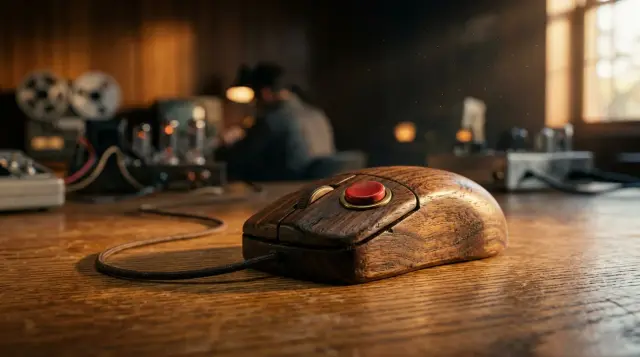
The first computer mouse was made of wood. Not plastic, not metal. Wood. Doug Engelbart carved the thing at the Stanford Research Institute in 1964, and if that fact doesn't make you rethink everything about tech history, hang on. We've got fourteen more where that came from.
So how does tech trivia surprising work, exactly? It comes down to pretty simple psychology. Technology moves so fast that facts from even 10 or 20 years ago sound completely absurd today. Our brains expect sleek, modern origin stories. The real ones are almost always messier, weirder, and way more interesting.
I spent weeks tracking down the strangest true facts about technology and verifying each one with real, credible sources. No urban legends. No "a friend told me" stories. Just pure, sourced, weird technology facts you can confidently drop at your next dinner party or trivia night.
Whether you're a casual tech enthusiast or someone who devours fun tech trivia questions for breakfast, this list is going to surprise you. Some of these facts are about gadgets. Some are about the internet itself. And a few touch on the invisible electromagnetic signals all around us, which, if you think about it, might be the strangest tech fact of all.
Ready? Let's get into it.

What Was the First Computer Mouse Actually Made Of?
Let's start with the one that hooked you. In 1964, Douglas Engelbart and his colleague Bill English at the Stanford Research Institute built the first computer mouse prototype. It was a hand-carved wooden shell with two metal wheels inside that tracked movement on a surface. Engelbart filed the patent in 1967, and it was officially granted in 1970 as U.S. Patent 3,541,541 [1].
Why "mouse"? Because the cord came out the back and looked like a tail. That's it. No committee meetings. No branding agency. Just a guy looking at his invention and thinking, "Huh, looks like a mouse."
Here's what gets me. Engelbart never made a dime from it. The patent expired before the personal computer revolution took off in the 1980s. Xerox PARC and then Apple ran with the concept, and the rest is history. If you want more surprising computer history like this, check out 12 Fascinating Tech Facts That Sound Too Weird to Be True: The Complete List.
Quick Q&A
Q: Who invented the first computer mouse?
A: Douglas Engelbart and Bill English invented the first computer mouse in 1964 at the Stanford Research Institute, using a hand-carved wooden shell and two metal tracking wheels.
Did YouTube Really Start as a Dating Website?
Yes. YouTube's three co-founders, Chad Hurley, Steve Chen, and Jawed Karim, originally built the platform as a video dating site. They registered the domain on February 14, 2005. Valentine's Day. Not a coincidence. The original tagline was reportedly "Tune In, Hook Up."
The dating angle flopped almost immediately. Nobody wanted to upload videos of themselves looking for a date. So the founders pivoted to general video sharing, and by November 2005, they'd secured $3.5 million in funding from Sequoia Capital. Google acquired YouTube in October 2006 for $1.65 billion. Not bad for a failed dating site.
This is one of those weird technology facts that shows why tech trivia hits so differently. The platforms we use every day rarely started as what they became. Twitter began as a podcasting platform called Odeo. Instagram was a location check-in app called Burbn. The pivots are where the magic happens.
Speaking of the internet and strange facts about how it all works, you might enjoy The Most Surprising Facts About How the Internet Works: The Numbers. The infrastructure behind all those cat videos is genuinely bizarre.
Technology moves so fast that facts from even 20 years ago sound completely absurd today. The gap between our intuition and reality is where the surprise lives, and that's exactly why tech trivia never gets old.
How Did the Internet Actually Begin?
The internet started as a U.S. military project. ARPANET (Advanced Research Projects Agency Network) was funded by the Department of Defense, and it sent its very first message on October 29, 1969, from a computer at UCLA to one at the Stanford Research Institute, about 350 miles away.
The first intended message was "LOGIN." The system crashed after transmitting just the letters "L" and "O." So technically, the first message ever sent on the internet was "LO." Honestly? Kind of poetic.
By 1971, ARPANET had grown to connect 15 nodes at various universities and research centers. Ray Tomlinson sent the first email that same year, choosing the @ symbol to separate usernames from computer names. These strange internet facts show that the technology we take for granted today was cobbled together by researchers who were basically making it up as they went.
And now the internet carries an estimated 4.8 zettabytes of data per year. All of it riding on electromagnetic signals, radio waves, fiber optics, and satellite transmissions. If you're curious about the invisible energy that powers all of this, 10 Surprising Facts About Electromagnetic Radiation: That Will Change How You See the World is a great next read.
Where Did the Word 'Robot' Come From?
The word "robot" comes from a 1920 Czech play called "R.U.R." (Rossum's Universal Robots) by Karel Čapek. The Czech word "robota" translates roughly to "forced labor" or "drudgery." In the play, artificial people are mass-produced to serve humans. It doesn't end well for the humans.
What's fascinating is that Čapek's "robots" weren't mechanical at all. They were biological, more like clones than machines. The metallic, clanking robot image came later, largely through Fritz Lang's 1927 film "Metropolis" and Isaac Asimov's stories in the 1940s. Asimov, incidentally, coined the word "robotics" thinking it was already a real term. It wasn't. He accidentally invented a whole field's name.
Today, the International Federation of Robotics reports that roughly 3.9 million industrial robots were operating worldwide as of 2022. From a dark origin in a Czech play to nearly 4 million machines working in factories around the globe. That's how technology trivia catches you off guard: the gap between origin and outcome is always wider than you'd guess.

Is Phantom Vibration Syndrome a Real Thing?
Absolutely real. And you've almost certainly experienced it. Phantom vibration syndrome is the sensation that your phone is buzzing in your pocket when it isn't. According to a 2012 study published in the journal Computers in Human Behavior by researchers at Indiana University, 89% of the undergraduate participants reported experiencing phantom vibrations [2].
The study, led by Dr. Michelle Drouin, found that these phantom sensations occurred roughly every two weeks for most participants. The brain becomes so used to expecting phone notifications that it misinterprets other sensory input, like a slight muscle twitch or fabric movement, as a vibration.
Robert Rosenberger, a philosopher of technology at Georgia Tech, has written extensively about how this phenomenon reflects the way devices become extensions of our bodies. Your phone isn't just a tool anymore. Your nervous system has literally integrated it into its sensory expectations.
Quick Q&A
Q: What percentage of people experience phantom phone vibrations?
A: A 2012 Indiana University study found that 89% of undergraduate participants reported experiencing phantom vibration syndrome, typically about once every two weeks.
This is the kind of fact that makes you think about your relationship with your devices. And it's honestly one of the reasons companies like Proteck'd EMF Protection exist. When our bodies are that intertwined with technology, it makes sense to be thoughtful about the electromagnetic radiation those devices emit. If you want to Learn About EMF Protection, that's a solid place to start.
How Old Is Samsung Compared to Apple?
Samsung was founded on March 1, 1938. Apple was founded on April 1, 1976. That makes Samsung 38 years and one month older. But here's the kicker: Samsung didn't start as a tech company. It started as a grocery trading store in Daegu, South Korea, selling dried fish, noodles, and locally grown produce.
Lee Byung-chul founded Samsung with 30,000 won (about $27 USD at the time). The company name means "three stars" in Korean, meant to symbolize something powerful and eternal. Samsung didn't enter the electronics industry until 1969, and it didn't start making semiconductors until 1974.
Today, Samsung Electronics is the world's largest manufacturer of smartphones and memory chips, with annual revenue exceeding $200 billion. Meanwhile, Apple's market cap has surpassed $3 trillion. Both companies are locked in a constant technological arms race, but their origins couldn't be more different. One started in a garage in Los Altos, California. The other started shipping fish in South Korea.
These kinds of surprising computer history facts remind us that the tech giants shaping our world today had wildly humble beginnings. For more technology fun facts with sources, check out 10 Fascinating Facts About Electromagnetic Radiation: That Will Change How You See the World.
Why Does CAPTCHA Exist, and What Does It Actually Do?
CAPTCHA stands for Completely Automated Public Turing test to tell Computers and Humans Apart. It was developed by researchers at Carnegie Mellon University, including Luis von Ahn, around the year 2000. The original purpose was simple: stop bots from spamming websites.
But here's the twist. The reCAPTCHA version, also created by von Ahn's team and later acquired by Google in 2009, had a brilliant double purpose. Every time you typed those squiggly, distorted words, you were helping digitize books. One word was a known control word (to verify you're human), and the other was a word that optical character recognition (OCR) software couldn't read from a scanned book page. Your answer helped teach the system what that word was.
According to Google, reCAPTCHA was digitizing roughly 100 million words per day at its peak, contributing to the digitization of the entire New York Times archive from 1851 to the present. Every annoying CAPTCHA you ever solved was a tiny act of digital preservation. Makes it sting a little less, right?
Von Ahn later went on to co-found Duolingo, applying the same crowdsourcing logic to language learning. The guy basically turned internet annoyance into two groundbreaking companies.
What's the Firefox Logo Actually Showing?
It's not a fox. Despite the name "Firefox," the animal in the logo is actually a red panda. The red panda's nickname is "firefox" because of its reddish-brown fur and somewhat fox-like face. Mozilla chose the name in 2004 after going through several other options, including "Phoenix" and "Firebird," both of which had trademark conflicts.
The current minimalist logo (updated in 2019) has moved so far toward abstraction that you can barely tell what animal it is at all. But the original 2004 logo, designed by Jon Hicks, clearly shows a red panda curled around a globe. Hicks has confirmed this in interviews.
Mozilla even "adopted" two real red pandas at the Knoxville Zoo in Tennessee back in 2010 to celebrate the connection. Their names? Firefox-themed, of course. This is the kind of weird technology fact trivia night was made for.
Does Google Really Rent Goats?
Google has indeed rented goats. Starting in 2009, Google hired a company called California Grazing to bring approximately 200 goats to their Mountain View, California, headquarters. The goats' job? Mow the grass. Google stated on their official blog that using goats was a more environmentally friendly alternative to gas-powered lawnmowers, and that the goats also fertilized the soil as they worked.
The goat crew came with a herder named Don and a border collie named Jen. Google's Dan Hoffman wrote at the time, "It costs us about the same as mowing, and goats are a lot cuter to watch than lawn mowers." The initiative became one of the most shared technology fun facts on the internet.
While it started partly as a PR move, it was also a genuine attempt at reducing the company's carbon footprint. Several other tech campuses and municipalities have since adopted similar goat grazing programs. Sometimes the simplest solutions really are the best ones.
How Big Is a Petabyte, and Why Should You Care?
A petabyte is 1,024 terabytes, or roughly 1 million gigabytes. To put that in perspective, one petabyte could store approximately 500 billion pages of standard printed text. Or about 13.3 years of continuous HD video. The numbers are genuinely hard to wrap your head around.
According to estimates from Statista and IDC (International Data Corporation), the world generated approximately 120 zettabytes of data in 2023. That's 120,000 petabytes. Every two years, the total volume of data on Earth roughly doubles. Most of it is generated by machines communicating with other machines, not by humans.
All that data moves through electromagnetic signals, from Wi-Fi to cellular networks to fiber optic pulses. It's an invisible ocean of radiation surrounding us constantly. If you've ever wondered what that means for your daily exposure, Proteck'd's Faraday Collection is designed with exactly that question in mind. Their signal-blocking apparel uses conductive fabrics to attenuate electromagnetic fields, which is surprisingly practical when you realize just how saturated our environment has become.
How does tech trivia surprising work when it comes to data? It works because humans are terrible at intuitively understanding exponential growth. We think in straight lines. Data grows exponentially. The gap between our intuition and reality is where the surprise lives.
What Were the Strangest Tech Origins Nobody Talks About?
The first VCR, built by Ampex Corporation in 1956, was the size of a piano and cost $50,000 (about $560,000 in 2024 dollars, adjusted for inflation). It was called the Ampex VRX-1000, and it was marketed exclusively to television broadcasters. Home video wouldn't become a reality until Sony's Betamax arrived in 1975, nearly two decades later.
The first Apple logo, designed by Ronald Wayne (Apple's often-forgotten third co-founder), wasn't the sleek bitten apple we know today. It was a detailed pen-and-ink drawing of Isaac Newton sitting under an apple tree. It lasted about a year before Rob Janoff designed the rainbow apple logo in 1977.
And here's one that always trips people up: Nokia, the phone company, started in 1865 as a paper mill in Finland. It then became a rubber company. Then a cable company. It didn't enter telecommunications until the 1960s. By the time Nokia made its first mobile phone in 1987, the company was 122 years old.
Surprising tech trivia works precisely because companies reinvent themselves so dramatically that their origins become unrecognizable. A paper mill becomes a phone giant. A fish market becomes a semiconductor powerhouse. These aren't anomalies. They're the pattern.
Can Everyday Clothing Really Block Electromagnetic Signals?
Yes, but not just any clothing. Signal-blocking garments use conductive materials, often silver-threaded fabrics, woven into textiles at specific densities. The concept is based on the Faraday cage principle, first demonstrated by Michael Faraday in 1836, where a mesh of conductive material blocks electromagnetic fields from passing through [3].
Modern EMF-shielding clothing from companies like Proteck'd EMF Protection applies this centuries-old physics principle to wearable form factors. Their garments incorporate silver and other conductive fibers to attenuate radiofrequency radiation from devices like smartphones, Wi-Fi routers, and cell towers.
According to research published by the National Institute of Environmental Health Sciences (NIEHS), non-ionizing radiation from everyday devices is an area of ongoing scientific study, with the National Toxicology Program conducting large-scale animal studies on radiofrequency radiation exposure [4]. While the debate about health effects continues, the physics of signal blocking is well established.
The fact that you can wear a jacket that blocks the same signals your phone uses to make calls? That's the kind of technology trivia that feels straight out of science fiction. But it's just physics, applied thoughtfully to everyday life.
Why Do Tech Trivia Facts Stick in Our Memory So Well?
There's actual psychology behind why fun tech trivia questions are so memorable. It's called the Von Restorff effect (also known as the isolation effect), identified by German psychiatrist Hedwig von Restorff in 1933. The principle says that items standing out from their surroundings are more likely to be remembered than common ones.
When you learn that Samsung started as a fish shop or that the internet's first message was "LO," those facts violate your expectations. Your brain flags them as unusual, which triggers stronger encoding into long-term memory. Same reason surprising headlines get more clicks and weird stories get shared more on social media.
A 2014 study from the University of California, Davis, published in the journal Neuron, found that curiosity actually enhances memory. When participants were in a state of curiosity, they were better at remembering not just the answer to the curious question, but also unrelated information presented at the same time. Curiosity literally primes your brain to learn.
So how does tech trivia surprising work at a neurological level? It activates the brain's dopamine pathways, the same reward circuitry that fires when you eat something delicious or hear a great song. Learning something genuinely unexpected feels good, and your brain wants more of it. That's why you're still reading this.
Key Takeaways
Frequently Asked Questions
How does tech trivia surprising work psychologically?
Tech trivia surprises us because of something called the Von Restorff effect, where unexpected information gets flagged by the brain for stronger memory encoding. When a fact breaks your expectations, like Samsung starting as a fish market, your dopamine pathways light up. A 2014 UC Davis study confirmed that curiosity enhances memory formation by priming the brain's reward circuits.
Was the first computer mouse really made of wood?
Yes. Douglas Engelbart and Bill English built the first mouse prototype from wood in 1964 at the Stanford Research Institute. It used two perpendicular metal wheels to track movement. Engelbart patented it in 1967 (U.S. Patent 3,541,541), but the patent expired before personal computers took off, so he never profited from it.
What was YouTube originally designed to be?
YouTube was originally designed as a video dating website. Co-founders Chad Hurley, Steve Chen, and Jawed Karim registered the domain on Valentine's Day 2005. When nobody uploaded dating videos, they pivoted to general video sharing, secured $3.5 million from Sequoia Capital, and sold to Google for $1.65 billion in 2006.
Is phantom vibration syndrome dangerous?
Phantom vibration syndrome isn't considered dangerous. It's classified as a tactile hallucination, not a medical condition. A 2012 Indiana University study found 89% of undergraduates experienced it. While it's harmless, researchers like Robert Rosenberger at Georgia Tech note it reflects how deeply our bodies have adapted to constant device use.
How old is Samsung compared to Apple?
Samsung is 38 years and one month older than Apple. Samsung was founded on March 1, 1938, as a grocery trading company in South Korea. Apple was founded on April 1, 1976, in a garage in Los Altos, California. Samsung didn't enter electronics until 1969, making the transformation even more surprising.
Can clothing actually block EMF radiation?
Yes, clothing woven with conductive materials like silver thread can attenuate electromagnetic fields. This works on the Faraday cage principle, first demonstrated in 1836. Companies like Proteck'd manufacture garments with silver-threaded fabrics designed to reduce radiofrequency radiation exposure from phones, Wi-Fi, and other wireless devices.
What does CAPTCHA stand for and why was it invented?
CAPTCHA stands for Completely Automated Public Turing test to tell Computers and Humans Apart. It was developed around 2000 by researchers at Carnegie Mellon University, including Luis von Ahn. The reCAPTCHA version, acquired by Google in 2009, served a dual purpose: verifying users while also digitizing approximately 100 million words per day from scanned books.
Is the Firefox logo a fox or a red panda?
The Firefox logo depicts a red panda, not a fox. The red panda's nickname is "firefox" because of its reddish-brown coloring. The original 2004 logo by designer Jon Hicks clearly shows a red panda curled around a globe. Mozilla even adopted two red pandas at the Knoxville Zoo in 2010 to honor the connection.
What was the first message ever sent on the internet?
The first internet message was sent on October 29, 1969, over ARPANET from UCLA to the Stanford Research Institute. The intended message was "LOGIN," but the system crashed after just two letters, making "LO" the first message ever transmitted over the internet. By 1971, ARPANET connected 15 nodes across universities and research institutions.
How big is a petabyte in real-world terms?
A petabyte equals approximately 1 million gigabytes or 1,024 terabytes. It can store about 500 billion pages of printed text or 13.3 years of continuous HD video. According to IDC estimates, the world generated approximately 120 zettabytes (120,000 petabytes) of data in 2023, with the total doubling roughly every two years.
References
- Stanford University - Stanford Research Institute History – Douglas Engelbart invented the first computer mouse prototype at the Stanford Research Institute in 1964
- National Institutes of Health - PubMed (Drouin et al., 2012, Computers in Human Behavior) – A 2012 study found that 89% of undergraduate participants experienced phantom vibration syndrome
- National Institutes of Health - Electromagnetic Shielding – The Faraday cage principle demonstrates that conductive mesh materials can block electromagnetic fields
- National Institute of Environmental Health Sciences - Cell Phone Radio Frequency Radiation – The National Toxicology Program has conducted large-scale studies on radiofrequency radiation exposure from everyday devices
About the Author
Proteck'd EMF Apparel
Health & EMF Specialists
The Proteck'd team covers EMF protection, silver-fiber apparel, and practical ways to reduce everyday radiation exposure. Every piece Proteck'd ships is designed, tested, and worn by the people who build it.
Protect Yourself Today
Proteck'd Faraday and silver fiber apparel is engineered to shield your body from everyday EMF exposure. Built for real life, tested for real results.
Shop EMF Protection →✓30-day returns✓Free shipping✓Free returns✓Silver fiber shielding


Leave a comment