


10 Mind-Blowing Facts About the Human Body: You Probably Didn't Know

Right now, as you read this, roughly 100 billion neurons in your brain are firing tiny electrical signals at speeds that would embarrass your home Wi-Fi. Your heart is pumping because of its own built-in pacemaker cells. Your skeleton? Quietly demolishing and rebuilding itself without you having the slightest idea. So why does body science facts interesting matter? Because the body you live in is, frankly, stranger and more impressive than most science fiction.
I've spent a lot of time reading medical journals and anatomy textbooks. I'm still regularly floored by what the human body pulls off on a random Tuesday afternoon without any conscious effort. We walk around thinking we're solid, stable, predictable creatures. We're not. We're buzzing, regenerating, electrically charged biological machines.
Here's what gets me: most people never learn any of this. You probably sat through a biology class that covered mitosis and the parts of a cell, but nobody told you that your body generates its own electromagnetic field. Nobody mentioned that your stomach acid could dissolve metal. These aren't random trivia points. They actually change how you think about protecting your health.
In this post, I'm sharing 10 facts about the human body that range from weird to genuinely astonishing. Some of them connect to bigger questions about how we interact with the electromagnetic environment around us, something more people are starting to pay attention to. Let's get into it.
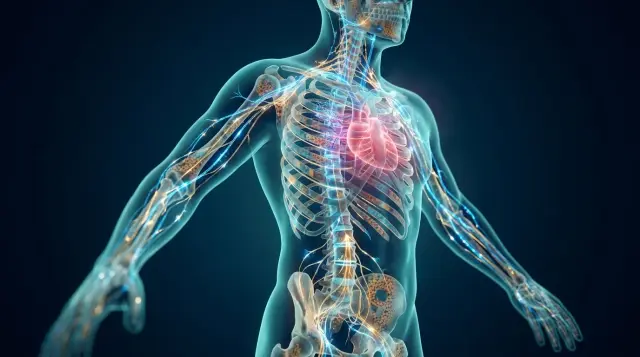
Your body generates enough electricity to power a light bulb, your skeleton rebuilds itself every decade, and your gut houses more bacterial cells than human ones. You're not just living in your body. You're piloting the most sophisticated electrical machine ever assembled.
How Much Electricity Does the Human Body Actually Produce?
Here's a fact that sounds made up but isn't: your body produces enough electricity to power a small light bulb. According to research from the National Institutes of Health, the human body at rest generates roughly 100 watts of power [1]. That energy comes from the metabolic processes happening in every single cell, and a huge chunk of it shows up as electrical signals zipping along your nervous system.
Your heart is the most obvious example. It has its own electrical conduction system, starting with the sinoatrial (SA) node, which fires about 100,000 times per day without any instruction from your brain. An electrocardiogram (EKG) literally measures the electrical voltage your heart produces. Not a metaphor. Measurable voltage from a muscle in your chest.
This is one reason why understanding body science facts and human bioelectricity isn't just academic. If you're curious about how electromagnetic fields interact with the body, it helps to know that your body is already an electrical system. External EMF sources, from cell phones to power lines, exist in the same electromagnetic spectrum your nerves use to communicate. You can Learn About EMF Protection to understand this overlap better.
Quick Q&A
Q: Can you actually measure the electricity the human body produces?
A: Yes. Devices like EKGs, EEGs, and EMGs routinely measure electrical activity from the heart, brain, and muscles, confirming the body generates real, measurable voltage.
The brain alone uses about 20% of the body's total energy, despite making up roughly 2% of body weight, according to the NIH [1]. Most of that energy powers electrical signaling between neurons. You're not just passively existing. You're a walking power plant.
Is It True That Your Skeleton Completely Replaces Itself?
Yes. And honestly, this is one of my favorite anatomy and physiology facts. Your bones are not the dead, dry sticks you saw hanging in your high school science room. They're living tissue, packed with blood vessels, constantly under construction. According to Cleveland Clinic, the adult human skeleton fully remodels itself approximately every 10 years through a process involving osteoclasts (cells that break bone down) and osteoblasts (cells that build it back up) [2].
Think about that for a second. The femur you had at 25 isn't the femur you have at 35. It's been completely rebuilt, piece by piece, cell by cell. This remodeling responds to stress and load, which is why weight-bearing exercise matters so much for bone density. Astronauts lose bone mass in space precisely because their skeletons aren't being loaded by gravity.
Here's another one: human bone is, pound for pound, stronger than steel. A cubic inch of bone can bear a load of roughly 19,000 pounds, about four times the strength of concrete. Your skeleton weighs only about 15% of your total body weight, yet it can handle forces that would buckle most building materials. The femur alone can withstand forces of roughly 1,700 to 1,800 pounds before fracturing.
Oh, and about a quarter of all the bones in your body are in your feet. Each foot has 26 bones, meaning your two feet account for 52 of the body's 206 bones. That engineering allows for the incredible range of motion and balance you use every time you walk, run, or stand on a packed subway without toppling over. If you love weird science, check out 10 Fascinating Facts About Planet Earth: That Sound Too Strange to Be True for more facts that challenge what you think you know.
How Fast Do Nerve Signals Actually Travel?
Fast. Really, really fast. The speed of electrical impulses in the nervous system varies depending on the type of nerve fiber, but myelinated motor neurons can conduct signals at up to 268 miles per hour, or about 120 meters per second. That's faster than a Formula 1 car. According to Harvard Medical School, this speed is made possible by the myelin sheath, a fatty insulation layer that wraps around nerve axons and allows signals to "jump" between gaps called nodes of Ranvier [3].
Not all nerve signals move that fast, though. Pain signals from a stubbed toe travel on slower, unmyelinated C-fibers at roughly 2 miles per hour. That's why there's sometimes a delay between smacking your shin on a coffee table and actually feeling it. Your brain gets the touch signal almost instantly, but the pain arrives a beat later on a slower network.
Here's where it gets interesting from a health perspective. These electrical signals operate on very precise voltage gradients, typically around 70 millivolts across a nerve cell membrane. Anything that disrupts those gradients, whether it's a disease like multiple sclerosis (which damages myelin) or external electromagnetic radiation, can theoretically affect nerve function. This is part of the reason people are increasingly interested in understanding their electromagnetic environment.
If you're curious about how external EM radiation interacts with the body, I'd recommend reading 10 Surprising Facts About Electromagnetic Radiation: That Will Change How You See the World. It adds useful context to what we're talking about here.

Does Your Body Really Contain Trace Amounts of Gold?
It does. The average human body contains approximately 0.2 milligrams of gold, most of it circulating in the blood. You won't get rich from it. At current gold prices, the gold inside you is worth about one-fiftieth of a cent. But the fact that it's there at all tells a fascinating story about human biochemistry and the elemental composition of life.
According to a breakdown of human body composition from research reviewed on PubMed, the body also contains trace amounts of copper, zinc, iron, cobalt, and even elements like arsenic and vanadium [1]. These aren't contaminants. Many of them serve biological functions. Zinc is involved in over 300 enzymatic reactions. Iron is the core of hemoglobin, the molecule that carries oxygen in red blood cells.
What fascinates me most is how much the human body has in common with the Earth itself. We're made of the same stuff. Our iron came from dying stars. The calcium in our bones was forged in stellar explosions billions of years ago. Understanding why body science facts interesting matter sometimes means zooming way out and seeing the bigger picture.
Speaking of the Earth's composition and how it connects to our bodies, you might enjoy 10 Fascinating Facts About Planet Earth: That Sound Too Strange to Be True. The parallels between planetary and human chemistry are genuinely wild.
Why Is Your Gut Called a 'Second Brain'?
Your gut contains around 500 million neurons. That's more than your spinal cord has. Scientists call it the enteric nervous system, and it can operate completely independently of your brain. According to Johns Hopkins Medicine, this network controls digestion, immune responses, and even mood through the gut-brain axis, a bidirectional communication highway that uses both nerve signals and hormones.
A 2016 study led by Ron Sender and colleagues at the Weizmann Institute of Science, published in the journal Cell, estimated that the human gut houses approximately 38 trillion microorganisms. That number actually outnumbers human cells, which come in at around 30 trillion. Your body, in a very real sense, is more bacterial than human. Let that sink in.
These gut microbes produce neurotransmitters like serotonin (about 95% of the body's serotonin is made in the gut), influence inflammation, and may even play a role in conditions like anxiety and depression. Research from Harvard Medical School has shown that the composition of your gut microbiome can be shaped by diet, antibiotics, stress, and environmental exposures [3].
Quick Q&A
Q: Does the gut really produce more serotonin than the brain?
A: Yes. Roughly 95% of the body's serotonin is produced by enterochromaffin cells in the gastrointestinal tract, not in the brain, according to research reviewed by the American Psychological Association.
So when someone says they have a "gut feeling" about something, there's more biology behind that phrase than most people realize. Your gut is quite literally thinking, reacting, and communicating with your brain all day long.
How Does Your Skin Regenerate So Quickly?
Your skin is the body's largest organ, weighing about 8 pounds and covering roughly 22 square feet in the average adult. According to the American Academy of Dermatology, the outer layer, the epidermis, completely renews itself approximately every 27 days. That means you're basically wearing a brand-new suit of skin about 13 times a year.
The process never stops. You shed roughly 30,000 to 40,000 dead skin cells every single hour. Per day, that adds up to about a million cells. Over a lifetime, the average person sheds about 100 pounds of skin. And yes, a significant portion of household dust is dead skin cells. You're welcome for that image.
This constant renewal is one of your body's primary defense mechanisms. Your skin is a barrier against pathogens, UV radiation, and environmental pollutants. It also interacts with electromagnetic fields from devices you carry or wear daily. That's one reason some people choose clothing designed with EMF shielding properties. Proteck'd EMF Protection offers apparel with built-in shielding fabrics, and their Faraday Collection is specifically designed for people who want a layer of protection between their skin and the electromagnetic environment.
The body's regenerative abilities are remarkable, but they aren't infinite. Factors like UV exposure, poor nutrition, and chronic stress all accelerate skin aging and slow regeneration. Why does body science facts interesting matter here? Because knowing how your skin works changes how you care for it.
Can Your Heart Really Generate Its Own Electrical Field?
Absolutely. Your heart is the strongest electrical generator in the body. The HeartMath Institute, a research organization based in Boulder Creek, California, has documented that the heart's electrical field can be detected by magnetometers up to 3 feet away from the body. That's not just interesting. That's bioelectricity you're broadcasting into the space around you.
The heart's conduction system starts at the SA node, which generates about 60 to 100 electrical impulses per minute in a resting adult. These impulses travel through the atria, pause briefly at the AV node, then shoot down the Bundle of His and Purkinje fibers to trigger each heartbeat. The whole sequence takes less than a second. It repeats roughly 100,000 times a day, 365 days a year, for your entire life.
This is bioelectricity in its purest form. And it doesn't happen in a vacuum. The electromagnetic field generated by your heart exists within a broader electromagnetic environment that includes power lines, wireless devices, and other artificial sources. Understanding this overlap is part of why people are paying more attention to electromagnetic fields and health. For a deeper look, check out 10 Surprising Facts About Electromagnetic Radiation: You Won't Believe Are True.
The point isn't to be alarmed. It's to recognize that your body is an electrical system operating in an electrical world. That awareness alone can shift how you think about your daily habits and environment.
What Happens When You Eat? Your Stomach Acid Could Dissolve Metal
Your stomach produces hydrochloric acid with a pH between 1.5 and 3.5. That's acidic enough to dissolve certain metals, including zinc and iron, and to break down a razor blade (though please don't test that). According to MIT research, a standard razor blade would be corroded significantly after about 24 hours in stomach acid.
So why doesn't this acid eat through your stomach? Because the stomach lining regenerates its mucous coating every three to four days. This mucous layer, roughly 1 to 1.5 millimeters thick, acts as a physical barrier between the acid and the stomach wall. When that barrier fails (due to H. pylori infection, excessive NSAID use, or other factors), the result is a peptic ulcer.
Fun connection: your stomach's extreme acidity is also a defense mechanism. It kills most bacteria and pathogens that enter through food. That's part of why food safety matters, but also why your body has evolved backup systems beyond just "chewing carefully." Speaking of food, if you want a lighter read after all this biology, take a detour to Interesting Facts About French Fries. Trust me, it's a palate cleanser.
The stomach's acid production is controlled by the vagus nerve and hormones like gastrin, both of which tie back to the electrical signaling systems we talked about earlier. Everything in the body is connected. Understanding those connections is part of why body science facts matter more than you'd think.
Do Humans Really Shed and Regrow Millions of Cells Every Minute?
Yes. Your body produces approximately 3.8 million cells per second. Not a typo. Per second. According to research published in the journal Cell and cited by the NIH, the human body replaces about 330 billion cells every day, with most of that turnover happening in the gut lining and blood [1].
Red blood cells, for instance, have a lifespan of about 120 days. Your bone marrow cranks out roughly 200 billion new red blood cells every day to replace the old ones. White blood cells turn over even faster, with some types lasting only a few hours before being swapped out.
This constant renewal is why nutrition, sleep, and environmental factors matter so much. Every new cell your body builds requires raw materials: amino acids, fatty acids, vitamins, minerals. If those inputs are poor quality, the cells you build will be poor quality. It's like trying to construct a house with cheap lumber. The structure goes up, but it won't hold as well.
This is also where the conversation about electromagnetic fields and health becomes relevant. If your body is constantly building new cells, and those cells rely on precise electrical signaling to function correctly, then the electromagnetic environment you spend time in is, at minimum, worth thinking about. Many people are choosing to be more intentional about this, whether through reducing screen time, grounding practices, or wearing EMF shielding apparel from brands like Proteck'd EMF Protection.
Why Should You Care About Your Body's Electrical Nature?
If you've made it this far, you've probably noticed a pattern. Almost every amazing body fact circles back to electricity. Your brain thinks with it. Your heart beats because of it. Your nerves communicate through it. Your muscles contract using it. Human bioelectricity isn't a niche topic. It's the operating system running your entire body.
And here's the practical side. We live surrounded by artificial electromagnetic fields: Wi-Fi routers, smartphones, Bluetooth devices, smart meters, power lines. The World Health Organization's International Agency for Research on Cancer (IARC) classified radiofrequency electromagnetic fields as "possibly carcinogenic to humans" (Group 2B) back in 2011. That classification was based on limited evidence, but it was enough to prompt further research that's still ongoing.
Understanding why body science facts interesting matter isn't about fear. It's about informed awareness. When you know your body is an electrical system, you naturally start asking better questions about the electrical environment you spend your time in. You don't have to overhaul your life. But making small, thoughtful choices, like picking clothing from the Faraday Collection that incorporates EMF shielding technology, is one way people are responding to this awareness.
Your body is the most complex, resilient, and astonishing machine on the planet. Learning how it works isn't just interesting. It's empowering. The more you know about the science behind your own biology, the better equipped you are to take care of it. And honestly? It's just really, really cool.
- The human body generates roughly 100 watts of power at rest, mostly through metabolic and electrical processes in cells and nerves.
- Bones are living tissue that fully remodel approximately every 10 years, and pound for pound, bone is stronger than steel.
- Your gut contains about 38 trillion microorganisms and produces roughly 95% of the body's serotonin, earning it the nickname 'second brain.'
- Nerve impulses travel up to 268 mph on myelinated fibers, while pain signals on unmyelinated fibers travel at about 2 mph.
- The human heart generates an electromagnetic field detectable up to 3 feet from the body, highlighting the body's fundamentally electrical nature.
Frequently Asked Questions
Understanding body science facts helps you make better health decisions because you learn how your body's systems actually work. For example, knowing that your skeleton remodels every 10 years explains why weight-bearing exercise and calcium intake matter at every age. Knowledge about your body's electrical nature also helps you think critically about your electromagnetic environment.
The brain uses about 20% of the body's total energy, despite making up only about 2% of body weight. Most of that energy powers the electrical signaling between its roughly 100 billion neurons. At rest, the brain operates on roughly 12 to 20 watts of power.
Yes, on a per-weight basis. A cubic inch of bone can bear about 19,000 pounds of load, making it roughly four times stronger than concrete and comparable to steel in compressive strength. That said, bones can fracture under sudden impact or when weakened by conditions like osteoporosis.
The gut contains about 500 million neurons in the enteric nervous system, which can function independently of the brain. It produces approximately 95% of the body's serotonin and communicates with the brain through the vagus nerve. This gut-brain axis influences mood, digestion, and immune function.
The body produces roughly 3.8 million new cells per second, replacing about 330 billion cells per day. Different cell types have different lifespans: red blood cells last about 120 days, gut lining cells last 3 to 5 days, and skin cells are replaced roughly every 27 days.
This is an active area of research. The body's nervous system operates on precise voltage gradients of about 70 millivolts across cell membranes. External electromagnetic fields exist in overlapping frequency ranges, and the WHO's IARC classified RF-EMF as "possibly carcinogenic" (Group 2B) in 2011. More research is ongoing to understand the full scope of effects.
The fastest nerve signals travel at up to 268 mph (120 meters per second) along myelinated nerve fibers. Slower pain signals on unmyelinated C-fibers travel at only about 2 mph. This speed difference explains why you feel the impact of stubbing your toe before you feel the pain.
Yes. The average human body contains about 0.2 milligrams of gold, primarily circulating in the bloodstream. At current market prices, it's worth less than a penny. The body also contains trace amounts of copper, zinc, cobalt, and other elements that serve various biological functions.
The stomach lining produces a mucous layer about 1 to 1.5 millimeters thick that acts as a barrier between the acid and the stomach wall. This layer completely regenerates every three to four days. When it's compromised by infection or medication overuse, ulcers can develop.
The femur (thigh bone) is the longest and strongest bone in the body. It can withstand compressive forces of roughly 1,700 to 1,800 pounds before fracturing. Its strength comes from both its dense cortical bone structure and its tubular shape, which distributes load efficiently.
References
- National Institutes of Health – The human brain uses roughly 20% of the body's total energy despite being only about 2% of body weight; the body replaces approximately 330 billion cells per day.
- Cleveland Clinic – The adult human skeleton fully remodels itself approximately every 10 years through continuous osteoclast and osteoblast activity.
- Harvard Medical School – Nerve impulse speed is enabled by the myelin sheath allowing saltatory conduction along myelinated neurons; gut microbiome composition is influenced by diet, stress, and environmental exposures.
About the Author
Proteck'd EMF Apparel
Health & EMF Specialists
The Proteck'd team covers EMF protection, silver-fiber apparel, and practical ways to reduce everyday radiation exposure. Every piece Proteck'd ships is designed, tested, and worn by the people who build it.
Get the Free EMF Home Audit Checklist
A room-by-room PDF that walks you through the biggest EMF sources in your house and what to do about each one. No cost, no fluff.
Download the Checklist →✓30-day returns✓Free shipping✓Free returns✓Silver fiber shielding


Hinterlassen Sie einen Kommentar