


10 Surprising Facts About Electromagnetic Radiation: You Won't Believe Are True

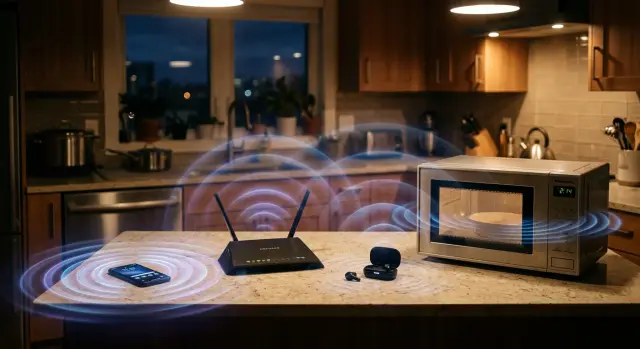
Right now, as you read this, your body is being hit by electromagnetic radiation from dozens of sources. Your phone. Your Wi-Fi router. The Bluetooth in your earbuds. The microwave sitting on your kitchen counter. Even the wiring hidden behind your walls. It never stops. And most of us never think about it.
If you've ever searched for how to block electromagnetic radiation facts, you've probably landed on pages that either scared you senseless or brushed the whole topic off as paranoia. The truth sits somewhere in the middle. Real science has real answers here, and some of them are genuinely fascinating.
I spent a frankly embarrassing amount of time pulling together the most surprising, verifiable facts about electromagnetic radiation. Not conspiracy theories. Not corporate spin. The actual science, the physics, the biology, and the practical realities of living in a world absolutely saturated with EM fields.
Some of these facts will make you rethink your daily habits. Others will just make you sound impressively well-read at dinner parties. Either way, let's get into it.
Does the Inverse Square Law Make Distance the Best EMF Shield?
Fact number one. And honestly, it might be the single most useful thing in this entire article. The inverse square law of physics says that radiation intensity drops proportionally to the square of your distance from the source. In plain English? Double your distance from your phone and you cut exposure by roughly 75%. Triple it, and you're looking at about an 89% reduction [1].
Think about what that actually means day to day. Holding your phone six inches from your face versus setting it on a table two feet away is a massive difference in exposure. Using speakerphone instead of pressing the thing against your ear isn't just more convenient. It's measurably safer, based on basic physics that's been understood for centuries.
The International Commission on Non-Ionizing Radiation Protection (ICNIRP), which sets guidelines used in most countries outside the U.S., explicitly accounts for this distance relationship in its exposure assessments. So when people ask how to block electromagnetic radiation, the simplest answer is often just: move a little farther away.
Quick Q&A
Q: How much does doubling your distance from a radiation source reduce exposure?
A: Roughly 75%, because EMF intensity follows the inverse square law, dropping by a factor of four when distance doubles.
I started keeping my phone on the nightstand instead of under my pillow after learning this. Small change. Real physics behind it. If you want to dig deeper into how our bodies interact with these invisible forces, check out 15 Surprising Facts About the Human Body: You Probably Didn't Know.
What Did the WHO Actually Say About Radiofrequency Radiation?
In 2011, the World Health Organization's International Agency for Research on Cancer (IARC) classified radiofrequency electromagnetic fields as Group 2B, meaning "possibly carcinogenic to humans" [2]. That put RF radiation in the same category as pickled vegetables and talcum powder. Not exactly reason to panic, but not nothing, either.
The classification was based largely on evidence from the Interphone study, a massive 13-country investigation that found a possible link between heavy cell phone use and glioma, a type of brain tumor. The keyword there is "possible." The evidence wasn't strong enough for a definitive causal link, but it was strong enough that the world's leading cancer research body felt it warranted a formal classification.
Here's what a lot of people miss. Group 2B doesn't mean "safe" and it doesn't mean "dangerous." It means the science isn't settled. And given how much our exposure has increased since 2011, with smart home devices, 5G networks, and wearable tech everywhere, many researchers have called for an updated review. The BioInitiative Working Group published a report arguing that existing evidence now supports a stronger classification.
Knowing the facts about electromagnetic radiation and how it's classified helps you make informed decisions. You don't need to panic. But you probably shouldn't wave the conversation away, either. If you're curious about what shielding options exist, Learn About EMF Protection to see what's actually available.
Your body is being hit by electromagnetic radiation from dozens of sources right now, at this very moment. The question isn't whether EMF exists around you. It's whether you understand it well enough to make smart choices about your exposure.
Can Silver Fabric Really Block Over 99% of RF Radiation?
Yes. This one genuinely stunned me the first time I saw the test data. Silver is one of the most conductive elements on Earth, and when it's woven into fabric as fine threads, it creates a flexible Faraday cage effect. Independent lab tests have shown that properly constructed silver-threaded textiles can block more than 99% of radiofrequency radiation across a wide frequency range.
The science behind it is straightforward. A Faraday cage works by distributing electromagnetic charges across its conductive surface, canceling out the field on the interior. Traditional Faraday cages are rigid metal boxes, but the same principle applies when you interlace conductive fibers tightly enough in a woven fabric. The mesh openings just need to be smaller than the wavelength of the radiation you're trying to stop.
This is exactly the technology behind the Faraday Collection from Proteck'd, which uses silver-infused fabrics in everyday clothing like hats, hoodies, and boxers. Sounds futuristic, right? But the physics is actually centuries old. Michael Faraday demonstrated the cage concept back in 1836.
Copper mesh works on similar principles, which is why you'll see it recommended for home shielding projects. But for wearable EMF shielding materials, silver has the edge because it's antibacterial, lightweight, and flexible enough to feel like normal clothing. It's not magic. It's conductivity.
How Much EMF Does Your Wi-Fi Router Actually Emit?
Your Wi-Fi router operates at either 2.4 GHz or 5 GHz (and newer Wi-Fi 6E routers add a 6 GHz band). The power output is typically between 30 and 100 milliwatts, depending on the model and settings. For context, that's significantly less than a cell phone, which can transmit at up to 2 watts during a call.
But here's the catch. Your router is on 24/7. Your phone transmits in bursts. So even though the instantaneous power is lower, the cumulative exposure from a router sitting three feet from your desk for eight hours a day adds up. A study published in Environmental Research in 2018 found that chronic low-level RF exposure from Wi-Fi frequencies triggered oxidative stress markers in animal models.
The practical takeaway? Don't sleep with your router in the bedroom. Put it in a central location, ideally at a reasonable distance from where you spend the most time. Some people put their routers on simple outlet timers to shut them off overnight. Zero cost, and it reduces electromagnetic field exposure during the hours your body is supposed to be recovering.
Speaking of how interconnected our digital world has become, you might enjoy reading about The Most Surprising Facts About How the Internet Works: The Numbers. The sheer volume of data pulsing through the air around us is staggering.

Did the National Toxicology Program Find Cancer Links to Cell Phone Radiation?
This is one of the biggest studies in the history of EMF research, and the results made serious waves. The U.S. National Toxicology Program (NTP), part of the National Institutes of Health, released its final report in 2018 after a $30 million, decade-long study. The conclusion: they found "clear evidence" of heart tumors (malignant schwannomas) in male rats exposed to high levels of RF radiation like that used in 2G and 3G cell phones [3].
They also found "some evidence" of brain tumors in those same male rats. Female rats showed weaker associations. The NTP was careful to note that the exposure levels used in the study were higher than what most humans experience. But the biological mechanism they identified, DNA damage in exposed tissues, was concerning enough to warrant attention.
A parallel study by Italy's Ramazzini Institute, published the same year, found similar tumor types in rats exposed to much lower RF levels, closer to what you'd get from a cell tower. Two independent studies, different countries, converging on the same findings. That gave the results considerably more weight in the scientific community.
Does this prove your phone causes cancer? No. But it's strong enough evidence that the question of how to block electromagnetic radiation, separating facts from fiction, has real scientific backing behind it. Reducing exposure, especially during sleep and for children, is a reasonable precaution given this data.
Why Do Different Countries Have Wildly Different EMF Safety Limits?
This one surprises almost everyone. The FCC in the United States sets the specific absorption rate (SAR) limit for cell phones at 1.6 W/kg, averaged over 1 gram of tissue [1]. The European Union follows ICNIRP guidelines, which set the limit at 2.0 W/kg averaged over 10 grams of tissue. Same type of measurement, different methodology, different numbers.
But it gets wilder. Russia and China maintain limits that are 100 times stricter than FCC standards for certain types of EM radiation exposure. Switzerland, Italy, and India have also adopted precautionary limits well below international norms. The discrepancy comes down to a fundamental disagreement: the U.S. standard is based purely on thermal effects (does the radiation heat tissue?), while other countries factor in potential non-thermal biological effects.
The BioInitiative Report, compiled by 29 scientists from 10 countries, argued in both its 2007 and 2012 editions that existing safety standards are outdated and don't account for non-thermal mechanisms like oxidative stress and disrupted calcium signaling. These are effects observed at power levels far below current limits.
Quick Q&A
Q: Why is the U.S. SAR limit different from Europe's?
A: The FCC measures SAR over 1 gram of tissue at 1.6 W/kg, while ICNIRP averages over 10 grams at 2.0 W/kg, reflecting different assumptions about thermal versus non-thermal risks.
The takeaway? "Safe" is a moving target depending on where you live and which scientific framework your government trusts. That alone is worth knowing.
Is Your Bedroom the Most EMF-Polluted Room in Your Home?
For most people, yes. Count the sources: your phone (often on the nightstand or under your pillow), a Wi-Fi router (sometimes right in the bedroom), a smart TV in standby mode, a baby monitor, a smart speaker, maybe an electric blanket. All of these emit radiofrequency radiation or extremely low frequency (ELF) fields, and you're soaking in them for six to nine hours straight while you sleep.
Research from the University of Melbourne published in 2014 examined the relationship between nighttime EMF exposure and sleep quality. Participants exposed to higher ambient RF fields took longer to reach deep sleep stages and reported feeling less rested. The mechanism is still debated, but melatonin suppression is a leading hypothesis. Some studies have shown that electromagnetic fields can interfere with the pineal gland's production of this sleep hormone.
Practical fixes are simple. Move your phone across the room. Switch your router off at night. Swap the electric blanket for a regular one. And if you want to go further, sleeping in shielded clothing from Proteck'd EMF Protection creates a personal buffer zone without requiring you to rewire your entire house.
If you're fascinated by the history of how we got so surrounded by electrical devices in the first place, take a look at 12 Amazing Facts About the History of Electricity: That Nobody Taught You. We went from zero electrical appliances to dozens per household in barely a century.
Do Natural Minerals Like Shungite Actually Absorb EMF?
Shungite has become a favorite in the wellness community, marketed as a natural EMF absorber because it contains fullerenes, a unique carbon molecular structure. There's a kernel of truth here. Research published in the journal Nanotechnology in 2009 confirmed that fullerenes do have electromagnetic shielding properties at certain frequencies.
However. Here's what the marketing usually leaves out. A small polished stone sitting on your desk is not going to meaningfully shield you from your laptop's emissions. The shielding effectiveness of any material depends on its thickness, conductivity, and the frequency of the radiation it's up against. A thin piece of shungite might reduce some EMF, but that reduction is minimal compared to purpose-built conductive materials like silver fabric or copper mesh.
Magnetized hematite is another popular option. It's claimed to "ground" electromagnetic energy, but grounding in the electrical engineering sense requires an actual conductive path to earth ground. Wearing a hematite bracelet doesn't create that path. It might feel good, and there could be placebo benefits worth something to you, but the physics doesn't support the EMF claims.
If you're serious about blocking EM radiation rather than just symbolically addressing it, engineered EMF shielding materials with tested attenuation values are the way to go. Science over sentiment, every time.
What's the Difference Between Ionizing and Non-Ionizing Radiation?
This distinction is fundamental, and getting it wrong fuels a lot of unnecessary fear (and also a lot of false reassurance). Ionizing radiation, which includes X-rays, gamma rays, and ultraviolet light at the upper end, has enough energy to knock electrons off atoms. That's how it damages DNA. That's why we wear lead aprons at the dentist.
Non-ionizing radiation covers everything from visible light down through infrared, microwaves, radiofrequency waves, and extremely low frequency fields. Your phone, your microwave oven, your Wi-Fi router, your power lines: all non-ionizing. The photon energy isn't sufficient to break chemical bonds directly. That's the basis for the argument that it's inherently safe.
But "non-ionizing" doesn't automatically mean "no biological effect." The NTP study showed tumor development from non-ionizing RF exposure [3]. Research from 2015 published in Electromagnetic Biology and Medicine documented oxidative stress from Wi-Fi frequency exposure in multiple cell and animal studies. The mechanism isn't the same as ionizing radiation, but that doesn't mean the effect is zero.
Understanding electromagnetic radiation facts means appreciating this nuance. It's not a simple either/or where non-ionizing is perfectly harmless and ionizing is deadly. Reality sits on a spectrum. Literally. For more on the weird science of waves and space, Interesting Facts About The Moon has some great tidbits about cosmic radiation exposure.
Can You Actually Build a DIY Faraday Cage at Home?
You absolutely can, and people do it all the time. The concept is simple: create an enclosure made of conductive material that's continuous enough to block electromagnetic waves from getting in. A basic version is literally a metal mesh box connected to a ground wire. People use them to shield routers, smart meters, and even entire rooms.
Aluminum foil is the cheapest starting point. Researchers at the Technical University of Denmark tested various household shielding setups and found that even a few layers of aluminum foil reduced RF penetration by 85% to 95% at common Wi-Fi frequencies. Copper mesh performs even better, especially at lower frequencies, and it's durable enough for permanent installations.
EMF shielding paint is another option for rooms. Products like YShield HSF54 contain nickel and carbon and can reduce RF fields by up to 99% when properly applied and grounded. That word "grounded" is doing heavy lifting in that sentence. Without a proper ground connection, conductive paint can actually reflect signals around unpredictably, sometimes making localized exposure worse.
For personal, everyday protection without the construction project, wearable Faraday cage technology has come a long way. The Faraday Collection applies these same shielding principles to clothing you'd actually want to wear. Same physics, just scaled down to fit your wardrobe instead of your walls.
Key Takeaways
Frequently Asked Questions
How do you block electromagnetic radiation in your home?
The most effective approaches are increasing distance from sources, turning off devices when you're not using them, and using shielding materials like copper mesh, aluminum foil, or EMF shielding paint. Grounding your shielding setup properly is key to making it work. A lot of people also put Wi-Fi routers on timers so they shut off overnight and cut exposure while sleeping.
Does aluminum foil actually block EMF radiation?
It does. Testing has shown that a few layers can reduce Wi-Fi frequency radiation by 85% to 95%. It's not a perfect solution because gaps and seams reduce effectiveness, but as a low-cost DIY option, it works surprisingly well for targeted shielding.
Is EMF from Wi-Fi routers dangerous?
Wi-Fi routers emit non-ionizing RF radiation at relatively low power levels, between 30 and 100 milliwatts. That's well below current safety limits, but some studies have shown oxidative stress markers in animal models from chronic Wi-Fi frequency exposure. The risk is likely low for most people, though keeping the router out of your bedroom is a sensible precaution.
What is the safest distance to keep from your cell phone?
Even a few inches makes a meaningful difference thanks to the inverse square law. Most phone manufacturers recommend keeping the device at least 5 to 15 millimeters from your body. You can find this buried in the fine print of your phone's settings. Using speakerphone or a wired headset significantly reduces head exposure.
Can clothing really protect you from electromagnetic radiation?
Yes, when the clothing contains conductive fibers like silver or copper. Silver-threaded fabrics have been lab-tested to block over 99% of radiofrequency radiation. Proteck'd's Faraday Collection uses this technology in everyday garments. The conductive mesh just needs to be dense enough relative to the wavelength being blocked.
What did the NTP study find about cell phone radiation and cancer?
The NIH's National Toxicology Program found clear evidence of malignant heart tumors in male rats exposed to RF radiation at 2G and 3G frequencies. The study cost $30 million and took over a decade. Exposure levels were higher than typical human use, but Italy's Ramazzini Institute found similar tumors at lower exposure levels, which strengthened the findings.
Does shungite protect against EMF radiation?
Shungite contains fullerenes, which do have some electromagnetic shielding properties. But a small decorative stone provides negligible protection compared to engineered materials. Shielding capability depends on thickness, conductivity, and frequency. For meaningful protection, tested conductive fabrics and metals are far more effective.
Why are EMF safety standards different in every country?
It comes down to whether a government considers only thermal effects or also factors in non-thermal biological effects. The U.S. FCC standard focuses on thermal effects and sets SAR at 1.6 W/kg. Countries like Russia and China account for non-thermal effects and maintain limits up to 100 times stricter. There's no global consensus on the science yet.
Is 5G more dangerous than 4G?
5G uses a wider range of frequencies, including millimeter waves above 24 GHz that don't penetrate skin as deeply as lower frequencies. The energy per photon is still non-ionizing. There isn't enough long-term data to definitively compare health risks, but 5G's higher frequencies are more easily blocked by walls, clothing, and even leaves.
What is the best material for blocking EMF?
Silver, copper, and nickel are among the most effective EMF shielding materials because of their high electrical conductivity. Silver is especially popular for wearable applications since it's lightweight, flexible, and antimicrobial. For building applications, copper mesh and nickel-based shielding paints are widely used. Effectiveness depends on material thickness and proper grounding.
Do EMF protection stickers on phones work?
There's no credible scientific evidence that small adhesive stickers or chips can meaningfully reduce EMF emissions from a cell phone. The FTC has actually taken enforcement action against companies making unsubstantiated claims about these products. Effective shielding requires covering a substantial surface area with conductive material, which a tiny sticker simply cannot do.
References
- National Institute of Environmental Health Sciences (NIEHS) – Overview of electromagnetic fields, the inverse square law's effect on exposure, and FCC SAR limits of 1.6 W/kg for cell phones
- World Health Organization / IARC – IARC classified radiofrequency electromagnetic fields as Group 2B (possibly carcinogenic to humans) in 2011
- National Toxicology Program (NIH) – The NTP found clear evidence of malignant heart tumors (schwannomas) in male rats exposed to high levels of RF radiation used by cell phones
About the Author
Proteck'd EMF Apparel
Health & EMF Specialists
The Proteck'd team covers EMF protection, silver-fiber apparel, and practical ways to reduce everyday radiation exposure. Every piece Proteck'd ships is designed, tested, and worn by the people who build it.
Protect Yourself Today
Proteck'd Faraday and silver fiber apparel is engineered to shield your body from everyday EMF exposure. Built for real life, tested for real results.
Shop EMF Protection →✓30-day returns✓Free shipping✓Free returns✓Silver fiber shielding


Hinterlassen Sie einen Kommentar