


12 Fascinating Facts About Nature: That Sound Too Strange to Be True

A banana is radioactive. Lightning produces gamma rays powerful enough to rival a medical scanner. And there's a microscopic animal that can survive the vacuum of outer space. If any of that sounds like fiction, welcome to reality. It's stranger than you'd guess.
So why does nature fascinating facts matter to anyone beyond trivia night regulars? Because these aren't party tricks. They reshape how we understand radiation, biology, and the invisible forces constantly at work around us. When you find out the Earth generates a massive electromagnetic shield, or that your own body emits a small amount of radiation, familiar things start looking completely different.
I've spent a lot of time reading research papers on natural radiation, bizarre animal behaviors, and ecosystem oddities. I keep finding facts that make me stop and re-read, sure I must have misunderstood something. Nope. They're real. Every last one.
This isn't a listicle of random "fun facts" pulled from a meme page. These are 12 verified, peer-reviewed, genuinely strange truths about the natural world. Some connect to radiation science. Some reveal animal abilities that put our best technology to shame. All of them will make you question whether you really know the planet you live on.
If you enjoyed our earlier posts on 7 Fascinating Facts About Nature: That Sound Too Strange to Be True or 10 Fascinating Facts About Nature: That Sound Too Strange to Be True, consider this the next chapter. Let's get into it.

Are Bananas Actually Radioactive, and Should You Care?
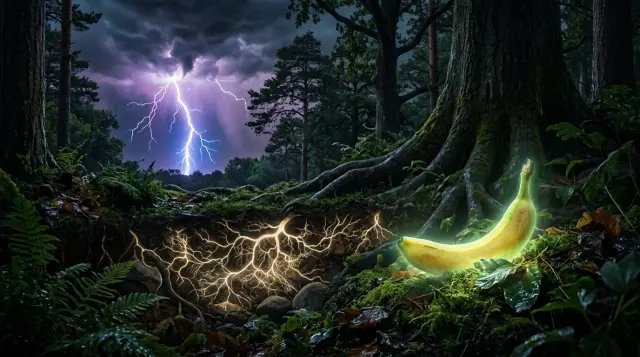
Yes, bananas are radioactive. Not in a "run for cover" way, but in a measurable, scientific way. Each banana contains roughly 15 becquerels of radiation thanks to potassium-40, a naturally occurring radioactive isotope [1]. Scientists even created something called the Banana Equivalent Dose (BED) as an informal way to explain radiation exposure to the public.
Here's the thing, though. You'd need to eat about 10 million bananas in one sitting for the radiation to be lethal. Your body regulates potassium levels tightly, so the extra potassium-40 from a banana gets flushed out before it accumulates. It's a perfect example of why context matters when we talk about radiation.
And bananas aren't alone. Brazil nuts are actually more radioactive, packing up to 40-260 becquerels per kilogram because their trees have deep root systems that absorb radium from the soil. The point isn't to scare you away from trail mix. It's to show that natural radiation is everywhere, and understanding it helps you make smarter decisions about the radiation sources you can actually control.
Quick Q&A
Q: How much radiation does a banana actually emit?
A: About 15 becquerels from potassium-40, which is roughly 0.1 microsieverts per banana, a dose far too small to cause any health effects.
That awareness is actually why companies like Proteck'd EMF Protection exist. Natural radiation sources are mostly harmless, but the electromagnetic fields from our tech devices are a different conversation entirely. If you're curious about how EMF shielding works, their Learn About EMF Protection page breaks it down clearly.
Does Lightning Really Produce Gamma Rays?
This one floored me the first time I read about it. Lightning doesn't just create visible light, heat, and thunder. It also generates terrestrial gamma-ray flashes (TGFs), bursts of high-energy electromagnetic radiation that can reach above 20 million electron volts. According to NASA's Fermi Gamma-ray Space Telescope data, these flashes were confirmed in 1994 and have been studied extensively since [2].
For perspective, a medical X-ray operates at around 20,000 to 150,000 electron volts. A gamma-ray flash from a thunderstorm can be over 100 times more energetic. These bursts last less than a millisecond. They're generated by the intense electric fields inside thunderclouds accelerating electrons to near light speed.
Researchers at the University of Tokyo published findings in 2017 showing that lightning can even trigger nuclear reactions in the atmosphere, producing radioactive isotopes like carbon-13 and nitrogen-15. So the next time someone tells you lightning is "just static electricity," you can let them know it's also a particle accelerator.
This is one of the reasons why understanding nature's relationship with electromagnetic radiation matters so much. The natural world is full of EM fields, from the planet's own magnetic shield to the bioelectricity running through your nervous system. We covered more of this in The Fascinating Science of Electromagnetic Waves: What Nobody Taught You in School, and it's one of those rabbit holes worth going down.
Nature doesn't just contain radiation. It runs on it. From the Earth's magnetic field shielding us from solar wind to the potassium-40 in your own bones, understanding how the natural world actually works is the first step to making smarter decisions about the electromagnetic environment we create for ourselves.
How Do Trees Talk to Each Other Underground?
This sounds like something from a fantasy novel, but it's well-documented ecology. Trees communicate and share resources through vast underground mycorrhizal fungal networks, sometimes called the "Wood Wide Web." Ecologist Suzanne Simard at the University of British Columbia pioneered this research in the late 1990s, showing that Douglas fir and paper birch trees actively exchange carbon through these fungal connections [3].
Here's the really wild part. Mother trees can recognize their own seedlings and send them more nutrients than they send to strangers. They can also send chemical warning signals when they're under attack by insects, prompting neighboring trees to ramp up their defenses. This isn't metaphor. These are measurable chemical transfers happening through fungal hyphae in the soil.
A single fungal network can connect dozens of trees across a forest floor. When a tree is dying, it sometimes dumps its remaining carbon into the network, essentially donating its resources to the community. Simard's 2021 book "Finding the Mother Tree" brought this research to a wider audience, but the science has been building for over two decades.
Why does nature fascinating facts matter in cases like this? Because it changes how we approach forestry, conservation, and even urban planning. Clear-cutting a forest doesn't just remove trees. It destroys an entire communication infrastructure that took decades to develop. These strange ecosystem facts reveal just how interconnected and sophisticated the natural world really is.

Can Tardigrades Really Survive in Outer Space?
They can. And they have. In 2007, the European Space Agency sent tardigrades (water bears) into low Earth orbit on the FOTON-M3 mission. These microscopic animals were exposed to the vacuum of space, cosmic radiation, and ultraviolet radiation up to 1,000 times more intense than on Earth's surface. Many of them survived. Some even reproduced afterward [4].
Tardigrades pull this off by entering a state called cryptobiosis, where they essentially shut down their metabolism to near zero. They lose almost all the water in their bodies, curl into a tiny ball called a "tun," and can stay in that state for decades. When conditions improve, they rehydrate and carry on like nothing happened.
A 2019 study published in Scientific Reports found that tardigrades produce a unique protein called Dsup (Damage Suppressor) that shields their DNA from radiation damage. Researchers at the University of Tokyo demonstrated that when this protein was introduced into human cells in a lab, those cells showed about 40% less DNA damage from X-rays.
Quick Q&A
Q: What is the Dsup protein found in tardigrades?
A: Dsup (Damage Suppressor) is a unique tardigrade protein that physically shields DNA from radiation, reducing X-ray damage by roughly 40% when tested in human cell cultures.
Think about that for a second. A creature smaller than a period on this page has radiation-shielding biology that could eventually influence human medicine. That's not science fiction. That's a peer-reviewed fact.
What Makes the Mantis Shrimp's Vision So Extraordinary?
Humans have three types of color-receptor cells (cones) in our eyes, allowing us to see roughly a million color variations. The mantis shrimp has 16. That includes the ability to perceive ultraviolet light and polarized light, wavelengths completely invisible to us.
Research published in the journal Science in 2014 by a team at the University of Queensland showed that mantis shrimp don't process color the way we do. Instead of blending wavelengths to create new perceived colors (like our brains do), they appear to recognize colors directly through a scanning process, almost like a barcode reader. It's a fundamentally different approach to vision, and we're still trying to fully understand it.
Then there's the punch. The mantis shrimp's strike is one of the fastest movements in the animal kingdom, accelerating at roughly 10,400 g-force and creating cavitation bubbles that reach nearly the temperature of the sun's surface (around 4,700°C). These shrimp are basically tiny, rainbow-seeing, superheated punch machines.
Strange animal behaviors like these remind us that evolution has solved problems in ways human engineering hasn't matched yet. The mantis shrimp's polarized light detection, for example, has inspired research into new types of cancer detection imaging at Washington University in St. Louis. Nature isn't just weird for the sake of it. It's an R&D lab that's been running for 3.8 billion years.
Is It True That Earth's Magnetic Field Protects Us From Solar Radiation?
Absolutely. And the scale of this protection is staggering. Earth's magnetic field, generated by the churning of molten iron in the planet's outer core, extends tens of thousands of kilometers into space, forming a region called the magnetosphere. According to the European Space Agency's Swarm mission data, this field deflects the vast majority of the solar wind, a stream of charged particles traveling at 400 to 800 kilometers per second.
Without the magnetosphere, solar radiation would strip away the ozone layer and expose the surface to lethal levels of ultraviolet and cosmic radiation. Mars is the cautionary tale. It lost its global magnetic field roughly 4 billion years ago, and solar wind gradually eroded most of its atmosphere. NASA's MAVEN mission confirmed this atmospheric loss in 2015.
Here's an interesting twist. Earth's magnetic field isn't static. It fluctuates, weakens, and even reverses polarity over geological time. The last full reversal (the Brunhes-Matuyama reversal) happened about 780,000 years ago. Right now, the field is weakening by about 5% per century, and the South Atlantic Anomaly represents a region where the field is notably weak, causing increased radiation exposure for satellites passing through it.
Understanding natural electromagnetic fields is what makes the conversation about man-made EM radiation so interesting. Nature built an entire planetary shield to protect life from harmful electromagnetic radiation. If you're interested in personal-scale EM shielding, the Faraday Collection from Proteck'd uses similar principles of electromagnetic shielding, just sized for everyday wear rather than an entire planet.
Do Dolphins Really Have Names for Each Other?
They do. Bottlenose dolphins develop unique "signature whistles" that function as names. Research led by Dr. Vincent Janik at the University of St Andrews, published in the Proceedings of the National Academy of Sciences (PNAS) in 2013, demonstrated that dolphins respond selectively when they hear their own signature whistle played back to them. They can also call specific individuals by copying that individual's whistle.
This isn't just sound recognition. It's referential communication. A dolphin can "say" another dolphin's name when that individual isn't even present, which implies a level of abstraction previously thought to be unique to humans. They develop these whistles in the first few months of life and keep them for decades.
Even more interesting, dolphins in different pods develop distinct whistling "dialects." Pods that interact frequently tend to develop more similar acoustic patterns, suggesting a form of cultural exchange. This research keeps pushing the boundary of what we thought only our species could do.
For more weird science facts about the natural world that challenge our assumptions, check out 12 Fascinating Tech Facts That Sound Too Weird to Be True: The Complete List. The line between nature and technology gets blurrier the more you learn.
Why Does Your Own Body Emit Radiation?
Here's one that catches people off guard. Your body is slightly radioactive. The average adult human contains about 7,000 becquerels of radioactivity, mostly from potassium-40 and carbon-14, both natural isotopes present in every living thing [1]. You are, technically, a low-level radiation source.
Your body also emits infrared radiation (heat) constantly, peaking at a wavelength of about 10 micrometers. This is how thermal imaging cameras work. They're not "seeing" through walls. They're detecting the electromagnetic radiation your body naturally gives off. At rest, you radiate about 100 watts of thermal energy, roughly the same as a standard incandescent light bulb.
On top of that, your heart generates an electrical field that can be measured several feet away from your body, and your brain produces electromagnetic waves detectable by EEG machines. The HeartMath Institute has measured the heart's electromagnetic field extending up to 3 feet from the body using magnetometers.
So when people ask why does nature fascinating facts matter, this is a perfect case study. You ARE nature. Your body is a walking electromagnetic system, emitting radiation, generating electrical fields, and interacting with the EM environment around you constantly. That's exactly why some people choose to be thoughtful about the electromagnetic fields they're exposed to from devices, and why products like those from Proteck'd EMF Protection exist for people who want to manage that exposure.
Can Plants Really Grow Faster When Exposed to Certain Sounds?
This one sits right at the edge of mainstream science, but the research is more compelling than you might expect. A well-known 2007 study by Dr. T.C. Singh at Annamalai University in India found that certain sound frequencies could increase plant growth rates by up to 20%. More recently, a 2018 study published in Ecology and Evolution showed that plants exposed to pollinator sounds (buzzing at around 200 Hz) produced nectar with higher sugar concentrations.
That second finding came from Dr. Lilach Hadany at Tel Aviv University, who studied evening primrose flowers. Within three minutes of being exposed to the sound of a bee buzzing, the flowers increased their nectar sugar concentration by about 20%. The flowers appeared to use their petals as acoustic receivers, vibrating in response to specific sound frequencies.
Does this mean playing Beethoven to your tomatoes will double your harvest? Probably not. The effect seems frequency-specific and species-dependent. But the underlying principle, that plants can detect and respond to vibrations in their environment, is well-supported. It's another example of how the natural world perceives stimuli we'd normally associate only with animals.
Bamboo, by the way, holds the record as the world's fastest-growing plant. According to Guinness World Records, certain bamboo species can grow up to 91 centimeters (about 36 inches) in a single 24-hour period. No sound tricks needed. That's just raw evolutionary optimization.
How Do Animals Navigate Using Earth's Electromagnetic Field?
Multiple animal species find their way using the Earth's magnetic field, a sense called magnetoreception. Sea turtles, salmon, migratory birds, and even some bacteria have been shown to detect magnetic fields and use them for orientation. A 2018 study in Nature reported that the protein cryptochrome, found in the eyes of European robins, is sensitive to magnetic fields and likely plays a role in their ability to "see" the Earth's magnetic lines [2].
Sea turtles offer one of the most dramatic examples. Loggerhead sea turtles hatching on beaches in Florida can detect both the inclination and intensity of the Earth's magnetic field, which gives them a kind of built-in GPS. Research by Dr. Kenneth Lohmann at the University of North Carolina demonstrated that these turtles can distinguish between magnetic fields characteristic of different ocean regions, allowing them to cross entire ocean basins.
Even honeybees have magnetite crystals in their abdomens that appear to help them orient themselves. And monarch butterflies use a combination of sun position and magnetic field detection during their 3,000-mile migration from Canada to central Mexico. The precision is astonishing. They arrive at the same grove of trees their great-grandparents left months before.
These strange ecosystem facts about natural electromagnetic perception are a reminder that EM fields aren't some abstract physics concept. They're a fundamental part of how life on this planet works. If you want to understand more about how electromagnetic fields interact with biology, Learn About EMF Protection is a good starting point.
What Are the Strangest Examples of Natural Radiation on Earth?
Beyond bananas and your own body, Earth has some genuinely extreme natural radiation sources. The natural nuclear fission reactor at Oklo in Gabon, Africa, is probably the most mind-bending example. About 1.7 billion years ago, natural conditions in a uranium deposit created a sustained nuclear chain reaction that ran for hundreds of thousands of years. French physicist Francis Perrin discovered evidence of this in 1972, and the finding was published in Comptes Rendus.
Then there's Ramsar, Iran, a city with some of the highest levels of natural background radiation on Earth. Residents in certain areas receive annual radiation doses up to 260 millisieverts, more than 100 times the global average of about 2.4 millisieverts per year. Studies published in the Journal of Environmental Radioactivity have shown that long-term residents appear to have developed some degree of radioresistance, with lower rates of chromosome aberrations than expected.
Radon gas, which seeps from uranium-bearing rock and soil, is the largest source of natural radiation exposure for most people. The U.S. Environmental Protection Agency (EPA) estimates that radon causes about 21,000 lung cancer deaths per year in the United States. It's odorless and colorless, accumulating in basements and ground-floor rooms.
Understanding these natural radiation sources puts man-made electromagnetic fields in context. We've always lived alongside radiation. The question isn't whether to avoid radiation entirely (you can't), but which exposures you can control and minimize. That philosophy is what makes understanding why nature fascinating facts matter so practical, not just interesting. And it's the same thinking behind Proteck'd's approach to wearable EMF shielding, using silver-infused fabrics inspired by Faraday cage principles. Check out the Faraday Collection if you want to see the technology in action.
Why Do These Facts About the Natural World Actually Matter?
I'll be honest. When I first started compiling these facts, the motivation was partly just amazement. Gamma rays from lightning? Radioactive bananas? A microscopic bear that laughs off the vacuum of space? It's endlessly entertaining stuff. But the deeper I went, the more I realized these strange nature facts connect to something genuinely important.
They change how you think about risk, about radiation, and about the invisible forces shaping your daily life. When you understand that you're already bathed in natural electromagnetic radiation every second of every day, the conversation about man-made EMF from phones, Wi-Fi routers, and smart meters becomes more nuanced. You stop thinking in terms of absolute danger and start thinking about dose, duration, and controllability.
Why does nature fascinating facts matter beyond trivia? Because scientific literacy isn't just about memorizing information. It's about building a mental framework that helps you make better decisions. When you know that Earth has its own electromagnetic shield, and that your body generates its own EM fields, you're better equipped to evaluate claims about EMF exposure and protection.
That matters whether you're choosing to test your home for radon, investing in EMF-shielding clothing, or simply deciding which science headlines to take seriously. Knowledge about the natural world, the genuinely weird and wonderful parts, makes you a sharper thinker. Period.
Key Takeaways
Frequently Asked Questions
Why does nature fascinating facts matter for everyday life?
Because they build scientific literacy that directly affects your decisions. Understanding natural radiation, for example, helps you evaluate claims about man-made EMF with more nuance. Knowing that your body already emits about 7,000 becquerels of radiation puts device emissions in a clearer context. It's about thinking more critically, not just collecting trivia.
Are bananas dangerous because they're radioactive?
Not remotely. A banana contains about 15 becquerels of potassium-40, which translates to roughly 0.1 microsieverts of radiation. You'd need to eat around 10 million bananas in one sitting for the dose to be lethal. Your body regulates potassium levels tightly, flushing out excess before it accumulates.
Can tardigrades survive nuclear radiation?
Yes. Tardigrades can survive radiation doses hundreds of times higher than what would kill a human. A 2007 ESA experiment confirmed they can survive direct space exposure, including cosmic radiation. They produce a unique protein called Dsup that physically shields their DNA from radiation damage.
Do trees really communicate with each other?
They do, through underground mycorrhizal fungal networks. Ecologist Suzanne Simard at the University of British Columbia documented that trees exchange carbon, nutrients, and even chemical warning signals through these networks. Mother trees can recognize their own seedlings and send them extra resources.
How does Earth's magnetic field protect us from radiation?
The magnetosphere, generated by molten iron in Earth's outer core, deflects most of the solar wind's charged particles before they reach the surface. Without it, solar radiation would strip away the ozone layer and make the surface uninhabitable. Mars lost its magnetic field about 4 billion years ago, and NASA's MAVEN mission confirmed that solar wind then eroded most of its atmosphere.
Does the human body emit electromagnetic radiation?
Yes. Your body constantly emits infrared radiation (about 100 watts of thermal energy at rest), and your heart generates an electromagnetic field measurable up to 3 feet away. You also carry about 7,000 becquerels of radioactivity from naturally occurring potassium-40 and carbon-14.
Can animals really sense electromagnetic fields?
Multiple species use magnetoreception to detect Earth's magnetic field. Sea turtles use it to cross ocean basins, European robins use the protein cryptochrome in their eyes to perceive magnetic lines, and monarch butterflies rely on it during their 3,000-mile annual migration. Even some bacteria contain magnetic particles for orientation.
What is the most radioactive natural place on Earth?
Ramsar, Iran, has some of the highest natural background radiation levels on Earth. Residents in certain areas receive annual doses up to 260 millisieverts, over 100 times the global average of about 2.4 millisieverts per year. Interestingly, studies suggest long-term residents may have developed some degree of radioresistance.
Is radon gas dangerous?
Yes. Radon is the largest source of natural radiation exposure for most people and a serious health concern. The U.S. EPA estimates it causes about 21,000 lung cancer deaths per year in the United States. It's an odorless, colorless gas that seeps from uranium-bearing soil and accumulates in enclosed spaces like basements.
What is the Banana Equivalent Dose?
The Banana Equivalent Dose (BED) is an informal unit of radiation exposure used to explain radiation levels to the public. One BED equals approximately 0.1 microsieverts, the amount of radiation you'd absorb from eating a single banana. It helps make abstract radiation measurements more relatable, though it's not used in formal scientific literature.
References
- U.S. Environmental Protection Agency – Natural radiation sources including potassium-40, carbon-14, and radon contribute to background radiation exposure. Radon causes approximately 21,000 lung cancer deaths per year in the U.S.
- National Aeronautics and Space Administration (NASA) via Nature.com – Lightning produces terrestrial gamma-ray flashes (TGFs) with energies exceeding 20 million electron volts, and animals use cryptochrome proteins for magnetic field detection.
- Proceedings of the National Academy of Sciences (PNAS) – Suzanne Simard's research documented carbon exchange between trees through mycorrhizal fungal networks in forest ecosystems.
- National Institutes of Health (PubMed) – Tardigrades survived exposure to space vacuum and cosmic radiation during the FOTON-M3 mission (2007 ESA experiment), with some individuals reproducing after return to Earth.
About the Author
Proteck'd EMF Apparel
Health & EMF Specialists
The Proteck'd team covers EMF protection, silver-fiber apparel, and practical ways to reduce everyday radiation exposure. Every piece Proteck'd ships is designed, tested, and worn by the people who build it.
Protect Yourself Today
Proteck'd Faraday and silver fiber apparel is engineered to shield your body from everyday EMF exposure. Built for real life, tested for real results.
Shop EMF Protection →✓30-day returns✓Free shipping✓Free returns✓Silver fiber shielding


Hinterlassen Sie einen Kommentar