


12 Mind-Blowing Facts About The Invisible Forces Around Us: You Won't Believe Are True

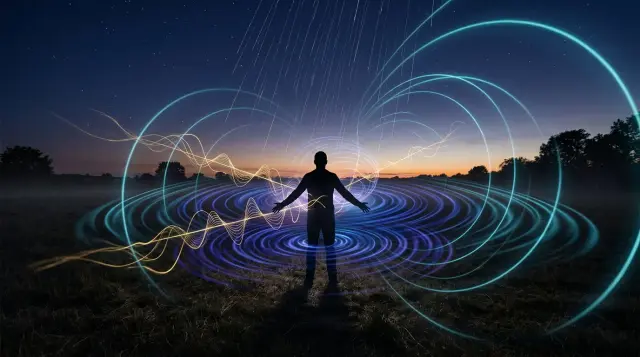
Right now, invisible waves are passing through your skull. Not metaphorically. Literally. Radio signals, Wi-Fi transmissions, cellular data, even the faint hum of Earth's own magnetic field are all moving through you as you read this sentence. You can't feel a single one of them.
So what is physics facts mind blowing, really? It's the moment you realize the universe runs on rules so bizarre, so counterintuitive, that even the scientists who discovered them struggled to believe their own math. Time doesn't tick at the same rate everywhere. Solid objects are almost entirely empty space. Particles on opposite sides of a galaxy can influence each other instantly.
I spent weeks pulling together the most astonishing, verified facts about the invisible forces shaping your daily life. Some come from Nobel Prize-winning experiments. Others come from NASA missions and WHO research papers. All of them will change how you think about the air around you.
What makes this list different from the typical "cool science facts" roundup? I'm connecting these physics phenomena directly to you. Your body, your home, and the devices you carry everywhere. Because the most surprising invisible force most people never consider is the one radiating from the phone in their hand right now.
Twelve facts. Zero fluff. All verified. Let's go.
Does Time Actually Slow Down Near Your Phone?
This sounds like something from a Christopher Nolan movie. But Einstein figured it out in 1915. His general theory of relativity predicts that gravity warps spacetime itself, meaning clocks tick slower in stronger gravitational fields. NASA's Gravity Probe B mission, launched in 2004 and reporting results in 2011, confirmed this with extraordinary precision [1].
Here's where it gets personal. GPS satellites orbiting 20,200 kilometers above Earth experience weaker gravity than devices on the ground. Their onboard atomic clocks actually tick 38 microseconds faster per day than clocks on Earth's surface. Without correcting for this, your Google Maps would drift by about 10 kilometers daily. Every single time you use GPS navigation, engineers are accounting for Einstein's time dilation. That's not theory. That's your Tuesday morning commute.
Now apply that thinking to electromagnetic fields closer to home. Your phone, your router, your smart meter, they're all emitting invisible energy that follows the same fundamental physics governing time dilation. These electromagnetic waves travel at the speed of light, roughly 299,792 kilometers per second. The same equations Einstein used to describe warped time also describe the behavior of the radiation pulsing from every device in your house. If you want to Learn About EMF Protection, understanding the physics behind these fields is the first step.
Quick Q&A
Q: Do GPS satellites really have to account for time dilation?
A: Yes, without relativistic corrections of about 38 microseconds per day, GPS positioning would accumulate roughly 10 km of error daily, making navigation useless.
Are You Really Made of Exploded Stars?
Yes. And it's not just poetic. It's backed by hard astrophysics. According to research from Arizona State University's School of Earth and Space Exploration, about 97% of the human body's mass is made of elements forged inside stars. Carbon, nitrogen, oxygen, iron. All of it was cooked in stellar cores billions of years ago.
When massive stars burn through their nuclear fuel, they explode in supernovae, scattering heavy elements across space. Those elements eventually clump together into planets, oceans, and you. The calcium in your bones was produced in a dying star. The iron carrying oxygen through your blood was once part of a stellar explosion. NASA's Dr. Ashley King put it simply: "We are made of star stuff."
What's fascinating is that this same cosmic process created the elements we now use to shield ourselves from electromagnetic radiation. Silver, for example, was forged in neutron star collisions, one of the most violent events in the universe. Today, that same element is woven into fabrics designed to block EM radiation from devices. The Faraday Collection uses silver-infused textiles for exactly this purpose, turning a cosmic element into everyday protection.
If you're curious about how your body interacts with these invisible forces on a biological level, check out 12 Mind-Blowing Facts About the How Your Body Works: You Probably Didn't Know. The connection between physics and biology runs deeper than most people realize.
You've never truly touched anything in your life. The electromagnetic force between atoms keeps you hovering above every surface by an infinitesimal distance. The same invisible force that makes your chair feel solid is the one radiating from every device you own.
What Happens When Atoms Never Actually Touch?
Here's something that will wreck your sense of reality. You have never truly touched anything. Not a table. Not another person. Nothing. When you press your hand against a surface, the electrons in your skin atoms and the electrons in the surface atoms repel each other through electromagnetic force. You're hovering above everything by an infinitesimally small distance. Always.
That's because atoms are 99.9999999999996% empty space. If you removed all the empty space from every atom in every human on Earth, the remaining matter would fit inside a single sugar cube. Not an exaggeration. That's just physics. The nucleus of an atom compared to the atom itself is like a marble sitting in the center of a football stadium.
So what gives matter its "solidity"? Electromagnetic force. The same fundamental force that creates the fields radiating from your laptop and microwave is the force that makes your chair feel solid beneath you. It's all electromagnetism, from the quantum scale to the size of your living room. Once you understand this, the idea of electromagnetic radiation becomes a lot less abstract. These aren't exotic laboratory phenomena. EM radiation is the same force holding your coffee mug together.
For more surprising science facts that sound like fiction, take a look at 12 Mind-Blowing Facts About Nature: That Sound Too Strange to Be True. Nature gets weird.

Can Particles Really Communicate Across the Universe Instantly?
Quantum entanglement made Einstein so uncomfortable he called it "spooky action at a distance." The concept goes like this: two particles can become "entangled" so that measuring the state of one instantly determines the state of the other, no matter how far apart they are. Across a room. Across a galaxy. Doesn't matter.
In 2022, the Nobel Prize in Physics was awarded to Alain Aspect, John Clauser, and Anton Zeilinger for decades of experiments proving that entanglement is real and not explained by hidden variables. Their work, spanning from the 1970s through the 2000s, systematically closed loopholes in Bell's theorem experiments. This is settled science now. Not speculation.
The implications are staggering. China's Micius satellite, launched in 2016, demonstrated quantum entanglement across 1,200 kilometers, setting a world record. This technology is being developed for unhackable quantum communication networks. The invisible forces governing particles at the smallest scale are about to reshape how entire nations secure their information.
Speaking of technology and invisible forces, 7 Mind-Blowing Tech Facts You Didn't Know: With Sources covers more of the surprising science behind our devices.

How Much Electromagnetic Radiation Is in Your Home Right Now?
Most people have no idea how many sources of electromagnetic fields are in their own home. Your Wi-Fi router broadcasts at 2.4 or 5 GHz continuously. Your microwave operates at about 2.45 GHz. Your cell phone communicates with towers using frequencies between 700 MHz and 39 GHz for 5G. Then there are Bluetooth headphones, baby monitors, smart speakers, smart thermostats. The average American home now contains more than 10 devices emitting non-ionizing radiation at the same time.
According to the World Health Organization, radiofrequency electromagnetic fields have been classified as Group 2B, meaning "possibly carcinogenic to humans" [2]. This classification was made by the International Agency for Research on Cancer (IARC) in 2011, based partly on studies showing associations between heavy cell phone use and certain brain tumors. That doesn't mean your phone will definitely harm you. It means the science is still being studied, and precaution makes sense.
A 2019 review published in the journal Environmental Research examined over 100 studies and found that long-term exposure to radiofrequency radiation could produce oxidative stress in cells [3]. This is one reason more people are looking into reducing their daily exposure. Simple steps like not sleeping next to your phone make a difference. Wearing clothing designed to reduce RF exposure, like the products at Proteck'd EMF Protection, adds another layer of protection.
Quick Q&A
Q: Is Wi-Fi radiation the same type as X-ray radiation?
A: No. Wi-Fi emits non-ionizing radiation, which doesn't carry enough energy to break chemical bonds, unlike ionizing radiation from X-rays or gamma rays which can damage DNA directly.
Why Does Light Behave Like Two Completely Different Things?
The double-slit experiment is, in my opinion, the single most shocking experiment in all of science. Fire photons (particles of light) at a barrier with two slits and they create an interference pattern on the other side, as if each photon traveled through both slits simultaneously as a wave. But place a detector to watch which slit the photon passes through? The interference pattern vanishes. The photon starts acting like a particle.
Read that again. The act of observing changes the outcome. This is wave-particle duality, and it's been replicated thousands of times since Thomas Young first demonstrated wave behavior of light in 1801. Richard Feynman, the Nobel Prize-winning physicist from Caltech, called it "the only mystery" in quantum mechanics.
This isn't just a lab curiosity. Wave-particle duality governs how all electromagnetic radiation behaves, from visible light to the radiofrequency waves coming off your router. When researchers study how EM radiation interacts with biological tissue, they're dealing with this same fundamental strangeness. Light, radio waves, microwaves. All the same phenomenon at different frequencies. The physics that makes the double-slit experiment so strange is the same physics describing the invisible energy in your living room.
For more on the surprising tech around you, check out 10 Surprising Tech Facts That Sound Too Weird to Be True: The Complete List.
How Fast Are You Actually Moving Right Now?
You feel like you're sitting still. You're not. Earth rotates at about 1,670 kilometers per hour at the equator. It orbits the Sun at roughly 107,000 km/h. The solar system itself whips around the center of the Milky Way at about 828,000 km/h. And the Milky Way is hurtling through the universe at approximately 2.1 million km/h relative to the cosmic microwave background radiation. Add it all up. You're moving at staggering speeds right now, reading this sentence.
The reason you don't feel any of it? Inertia. Everything around you, the air, the ground, your coffee, is moving at the same speed. There's no relative difference to detect. This was one of Galileo's key insights back in the 1600s, and it still trips people up today. Motion is always relative.
Here's what connects this to everyday life. The cosmic microwave background radiation scientists use to measure our galaxy's motion is itself an invisible force. It's the afterglow of the Big Bang, filling every cubic centimeter of space. It was first detected accidentally in 1965 by Arno Penzias and Robert Wilson at Bell Labs, who won the Nobel Prize for the discovery. You are literally bathed in the remnant radiation of the universe's birth at all times. If that doesn't qualify as a mind-blowing physics fact, I honestly don't know what does.
What Is Antimatter and Why Does It Matter?
For every type of particle, there exists an antiparticle with the same mass but opposite charge. When matter and antimatter meet, they annihilate each other and convert entirely into energy. One gram of antimatter reacting with one gram of matter would release about 180 terajoules of energy. That's roughly the energy of 43 kilotons of TNT, nearly three times the Hiroshima bomb.
Antimatter isn't science fiction, either. CERN's laboratory in Geneva regularly produces and stores antihydrogen atoms. In 2020, their ALPHA experiment successfully measured the spectral properties of antihydrogen for the first time, confirming that antimatter behaves symmetrically to matter under certain conditions. The stuff is real, measurable, and being actively studied right now.
The big mystery? After the Big Bang, equal amounts of matter and antimatter should have been created. They should have wiped each other out completely, leaving nothing but energy. And yet here we are, in a universe made almost entirely of matter. Where did all the antimatter go? This is one of the biggest unsolved problems in physics, and experiments at CERN and Fermilab are actively hunting for answers. Some of the invisible forces shaping our universe are ones we haven't fully explained yet.
Can You Actually Block Electromagnetic Fields?
Yes. And the science behind it goes back to the 1830s. Michael Faraday discovered that a mesh of conductive material could block electromagnetic fields from entering or exiting an enclosed space. This principle, called a Faraday cage, is used in everything from MRI rooms to airplane fuselages to the shielding around sensitive electronics. It works because the conductive material redistributes electrical charges to cancel the incoming field.
The same principle scales down to wearable fabrics. When silver or copper threads are woven into textiles at sufficient density, they create a flexible Faraday-style shield. Research published in the journal ACS Nano has shown that silver-coated fabrics can attenuate electromagnetic radiation by 60 to 80 dB in certain frequency ranges, which translates to blocking over 99.9% of incoming RF energy. That's not marketing spin. That's materials science.
This is exactly the technology behind the Faraday Collection at Proteck'd. The clothing uses silver-infused fabric to reduce your exposure to the non-ionizing radiation from phones, routers, and other common sources. It's not about fear. It's about applying a 190-year-old physics principle to modern life. You can Learn About EMF Protection and the specific shielding effectiveness in more detail on their FAQ page.
Want to know what else your tech is doing that you didn't expect? 12 Surprising Tech Facts You Didn't Know: The Complete List has some real surprises.
Is Schrödinger's Cat More Than Just a Thought Experiment?
Schrödinger's cat is probably the most misunderstood concept in all of physics. In 1935, Erwin Schrödinger proposed a thought experiment: a cat in a sealed box could be both alive and dead simultaneously until someone opens the box and observes it. He wasn't being literal. He was showing how absurd it would be to apply quantum superposition to everyday objects.
But here's the thing. Superposition is absolutely real at the quantum level. Electrons, photons, and even molecules have been experimentally shown to exist in multiple states at once. In 2019, researchers at the University of Vienna and the University of Basel demonstrated quantum superposition with molecules containing over 2,000 atoms, setting a new record for the largest objects ever shown to behave this way.
The practical takeaway? The world you see, solid and predictable, is built on a foundation of quantum weirdness where nothing is definite until it's measured. Every electromagnetic wave your router emits is made of photons that individually follow these bizarre quantum rules. The invisible energy surrounding you behaves according to laws that even physicists find unsettling. Schrödinger's thought experiment started as a joke about how strange quantum mechanics is. Nearly a century later, experiments keep proving it's even stranger than he imagined.
Why Does Earth Have a Magnetic Field, and What Would Happen Without It?
Earth's magnetic field is generated by the motion of liquid iron in the planet's outer core, a process called the geodynamo. This invisible shield extends tens of thousands of kilometers into space and deflects the solar wind, a stream of charged particles blasting from the Sun at 400 to 800 km/s. Without this field, life on Earth would likely not exist.
Mars provides a chilling example. According to NASA's MAVEN mission data published in 2015, Mars lost its global magnetic field roughly 4 billion years ago. Without that protection, the solar wind stripped away most of its atmosphere over hundreds of millions of years. Today, Mars has an atmospheric pressure less than 1% of Earth's. Its surface is bombarded by radiation that would be lethal to unprotected humans.
Here's what's interesting. Earth's magnetic field isn't static. According to the European Space Agency's Swarm satellite mission, the field has weakened by about 9% over the last 200 years, with a particularly notable weak spot called the South Atlantic Anomaly growing in size. The invisible electromagnetic shield we depend on is constantly changing. This is yet another reminder that invisible forces, whether cosmic or coming from the device in your pocket, deserve our attention and respect.
What Do All These Invisible Forces Mean for Your Daily Life?
So we've covered time dilation, quantum entanglement, antimatter, stardust, and the electromagnetic spectrum. What ties it all together? Every single one of these phenomena is happening around you or to you right now. You're made of elements forged in supernovae, hurtling through space at millions of kilometers per hour, never truly touching anything, surrounded by electromagnetic fields you can't see or feel.
The question isn't whether these invisible forces are real. They are. They've been verified by some of the most rigorous experiments in scientific history. The real question is what you do with that knowledge. For most of human history, we had no way to detect, measure, or interact with these forces. Now we can. And in the case of electromagnetic radiation from our devices, we increasingly have the tools to manage our exposure.
Understanding what is physics facts mind blowing isn't about memorizing trivia for a party. It's about seeing the world more accurately. The air in your room is thick with invisible energy. Some of it, like Earth's magnetic field, protects you. Some of it, like RF emissions from constant device use, may warrant a closer look. Companies like Proteck'd EMF Protection are applying real physics principles, the same Faraday cage science from the 1830s, to modern clothing. That's not pseudoscience. That's physics, applied.
If these surprising science discoveries have grabbed your attention, keep reading. Keep asking questions. The universe rewards curiosity. And the more you learn about these invisible forces, the better equipped you are to live alongside them intelligently.
Key Takeaways
Frequently Asked Questions
What is physics facts mind blowing and why do people search for it?
People search for mind-blowing physics facts because they want to find surprising, verified truths about how the universe actually works. These facts cover things like time dilation, quantum entanglement, and the discovery that atoms are 99.99% empty space. They challenge everyday intuition and reveal a reality far stranger than most people expect.
Is the electromagnetic radiation from Wi-Fi routers dangerous?
Wi-Fi routers emit non-ionizing radiation at 2.4 or 5 GHz frequencies, which the WHO classifies as Group 2B (possibly carcinogenic). The energy levels are far below ionizing radiation like X-rays, but some research suggests long-term, close-range exposure may produce oxidative stress in cells. Most health agencies recommend reasonable precautions, like not sleeping directly next to your router.
How does a Faraday cage block electromagnetic fields?
A Faraday cage works by redistributing electrical charges across its conductive surface to cancel incoming electromagnetic fields. When an external field hits the cage, free electrons in the conductive material rearrange themselves to oppose it. Michael Faraday discovered this principle in the 1830s, and it's used today in everything from MRI rooms to EMF-shielding clothing.
Is quantum entanglement faster than the speed of light?
Quantum entanglement correlations appear to happen instantaneously regardless of distance, which seems like it should violate the speed of light. But it can't be used to transmit information faster than light, so it doesn't break Einstein's special relativity. The 2022 Nobel Prize in Physics confirmed entanglement is real through experiments by Aspect, Clauser, and Zeilinger.
Can clothing really block EMF radiation?
Yes. Clothing woven with silver or copper threads can significantly reduce electromagnetic radiation exposure. Research published in ACS Nano showed silver-coated fabrics blocking over 99.9% of RF energy in certain frequency ranges. It applies the same Faraday cage principle used in industrial shielding, just scaled down to wearable textiles.
What is the double-slit experiment and why is it so important?
The double-slit experiment shows that photons and electrons behave as both waves and particles depending on whether they're being observed. Unobserved, they create an interference pattern suggesting wave behavior. Add a detector to watch which slit they pass through, and they behave as particles. This demonstrates wave-particle duality, one of the foundational concepts of quantum mechanics.
How much EMF radiation does the average person get exposed to daily?
The average person is exposed to EMF from many sources at once, including cell phones (700 MHz to 39 GHz), Wi-Fi (2.4 or 5 GHz), Bluetooth devices, microwave ovens, and power lines (60 Hz). Total exposure depends on proximity and how long you're near the source, but most people are within range of 10 or more emitting devices at any given moment in their homes.
Are we really made of stardust?
Yes. According to research from Arizona State University and NASA, about 97% of the human body's mass consists of elements that were made inside stars. Carbon, nitrogen, oxygen, and iron all formed through nuclear fusion in stellar cores, then scattered through space when those stars exploded as supernovae billions of years ago.
What would happen if Earth lost its magnetic field?
Without its magnetic field, Earth would lose protection against the solar wind, a stream of charged particles from the Sun. NASA's MAVEN mission showed that Mars lost most of its atmosphere after its magnetic field disappeared about 4 billion years ago. Earth would likely face severe atmospheric erosion and surface radiation levels incompatible with life as we know it.
Is time dilation something that actually affects everyday life?
Absolutely. GPS satellites experience time dilation because they orbit in a weaker gravitational field than Earth's surface. Their atomic clocks tick 38 microseconds faster per day than ground-based clocks. Engineers correct for this constantly. Otherwise, GPS positioning would drift by approximately 10 kilometers per day, making every navigation system useless.
References
- World Health Organization - Electromagnetic Fields – The WHO's IARC classified radiofrequency electromagnetic fields as Group 2B, possibly carcinogenic to humans, in 2011.
- National Institutes of Health - National Institute of Environmental Health Sciences – EMF exposure from everyday devices is a subject of ongoing research, with some studies suggesting biological effects from long-term radiofrequency radiation exposure.
About the Author
Proteck'd EMF Apparel
Health & EMF Specialists
The Proteck'd team covers EMF protection, silver-fiber apparel, and practical ways to reduce everyday radiation exposure. Every piece Proteck'd ships is designed, tested, and worn by the people who build it.
Protect Yourself Today
Proteck'd Faraday and silver fiber apparel is engineered to shield your body from everyday EMF exposure. Built for real life, tested for real results.
Shop EMF Protection →✓30-day returns✓Free shipping✓Free returns✓Silver fiber shielding


Hinterlassen Sie einen Kommentar