


7 Surprising Facts About the How Your Body Works: You Probably Didn't Know

Here's something that might stop you mid-scroll: your body is producing electricity right now. Not metaphorically. Not in some woo-woo spiritual sense. Your cells are literally firing electrical signals at this very moment, generating enough combined energy to power a light bulb. And as you start thinking about your fall sleep routine, that bioelectricity becomes even more interesting. The shorter days of autumn actually change how your internal electrical system operates.
Most of us think about the body in terms of muscles, bones, maybe hormones if we're feeling ambitious. But the electrical dimension? It gets overlooked constantly, even though it controls everything from your heartbeat to your ability to fall asleep at night.
I've spent a lot of time reading the research on this. Honestly, some of it sounds like science fiction. Your heart creates an electromagnetic field that extends several feet beyond your skin. Your brain's electrical patterns shift dramatically between waking and sleeping. And the devices you carry around all day are pumping out their own electromagnetic fields that interact with yours.
So let's get into seven facts about your body's electrical nature that you probably didn't know. Along the way, we'll talk about why your autumn bedtime habits matter more than you realize, and what you can do to protect your body's delicate electrical balance as the season changes.
Your body isn't just a collection of organs and bones. It's an electrical system, generating roughly 100 watts of power at rest, communicating through voltage gradients across 37 trillion cells. Protecting that system, especially during the vulnerable hours of sleep, isn't optional. It's foundational.
- Every cell in your body maintains a voltage of roughly negative 70 millivolts, making you a walking electrical system producing about 100 watts at rest.
- Your heart generates an electromagnetic field detectable up to 3 feet from your body, and its electrical rhythms shift with the seasons.
- Autumn's decreasing daylight triggers a circadian rhythm reset that changes melatonin timing, making a deliberate fall sleep routine biologically important.
- Evening screen use can suppress melatonin by up to 50%, directly disrupting the brain's electrical sleep cycles.
- Reducing EMF exposure before bed and creating a low-EMF sleep environment supports the bioelectric conditions your body needs for healing and recovery.
How Much Electricity Does Your Body Actually Produce?
Start with the basics, because they're wild enough on their own. Every single one of your roughly 37 trillion cells maintains a voltage difference across its membrane of about negative 70 millivolts [1]. That's each cell acting as its own tiny battery. Multiply that across your entire body and you're looking at a system producing approximately 100 watts of electrical power at rest.
To put that in perspective, that's enough to keep a ceiling fan running. Your body, just sitting there reading this, is generating ceiling-fan levels of electricity. The source? Ion channels in your cell membranes that shuttle sodium, potassium, and calcium back and forth, creating electrical gradients that power everything from muscle contractions to thought itself.
According to research published by the National Institutes of Health, these bioelectric signals aren't just byproducts of cellular activity. They're control signals. Researchers at Tufts University, led by Dr. Michael Levin, have shown that bioelectric patterns actually guide wound healing, organ development, and even cancer suppression [1]. Change the voltage, and you change what the cell does.
This is why anything that disrupts your body's electrical environment matters. And it's why understanding the The War of Currents: Fascinating Facts isn't just a history lesson. It's context for understanding how human-made electrical fields interact with our own.
Why Does Your Heart Generate an Electromagnetic Field You Can Measure From Feet Away?
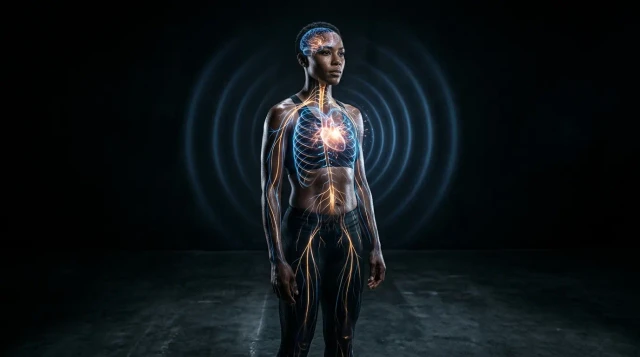
Your heart isn't just a pump. It's the strongest bioelectric generator in your body, producing an electrical field roughly 60 times greater in amplitude than the brain's. The HeartMath Institute has measured the heart's electromagnetic field extending up to 3 feet beyond the body using sensitive magnetometers called SQUIDs (superconducting quantum interference devices).
Every time your heart beats, it generates a pulse of electricity that starts in the sinoatrial node, a cluster of about 10,000 specialized cells in your right atrium. That pulse races through your cardiac tissue at about 1 to 4 meters per second, coordinating the contraction of billions of cardiac muscle cells in perfect sync. When doctors hook you up to an EKG, they're reading this electrical story from the surface of your skin.
Quick Q&A
Q: Can external electromagnetic fields interfere with the heart's electrical activity?
A: Yes. Research from the World Health Organization indicates that strong external EMF exposure can induce currents in the body that, at high enough levels, affect cardiac pacemaker cells and nerve function.
What's really interesting is that your heart's electrical rhythm changes with the seasons. A 2018 study published in the journal Heart Rhythm found that heart rate variability, a marker of cardiovascular health and autonomic nervous system balance, shifts measurably between summer and winter. The transition through autumn is when these shifts begin. That's another reason your fall sleep routine deserves real attention. Sleep is when your heart's electrical system recovers and recalibrates.
What Happens to Your Brain's Electrical Patterns When You Sleep?
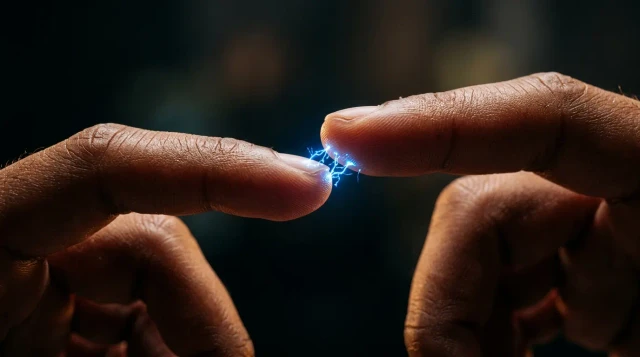
Your brain is an electrical organ. Full stop. It contains about 86 billion neurons, and each one communicates through electrical impulses that fire between 0.5 and 100 times per second depending on your state of consciousness. During deep sleep, your brain shifts into slow-wave activity between 0.5 and 4 Hz, called delta waves. During REM sleep, it looks almost identical to being awake, with fast beta and gamma wave activity lighting up the cortex.
According to research from Harvard Medical School's Division of Sleep Medicine, these electrical transitions aren't just brain housekeeping. They're when your brain clears metabolic waste through the glymphatic system, consolidates memories, and repairs neural connections. Skip the deep electrical cycling, and you wake up foggy, irritable, and cognitively slower [2].
Here's where the seasonal piece comes in. As autumn arrives and daylight drops, your suprachiasmatic nucleus, a tiny cluster of about 20,000 neurons behind your eyes, recalibrates your circadian rhythm. It tells your pineal gland to start producing melatonin earlier in the evening. This circadian rhythm reset is why you might feel sleepy at 8 PM in November when you were wide awake at 9:30 in July.
The problem? Most of us fight this natural electrical shift by staring at bright screens late into the evening. A 2014 study published in the Proceedings of the National Academy of Sciences found that reading on a light-emitting device before bed suppressed melatonin production by up to 50% and shifted circadian timing by more than 1.5 hours [3]. If you want to understand just how much your phone is doing to your body, check out The Most Interesting Facts About Your Smartphone: What's Actually Happening.
Does Reducing EMF Exposure Before Bed Actually Improve Sleep?
This is where things get practical. We've established that your body runs on delicate electrical signals. We know your brain needs specific electrical cycling during sleep. So the question becomes: does the electromagnetic radiation from your devices actually interfere with any of that?
The research is genuinely interesting. A study from the University of Melbourne, published in Bioelectromagnetics, found that exposure to radiofrequency EMF similar to what a mobile phone emits altered participants' EEG patterns during subsequent sleep, specifically increasing alpha-wave power during early non-REM sleep [4]. Not catastrophic. But it suggests your brain's electrical environment during rest is sensitive to what it was exposed to beforehand.
The World Health Organization classified radiofrequency electromagnetic fields as "possibly carcinogenic to humans" (Group 2B) in 2011, based on research reviewed by the International Agency for Research on Cancer. Even setting the cancer question aside, the sleep disruption angle alone is worth paying attention to. Your autumn bedtime habits should probably include creating distance between you and your devices. Airplane mode. Charging your phone in another room. Turning off your Wi-Fi router.
And if you're someone who wants to take it further, EMF-shielding apparel is actually a thing. Proteck'd EMF Protection makes clothing with silver-fiber technology designed to block electromagnetic radiation. Their Faraday Collection uses real Faraday cage principles woven into wearable fabrics. If you're curious about the science behind how it works, you can Learn About EMF Protection on their FAQ page.
How Does the Autumn Equinox Affect Your Circadian Rhythm?
The autumn equinox, which falls around September 22 each year, marks the moment when day and night are roughly equal in length. After that, darkness wins. Each day gets progressively shorter. By late October in the northern hemisphere, you might be losing 2 to 3 minutes of daylight every single day. Your body notices, even if you don't consciously register it.
According to the National Institute of General Medical Sciences (part of the NIH), your circadian clock responds directly to light input through specialized retinal ganglion cells containing the photopigment melanopsin [1]. As light exposure drops in autumn, melatonin onset shifts earlier, cortisol rhythms adjust, and your body temperature cycle changes. This isn't subtle stuff. It's a full-body electrical and hormonal recalibration.
This is precisely why building a deliberate fall sleep routine matters. You're not just "going to bed." You're supporting a biological transition that affects everything from immune function to mood regulation. Research from the University of Pittsburgh, published in 2015, found that inconsistent sleep schedules were associated with increased markers of metabolic syndrome, even in otherwise healthy adults.
Quick Q&A
Q: Should you go to bed earlier in the fall?
A: Generally, yes. Your body's melatonin production begins earlier as daylight decreases, so shifting your bedtime 15 to 30 minutes earlier in autumn aligns with your natural circadian rhythm reset.
A simple approach that works: start dimming lights an hour before bed, swap screen time for reading or stretching, and keep your bedroom cool (around 65°F, which the Cleveland Clinic recommends as optimal for sleep). These seasonal sleep changes aren't complicated. They just require a bit of intention.
Can Your Skin Conduct Electricity, and What Does That Mean for Daily Life?
Here's a fact that surprises most people: your skin is a conductor. Not a great one, mind you. Dry skin has a resistance of about 100,000 ohms. But add moisture, sweat, or even the humidity of a fall evening, and that resistance can drop to around 1,000 ohms. This is why lie detectors work. They measure the tiny changes in your skin's electrical conductivity caused by the autonomic nervous system when you're stressed.
This electrical conductivity is also how devices like fitness trackers read your heart rate through your wrist. The electrical signals from your cardiac system are strong enough to be picked up through your skin. Galvanic skin response (GSR) sensors in wearables from companies like Fitbit, Garmin, and Apple use this principle to estimate stress levels and sleep stages.
But here's the flip side that few people think about. If your skin can conduct electricity outward for sensors to read, it can also conduct electromagnetic energy inward. The specific absorption rate (SAR) of your phone measures exactly this: how much radiofrequency energy your body absorbs from the device. The FCC caps SAR at 1.6 W/kg averaged over 1 gram of tissue. European standards (set by ICNIRP) allow up to 2.0 W/kg averaged over 10 grams.
For a deeper look at how the technology around us interacts with our bodies in unexpected ways, I'd recommend checking out 10 Surprising Tech Facts That Sound Too Weird to Be True: The Complete List and 12 Surprising Tech Facts You Didn't Know: The Complete List. The overlap between biology and technology is wilder than most people realize.
What's the Connection Between Bioelectricity and Healing While You Sleep?
Your body does its heaviest repair work at night. That's not new information. But what is relatively new is the understanding that bioelectric signals are directly involved in the healing process. Research from Tufts University's Allen Discovery Center, led by Dr. Michael Levin, has demonstrated that manipulating the bioelectric state of cells can trigger regeneration of entire limbs in species like frogs that don't normally regenerate them. The implications for human healing are enormous.
During deep sleep, your pituitary gland releases human growth hormone (HGH) in its largest pulse of the day. According to the National Library of Medicine, up to 75% of daily HGH secretion occurs during slow-wave sleep [2]. This hormone drives tissue repair, muscle recovery, and cellular regeneration. But here's the electrical connection: HGH release is triggered by electrical signals from the hypothalamus, specifically growth hormone-releasing hormone (GHRH) neurons that fire in a pulsatile pattern during deep nightly recovery.
Disrupt the electrical environment of sleep, and you disrupt this cascade. That's why your fall sleep routine isn't just about comfort or coziness, though those things matter too. It's about protecting the bioelectric conditions your body needs to heal. Creating a low-EMF bedroom, keeping consistent sleep and wake times, and supporting your circadian rhythm through light management are all ways to support this process.
Nature itself offers some wild parallels. Electric eels can generate 860 volts. Sharks detect prey through electroreception. Even plants use electrical signaling to coordinate responses to damage. If you want to go down that rabbit hole, 10 Fascinating Facts About The Natural World: That Sound Too Strange to Be True is a great place to start.
Frequently Asked Questions
A fall sleep routine is a set of consistent bedtime habits you adopt as autumn arrives and daylight hours decrease. It matters because your circadian rhythm shifts significantly during this transition, with melatonin production starting earlier in the evening. Aligning your habits with this biological shift improves sleep quality, mood, and immune function.
About 100 watts at rest. Each of your roughly 37 trillion cells maintains a membrane potential of about negative 70 millivolts. This bioelectricity powers nerve impulses, muscle contractions, heartbeat coordination, and brain function.
Research suggests it can. A study from the University of Melbourne found that mobile-phone-level radiofrequency EMF altered EEG patterns during early non-REM sleep. On top of that, the blue light from phone screens suppresses melatonin by up to 50%, according to a 2014 PNAS study. Reducing phone use before bed is a practical step for better rest.
The Cleveland Clinic recommends keeping your bedroom around 65°F (18.3°C). In fall, nighttime temperatures naturally drop, which can actually help. A cool room supports your body's natural temperature decline that occurs as part of the sleep initiation process.
Yes. As daylight hours decrease after the autumn equinox, specialized melanopsin-containing cells in your retina signal your suprachiasmatic nucleus to adjust your internal clock. This triggers earlier melatonin release and shifts your cortisol and body temperature rhythms, according to the National Institute of General Medical Sciences.
Start dimming lights an hour before bed. Swap screens for reading or gentle stretching. Keep your bedroom around 65°F, and consider a warm herbal tea ritual. Going to bed 15 to 30 minutes earlier than your summer schedule helps align with your body's shifted melatonin onset. Consistency night to night matters more than any single technique.
It's real, and based on well-established physics. Faraday cage principles have been used to block electromagnetic fields since the 1830s. Companies like Proteck'd use silver-fiber fabrics to create wearable EMF shielding. The effectiveness depends on the material's conductivity and weave density, so quality matters.
Bioelectric signals play a direct role in wound healing by guiding cell migration and tissue regeneration. Research from Dr. Michael Levin's lab at Tufts University has shown that altering cells' bioelectric states can trigger regeneration in organisms that normally can't regenerate. In humans, the body generates measurable electrical currents at wound sites that help coordinate the repair process.
You're feeling your circadian rhythm adjust to decreasing daylight. After the autumn equinox, your body starts producing melatonin earlier in the evening because your retinal cells detect less light during the day. This is a normal biological response, not laziness. Working with this shift rather than against it generally leads to better nightly recovery.
Yes. The HeartMath Institute has measured the heart's electromagnetic field extending up to 3 feet from the body using SQUID magnetometers. The heart's electrical signal is about 60 times greater in amplitude than the brain's, making it the strongest bioelectric source in the human body.
References
- National Institute of General Medical Sciences (NIH) – Circadian rhythms are regulated by the suprachiasmatic nucleus responding to light input through melanopsin-containing retinal ganglion cells, and melatonin production shifts with seasonal daylight changes.
- Harvard Medical School - Division of Sleep Medicine – During deep sleep the brain clears metabolic waste, consolidates memories, and the pituitary gland releases up to 75% of daily HGH during slow-wave sleep.
- Proceedings of the National Academy of Sciences (PNAS) – Reading on a light-emitting device before bed suppressed melatonin production by up to 50% and shifted circadian timing by more than 1.5 hours compared to reading a printed book.
- World Health Organization / IARC – IARC classified radiofrequency electromagnetic fields as possibly carcinogenic to humans (Group 2B) in 2011, and WHO notes that strong external EMF exposure can induce currents affecting nerve and cardiac function.
About the Author
Proteck'd EMF Apparel
Health & EMF Specialists
The Proteck'd team covers EMF protection, silver-fiber apparel, and practical ways to reduce everyday radiation exposure. Every piece Proteck'd ships is designed, tested, and worn by the people who build it.
Protect Yourself Today
Proteck'd Faraday and silver fiber apparel is engineered to shield your body from everyday EMF exposure. Built for real life, tested for real results.
Shop EMF Protection →✓30-day returns✓Free shipping✓Free returns✓Silver fiber shielding


Hinterlassen Sie einen Kommentar