


The Fascinating Science of Electromagnetic Waves: What Nobody Taught You in School

Here's something that should keep you up tonight: the atoms in your body have never actually touched anything. Not the chair you're sitting on. Not the phone in your hand. Not another person. The electromagnetic forces between electrons repel before true contact ever happens. That's not a thought experiment. It's verified physics.
So how does physics facts mind blowing work, exactly? They work because the universe follows rules that are wildly different from what our brains evolved to expect. We evolved to dodge predators and find ripe fruit, not to intuitively grasp that time slows down when you move faster or that light is simultaneously a wave and a particle. The real science is stranger than any sci-fi movie ever managed.
I've spent years reading physics papers and translating them into something a normal person can enjoy over coffee. And I still get a jolt when I re-encounter certain facts. The electromagnetic spectrum alone, that full range of EM radiation humming all around you right now, contains secrets that most science classes never get to. Your teacher was too busy explaining gravity with bowling balls on trampolines.
This article is going to walk you through the most jaw-dropping physics facts about electromagnetic waves and the forces that shape our universe. We'll go way beyond the usual "speed of light is fast" trivia and connect this science to things that actually affect your daily life. Ready?
Key Takeaways
Why Is the Speed of Light So Important to Physics?
The speed of light isn't just fast. It's the cosmic speed limit, baked into the structure of spacetime itself. In a vacuum, light travels at exactly 299,792,458 meters per second. That number is a defined constant, not a measured estimate. Since 1983, the International Bureau of Weights and Measures has actually defined the meter based on how far light travels in 1/299,792,458 of a second [1].
To put that in perspective: a beam of light could circle the entire Earth about 7.5 times in a single second. It reaches the Moon in 1.3 seconds. But even at that absurd speed, light from Proxima Centauri, the nearest star beyond our Sun, takes over four years to reach us. The universe is just that enormous.
What makes this speed truly wild is what Albert Einstein revealed in his 1905 special theory of relativity. Nothing with mass can reach the speed of light. As an object accelerates toward light speed, its mass effectively increases toward infinity, requiring infinite energy to push it any further. This isn't some theoretical thought exercise, either. Particle accelerators at CERN have confirmed it by pushing protons to 99.9999991% the speed of light without ever hitting 100%.
And here's where it gets personal. Every wireless signal your phone sends, every Wi-Fi packet streaming your Netflix, every Bluetooth ping from your earbuds. These are all electromagnetic waves traveling at or near light speed. They're invisible, but they're absolutely real. Understanding how does physics facts mind blowing work starts with grasping that this incredible speed governs the invisible radiation around you every single day. If you've ever been curious about how electromagnetic radiation affects your body, check out these 12 Mind-Blowing Facts About Electromagnetic Radiation.
Does Time Really Slow Down at High Speeds?
Yes. And we've proven it with clocks on airplanes. In 1971, physicists Joseph Hafele and Richard Keating placed cesium atomic clocks on commercial aircraft and flew them around the world, both eastward and westward. When compared to reference clocks on the ground, the airborne clocks showed measurable differences, exactly as Einstein's equations predicted [2]. Time dilation is not a metaphor. It's a measured, physical reality.
Einstein's special relativity tells us that the faster you move through space, the slower you move through time, relative to a stationary observer. GPS satellites, orbiting at about 14,000 km/h, experience time roughly 7 microseconds slower per day than clocks on Earth's surface because of their velocity. Without correcting for this, GPS coordinates would drift by about 10 kilometers daily. The U.S. Air Force, which operates the GPS constellation, builds relativistic corrections into every single satellite.
Quick Q&A
Q: Has time dilation actually been measured with real clocks?
A: Yes. The 1971 Hafele-Keating experiment flew atomic clocks on commercial jets and measured time differences matching Einstein's predictions to within 10%.
Gravity plays a role too. General relativity shows that stronger gravitational fields slow time further. At the surface of a neutron star, where gravity can be 2 billion times stronger than Earth's, time would crawl compared to what you experience here. If you could somehow watch a clock on a neutron star from a safe distance, its seconds would stretch noticeably. The interplay between speed, gravity, and time is one of those things that makes you rethink what "reality" even means.
These aren't abstract ideas locked in a physics lab, either. The electromagnetic waves that carry your cell signal propagate in a universe where these relativistic effects are always at work. Understanding the physics of the fields surrounding us is the first step toward making informed choices about daily exposure. For a deeper look at how your body interacts with these forces, read 10 Mind-Blowing Facts About How Your Body Works.

What Is Wave-Particle Duality and Why Does It Matter?
Light is a wave. Light is also a particle. Both of those statements are true at the same time, and this fact broke physics wide open in the early 20th century. In 1927, Clinton Davisson and Lester Germer at Bell Labs fired electrons at a nickel crystal and observed a diffraction pattern, proving that even particles of matter behave like waves under certain conditions [1]. Thomas Young's famous double-slit experiment, first performed in 1801, had already shown that light creates interference patterns characteristic of waves.
So what is light, really? Physicists settled on calling individual units of light "photons." They're tiny packets of energy that exhibit wave-like behavior in transit but particle-like behavior when they interact with matter. When a photon hits the sensor in your phone camera, it registers as a single particle event. But send millions of photons through two narrow slits, and they collectively paint a wave interference pattern on the screen behind. Weird? Incredibly.
This wave-particle duality sits at the heart of quantum mechanics, the most successful and most counterintuitive theory in all of science. It explains how solar panels work (photons knock electrons loose in silicon), how lasers function (coherent photon emission), and even how your microwave heats food (EM radiation at 2.45 GHz vibrates water molecules). The fact that how does physics facts mind blowing work keeps circling back to electromagnetic waves shouldn't surprise you. EM radiation is the thread connecting most of modern technology.
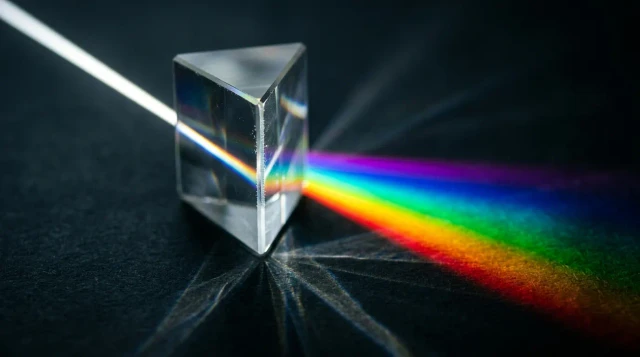
The electromagnetic spectrum spans an almost incomprehensible range. Gamma rays have wavelengths smaller than an atom. Radio waves can stretch for kilometers. Visible light, the sliver your eyes can detect, occupies less than 0.0035% of the entire spectrum. Everything else is invisible to you, but it's there. Your router broadcasts at roughly 2.4 or 5 GHz. Cell towers pump out signals between 700 MHz and 39 GHz. And if you've been wondering what all this invisible radiation means for your health, you can Learn About EMF Protection to get straightforward answers.
The same electromagnetic forces that forge iron in the cores of dying stars also govern the chemistry of your cells. Understanding this invisible spectrum isn't just academic. It's the first step toward making informed choices about the radiation you encounter every single day.
Can Quantum Particles Really Tunnel Through Solid Walls?
They can. And they do, billions of times a second inside the device you're reading this on. Quantum tunneling is the phenomenon where a particle passes through an energy barrier that classical physics says it absolutely cannot cross. Picture throwing a tennis ball at a brick wall and having it appear on the other side without breaking anything. At the quantum scale, this happens routinely.
The math behind it comes from the Schrödinger equation, formulated by Austrian physicist Erwin Schrödinger in 1926. A particle's position isn't a fixed point. It's a probability wave. That wave doesn't drop to zero at a barrier. It decays exponentially through it. If the barrier is thin enough, there's a non-zero probability the particle appears on the other side. This is how flash memory stores data in your smartphone. Electrons tunnel through thin oxide layers to get trapped in a floating gate, representing a 1 or a 0.
Tunneling also powers nuclear fusion in stars. The protons inside our Sun don't actually have enough kinetic energy to overcome their mutual electromagnetic repulsion through classical means. According to research published in Nature, quantum tunneling allows protons to fuse at temperatures lower than classical physics would require. That's the only reason stars shine at all. Without tunneling, the Sun would be dark.
Quick Q&A
Q: Is quantum tunneling just theoretical or does it have real-world applications?
A: It's absolutely real and practical. Flash memory, scanning tunneling microscopes, and nuclear fusion in stars all depend on quantum tunneling as a physical process.
This is the kind of physics that sounds made up until you realize it's engineering reality. The boundary between "wild theory" and "thing in your pocket" is thinner than you think. And speaking of the electromagnetic forces involved in all of this, there's a growing conversation about how the EM radiation from our devices interacts with biological systems. For more weird-but-true tech facts, check out these 12 Fascinating Tech Facts That Sound Too Weird to Be True.
How Does Gravity Bend Light, and What Does That Prove?
In 1919, British astronomer Arthur Eddington traveled to the island of Príncipe off the west coast of Africa to photograph a total solar eclipse. His goal was simple but enormous: see if starlight passing near the Sun would bend, exactly as Einstein's general relativity predicted. It did. The stars near the Sun's edge appeared slightly shifted from their known positions. That single observation made Einstein a worldwide celebrity overnight.
Gravity doesn't "pull" light the way it pulls a baseball. Instead, massive objects warp the fabric of spacetime, and light follows the curved path through that warped geometry. Astronomers call it gravitational lensing, and they now use it as a tool. NASA's Hubble Space Telescope has captured stunning images of distant galaxies whose light has been bent and magnified by massive galaxy clusters sitting between us and them. Some of those galaxies would have been completely invisible without this cosmic magnification.
The same force that bends starlight around galaxies is the force that keeps your feet on the ground. Gravity is an electromagnetic wave's constant companion, shaping the paths of photons across billions of light-years. Understanding how does physics facts mind blowing work often comes down to appreciating that gravity, light, and time are all woven together in ways your intuition was never built to handle.
On a much smaller, much more personal scale, electromagnetic fields are all around you right now. Radio waves, microwaves, infrared from your own body heat. You're soaking in an invisible bath of EM radiation at this very moment. According to the World Health Organization, non-ionizing electromagnetic fields from wireless devices were classified as Group 2B, a possible carcinogen, in 2011 based on the findings of the International Agency for Research on Cancer [3]. That classification doesn't mean "definitely dangerous," but it does mean the question deserves attention. If you want to take a practical step, the Faraday Collection from Proteck'd EMF Protection uses silver-infused fabric to shield against a range of electromagnetic radiation frequencies.
Are You Really Made of Stardust, or Is That Just a Saying?
It's not poetic license. It's nuclear physics. Every atom of carbon, oxygen, iron, and calcium in your body was forged inside the core of a massive star that lived and died before our solar system even formed. Stars fuse hydrogen into helium, then helium into carbon, and so on up the periodic table. When massive stars explode as supernovae, they scatter these heavy elements across space, seeding future solar systems with the raw ingredients for planets. And people.
According to research from Chris Impey at the University of Arizona, roughly 97% of the mass in the human body consists of elements created in stellar nucleosynthesis. The iron in your blood was produced in the final moments of a dying star's life, in conditions exceeding 3 billion degrees. The calcium in your bones formed through similar processes billions of years ago.
Here's the connection to electromagnetic waves that people miss. We know the composition of distant stars because of spectroscopy, the analysis of light. Every element absorbs and emits electromagnetic radiation at specific wavelengths, creating a unique fingerprint. When astronomers split starlight into its component wavelengths, they can identify the exact elements present. It was through this technique that helium was discovered on the Sun in 1868, decades before anyone found it on Earth. The electromagnetic spectrum isn't just something that carries your Wi-Fi signal. It's the tool that revealed our cosmic origins.
This deep connection between your body and the cosmos is worth sitting with for a moment. The same electromagnetic forces that govern stellar fusion also govern the chemistry of your cells. For a fascinating look at the intersection of physics and biology, here are 7 Mind-Blowing Facts About Electromagnetic Radiation that tie it all together.
Why Should You Care About Electromagnetic Fields in Daily Life?
Knowing that physics facts are mind blowing is fun. But the part of this science that actually touches your life every day? It's the electromagnetic field. Your phone, your laptop, your smart meter, your microwave, your baby monitor. All of them emit non-ionizing electromagnetic radiation at various frequencies. The average American now spends over 7 hours a day interacting with digital devices, according to data from eMarketer's 2023 report. That's a lot of exposure time.
The National Institute of Environmental Health Sciences (NIEHS) has studied the biological effects of radiofrequency radiation extensively. The National Toxicology Program's landmark study, completed in 2018, found "clear evidence" of heart tumors in male rats exposed to high levels of radiofrequency radiation similar to what 2G and 3G cell phones emit [4]. The study's findings were debated in the scientific community, but they were significant enough to prompt continued research.
This doesn't mean you should throw your phone into a river. It means that making informed choices about your EM radiation exposure is reasonable, not paranoid. Simple steps like using speakerphone, keeping devices away from your body when possible, and wearing EMF-protective clothing can reduce your daily exposure without changing your lifestyle.
That's exactly what Proteck'd designs for. Their apparel uses conductive silver fiber woven into comfortable, normal-looking clothing that provides a measurable barrier against electromagnetic radiation. It's physics applied to fashion, which, if you think about it, is one of the most practical applications of everything we've talked about in this article. Understanding how the electromagnetic spectrum works helps you make better choices about the invisible energy surrounding you.
Frequently Asked Questions
Q: How does physics facts mind blowing work in simple terms?
Physics facts blow our minds because the universe operates on rules that completely contradict everyday human intuition. Our brains evolved for survival, not for understanding quantum mechanics or relativity. When we learn that time slows down at high speeds, or that light is both a wave and a particle, it challenges everything we thought we knew about how reality works.
Q: What is the electromagnetic spectrum and why does it matter?
The electromagnetic spectrum is the full range of electromagnetic radiation, from extremely short gamma rays to very long radio waves. It matters because nearly all modern technology depends on it. Your Wi-Fi, cell phone, microwave oven, television, and even medical X-rays all use different portions of the EM spectrum.
Q: Is time dilation a real, proven phenomenon?
It is. Time dilation was experimentally confirmed in 1971 by the Hafele-Keating experiment, which flew atomic clocks on commercial jets and measured time differences matching Einstein's predictions. GPS satellites also correct for time dilation every day. Without those corrections, position calculations would drift by about 10 km daily.
Q: Can EMF from phones and Wi-Fi really affect your health?
The World Health Organization's International Agency for Research on Cancer classified radiofrequency electromagnetic fields as Group 2B, meaning a possible carcinogen, in 2011. The National Toxicology Program's 2018 study found evidence of tumors in rats exposed to high levels of RF radiation. While the science is still evolving, many researchers recommend precautionary measures to reduce daily exposure.
Q: What is quantum tunneling in everyday language?
Quantum tunneling is when a tiny particle passes through a barrier that it shouldn't be able to cross according to classical physics. Think of it like a ball going through a wall instead of bouncing off. It sounds impossible, but it's the real mechanism that allows flash memory in your phone to store data and enables nuclear fusion inside stars.
Q: How fast does light actually travel?
Light travels at exactly 299,792,458 meters per second in a vacuum. That's about 186,282 miles per second, fast enough to circle Earth's equator roughly 7.5 times in one second. This speed is a fundamental constant in physics and serves as the ultimate speed limit for anything in the universe.
Q: What does it mean that you are made of stardust?
Almost every atom in your body, the carbon, oxygen, iron, and calcium, was created inside the core of a star through nuclear fusion. When those stars exploded as supernovae, they scattered these elements into space, where they eventually became part of the gas cloud that formed our solar system. It's not a metaphor. It's nuclear astrophysics.
Q: What is wave-particle duality and how was it proven?
Wave-particle duality is the principle that quantum entities like photons and electrons behave as both waves and particles. Thomas Young's double-slit experiment in 1801 showed light's wave behavior. In 1927, the Davisson-Germer experiment proved that even electrons diffract like waves. Both behaviors are real and depend on how the observation is set up.
Q: How does EMF-protective clothing work?
EMF-protective clothing typically uses conductive metals like silver woven into fabric. The silver threads create a mesh that reflects or absorbs incoming electromagnetic radiation, working on a principle similar to a Faraday cage. Effectiveness depends on the fabric's conductivity, thread density, and the frequency of the EM radiation it's designed to block.
Q: Why do GPS satellites need to account for Einstein's relativity?
GPS satellites orbit at high speeds and at altitudes where gravity is weaker than at Earth's surface. Both of these factors cause their onboard clocks to tick at different rates compared to ground clocks. Without relativistic corrections built into the system, GPS position calculations would accumulate errors of roughly 10 kilometers per day, making the whole system useless for navigation.
References
- National Institute of Standards and Technology (NIST) via Nature – The speed of light is defined at exactly 299,792,458 meters per second, and the meter is defined based on this constant. Wave-particle duality was confirmed through landmark experiments including Davisson-Germer in 1927.
- Nature - Hafele-Keating Experiment – The 1971 Hafele-Keating experiment confirmed Einstein's time dilation predictions by flying cesium atomic clocks on commercial aircraft and comparing them to ground-based reference clocks.
- World Health Organization - IARC – The IARC classified radiofrequency electromagnetic fields as Group 2B (possibly carcinogenic to humans) in 2011.
- National Institute of Environmental Health Sciences - National Toxicology Program – The NTP's 2018 study found clear evidence of heart tumors (malignant schwannomas) in male rats exposed to high levels of radiofrequency radiation similar to 2G and 3G cell phone emissions.
About the Author
Proteck'd EMF Apparel
Health & EMF Specialists
The Proteck'd team covers EMF protection, silver-fiber apparel, and practical ways to reduce everyday radiation exposure. Every piece Proteck'd ships is designed, tested, and worn by the people who build it.
Protect Yourself Today
Proteck'd Faraday and silver fiber apparel is engineered to shield your body from everyday EMF exposure. Built for real life, tested for real results.
Shop EMF Protection →✓30-day returns✓Free shipping✓Free returns✓Silver fiber shielding


Hinterlassen Sie einen Kommentar