


The Most Interesting Facts About Your Smartphone: The Numbers

Here's a number that might make you pause: the average person will spend roughly 4.5 years of their life staring at their smartphone. Not all screens combined. Just the phone. That single stat reframes the device in your pocket from a handy little tool into something much bigger. And it's just one reason why does technology facts interesting matter, not as party trivia, but as information that can genuinely change how you behave.
I've always been a sucker for good tech trivia. The kind of stat that makes you stop mid-scroll and think, "Wait, seriously?" But the deeper I got into the actual numbers behind our smartphones, the more I realized these aren't just fun factoids. They're signals. About how we live, what we're exposed to, and what we almost never stop to question.
Think about it. You probably know your phone's storage capacity and battery percentage at any given moment. But do you know how much radiofrequency energy it's pushing out against your body? Or how your daily screen hours stack up against the global average? The numbers are out there. They're fascinating.
This post is a long, honest look at the most interesting, surprising, and occasionally unsettling statistics about smartphones and the technology trivia that surrounds them. We'll go way past the usual "did you know" listicle format and actually explore what these numbers mean for you.
Your smartphone has 100,000 times more computing power than the Apollo 11 guidance computer, and the average person touches it 2,617 times a day. The numbers behind our devices aren't just trivia. They're a wake-up call about how deeply technology has woven itself into our biology and behavior.
- The average smartphone user touches their phone 2,617 times per day, with heavy users exceeding 5,400 touches
- Americans spend over 7 hours daily on screens, and global mobile usage averages 4.8 hours per day
- The FCC's SAR limit of 1.6 W/kg was set in the 1990s and hasn't been substantially updated for modern usage patterns
- Global e-waste hit 62 million metric tonnes in 2022 with only 22% properly recycled
- Understanding tech facts isn't just trivia. Research shows it leads to better self-regulation and healthier digital habits
How Much Computing Power Is Actually in Your Pocket?
Let's start with the stat that never gets old. Your smartphone has roughly 100,000 times more processing power than the computer that guided Apollo 11 to the moon in 1969. NASA's Apollo Guidance Computer ran at 0.043 MHz with about 74 KB of memory. Your phone? It's working with multiple gigahertz of speed and gigabytes of RAM. The gap is almost funny.
But it gets even wilder. According to research highlighted by MIT, the rate of computing improvement has followed an exponential curve for decades, roughly doubling every two years in line with Moore's Law. That means the phone you own in 2027 will make today's model look like a calculator.
So why does technology facts interesting matter when it comes to computing power? Because most of us drastically underestimate what we're carrying around. That device you use to watch cat videos has more raw capability than the computers that filled entire rooms in the 1980s. It can process medical-grade imaging, run complex AI models locally, and communicate with satellites orbiting Earth. We just mostly use it for Instagram.
If you love this sort of mind-bending tech trivia, you'll probably enjoy our breakdown of 15 Fascinating Tech Facts That Sound Too Weird to Be True: With Sources. Some of those facts are even harder to believe than this one.
How Many Times Do You Actually Touch Your Phone Each Day?
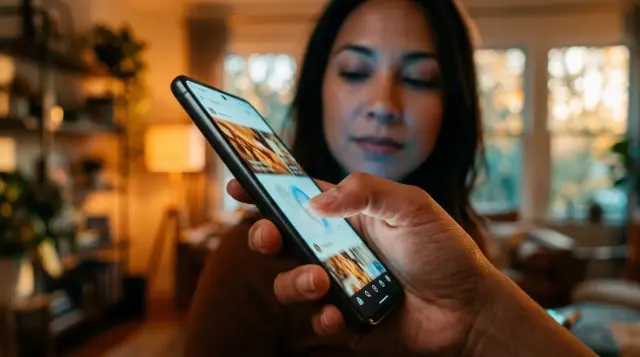
Asurion, the tech insurance company, ran a study in 2019 that found the average American checks their phone 96 times per day. That's once every 10 minutes during waking hours. But "checks" is a conservative metric. A separate study from Dscout in 2016 tracked actual screen touches and found that heavy users tap, swipe, and click their phones over 5,400 times daily. Even the average user clocked in at around 2,617 touches [1].
Let that sit for a second. Over two thousand physical interactions with a single object, every single day. No other tool in human history has demanded that level of micro-attention from us. Not books. Not televisions. Not even the steering wheel of your car.
Quick Q&A
Q: How many times does the average person touch their smartphone per day?
A: According to Dscout's research, the average smartphone user touches their device approximately 2,617 times per day, with heavy users exceeding 5,400 touches daily.
This is one of those smartphone statistics that rewires how you think about digital device usage. When you're interacting with something thousands of times a day, that device isn't just a tool anymore. It's a habit loop. And the companies designing these interfaces know exactly what they're doing, optimizing every pixel for engagement.
The health angle here is real, too. All those interactions mean prolonged proximity to a device that emits radiofrequency energy. If you're curious about what that means for your body, you can Learn About EMF Protection and the science behind shielding yourself from unnecessary exposure.
What Does Screen Time Actually Look Like in Hard Numbers?
According to DataReportal's 2023 Digital Global Overview, the average American spent 7 hours and 4 minutes per day on screens across all devices. Globally, the number was about 6 hours and 37 minutes. That's roughly 40 to 50 hours per week. More time than most people spend at their jobs.
For smartphones specifically, App Annie (now data.ai) reported in 2022 that global consumers averaged 4.8 hours per day on mobile devices. In the U.S., the number was slightly higher. These figures have been climbing steadily year over year since 2015, with no sign of leveling off.
Here's the health connection that often gets overlooked. Research published in JAMA Pediatrics in 2019 found that higher screen time in children was associated with poorer performance on developmental screening tests [2]. For adults, studies from the National Institutes of Health have linked excessive screen use to disrupted circadian rhythms, primarily because blue light exposure suppresses melatonin production.
Those mobile phone radiation facts and screen time health effects are intertwined in ways we're only beginning to fully understand. The sheer volume of hours we spend in close contact with these devices means that even small exposure risks compound over time. This is exactly the kind of digital exposure concern that led Proteck'd to develop their Faraday Collection, designed to reduce RF exposure from the devices you carry constantly.
And if you want to understand the infrastructure powering all those screen hours, check out The Most Interesting Facts About How the Internet Works: What's Actually Happening. The numbers behind the network are just as staggering.
How Much Radiofrequency Radiation Does Your Phone Emit?
Every smartphone on the market emits radiofrequency (RF) radiation. That's just how they work. They send and receive signals from cell towers, Wi-Fi routers, and Bluetooth devices using electromagnetic waves. The question isn't whether they emit radiation. It's how much, and whether it matters.
The FCC regulates this through a measurement called the Specific Absorption Rate, or SAR. In the United States, the legal limit is 1.6 watts per kilogram (W/kg) averaged over 1 gram of tissue [3]. In Europe, the limit is slightly more permissive at 2.0 W/kg averaged over 10 grams. Every phone sold must be tested and certified below these thresholds before it hits shelves.
Here's where it gets interesting, though. The testing protocols were established in the 1990s. They haven't been meaningfully updated to reflect how people actually use phones today. Back then, nobody was holding a phone against their face for hours watching TikTok. The testing assumes specific distances and usage patterns that just don't match modern behavior.
Quick Q&A
Q: What is the SAR limit for smartphones in the United States?
A: The FCC sets the SAR limit at 1.6 W/kg averaged over 1 gram of tissue, a standard that has remained largely unchanged since the 1990s.
The International Agency for Research on Cancer (IARC), which is part of the World Health Organization, classified radiofrequency electromagnetic fields as "possibly carcinogenic to humans" (Group 2B) back in 2011. That classification hasn't been upgraded, but it hasn't been downgraded either. This is why brands like Proteck'd EMF Protection exist, offering wearable solutions that put a functional barrier between your body and the RF energy your devices constantly produce.
Why Does Knowing Tech Trivia Change Your Daily Habits?
You might wonder why any of this matters beyond cocktail party conversation. Here's my honest take: knowledge changes behavior. I didn't think much about how I carried my phone until I learned about SAR values and how they're tested at specific distances from the body. Now I use speaker mode more often. Small change, but it came from real data.
The question of why does technology facts interesting matter goes deeper than curiosity. According to a 2020 study published in Nature Human Behaviour, people who understood the mechanisms behind digital persuasion techniques (like infinite scrolling and push notifications) were significantly more likely to set usage boundaries [4]. Knowing the facts literally made them better at self-regulation.
Consider e-waste as another example. The UN's Global E-Waste Monitor 2024 reported that the world generated 62 million metric tonnes of electronic waste in 2022, up 82% from 2010. Only about 22% of that was properly recycled. When you know that number, you're more likely to repair your phone instead of replacing it, or to recycle your old devices properly.
Tech facts and smartphone statistics aren't trivia for its own sake. They're the raw material for better decisions. And sometimes, they point you toward solutions you didn't know existed. Things like EMF-shielding apparel that you can actually wear daily without looking like you're wrapped in aluminum foil. The Faraday Collection from Proteck'd is a good example of what that looks like in practice: real clothes with real protection built in.
What Are the Weirdest Smartphone Facts Most People Don't Know?
Let's lighten things up with some of the stranger entries in the tech trivia vault. Ever heard of Phantom Vibration Syndrome? It's the sensation that your phone is vibrating in your pocket when it isn't. According to research from Georgia Institute of Technology, about 89% of undergraduate students reported experiencing it. Your brain is so conditioned to expect phone notifications that it literally invents them.
Here's another one. Samsung was founded in 1938, originally as a trading company dealing in dried fish and noodles. Apple wasn't founded until 1976. That makes Samsung 38 years older than Apple, a fact that surprises nearly everyone. And the first Apple logo? It depicted Isaac Newton sitting under an apple tree. Not exactly the sleek minimalism we associate with the brand today.
Speaking of surprising origins, the word "robot" comes from the Czech word "robota," meaning forced labor or drudgery. It was coined by playwright Karel Čapek in his 1920 play R.U.R. (Rossum's Universal Robots). So every time you ask your phone's voice assistant to do something, there's a tiny etymological echo of servitude in the command.
For a bigger collection of this kind of mind-bending trivia, take a look at 12 Fascinating Tech Facts That Sound Too Weird to Be True: The Complete List. I promise you'll find at least three that make you say "no way" out loud.
How Does Your Phone Compare to the World's Biggest Supercomputers?
This comparison puts everything in perspective. The iPhone 15 Pro's A17 Pro chip delivers roughly 17 trillion operations per second. That sounds absurd. It is. But the world's fastest supercomputer in 2024, Frontier at Oak Ridge National Laboratory in Tennessee, operates at over 1.1 exaflops. That's 1.1 quintillion floating-point operations per second.
So your phone isn't exactly competing with Frontier. But consider this: Frontier occupies 7,300 square feet and uses about 21 megawatts of power. Your phone fits in your pocket and charges from a wall outlet. The efficiency gap is arguably more impressive than the raw performance gap.
Why does this matter for everyday people who aren't running climate simulations? Because the trajectory of computing power directly affects what your phone will be able to do in five years. On-device AI processing, real-time language translation, medical diagnostics from your camera. All of these are becoming possible because your pocket computer keeps getting exponentially more powerful.
And with more powerful devices comes more electromagnetic output. As processors get faster and connectivity expands to 5G and beyond, the conversation about RF exposure isn't going away. It's getting louder. That's another reason why does technology facts interesting matter: today's trivia is tomorrow's public health discussion. For a totally different angle on how technology intersects with biology, check out How Animals See the World: Fascinating Facts. Nature's own "technology" is equally wild.
What Will Smartphone Numbers Look Like by 2030?
Projections from Statista estimate there will be roughly 7.7 billion smartphone subscriptions worldwide by 2028. That's approaching one per person on the planet. Meanwhile, Ericsson's Mobility Report from November 2023 projected that 5G subscriptions would surpass 5.3 billion by 2029, accounting for the majority of all mobile subscriptions globally.
Screen time is projected to keep climbing, too. If the current trend holds, average daily screen time could exceed 8 hours by 2027. That would mean more waking hours spent on screens than off them for many people. Think about the compounding effects on posture, eye health, sleep quality, and cumulative RF exposure over a lifetime.
On the brighter side, mobile health apps are expected to generate over $100 billion in revenue by 2028, according to Grand View Research. Phones are increasingly becoming diagnostic tools, monitoring heart rate, blood oxygen, and even detecting atrial fibrillation. The same device that might contribute to health concerns could also be your first line of defense in catching them early.
The future of smartphone statistics tells a story of intensification in every direction. More powerful, more present, more personal, more pervasive. Understanding the numbers now helps you stay ahead rather than being swept along by them. And for those who want practical, everyday protection as device usage grows, Proteck'd EMF Protection offers options that fit seamlessly into your wardrobe without requiring you to leave your phone at home.
Frequently Asked Questions
It matters because understanding real numbers about your devices changes how you use them. Research published in Nature Human Behaviour found that people who understood digital persuasion mechanisms were better at setting boundaries. Knowing facts like your phone's RF output or your daily screen hours gives you actionable data, not just cocktail party trivia.
According to Asurion's 2019 research, the average American checks their phone 96 times per day. If you measure actual physical touches instead of just "checks," the Dscout study puts it at 2,617 touches per day for average users and over 5,400 for heavy users.
Yes, by a massive margin. The Apollo 11 guidance computer operated at 0.043 MHz with about 74 KB of memory. A modern smartphone runs at several gigahertz with gigabytes of RAM, making it roughly 100,000 times more powerful.
The FCC sets the SAR limit at 1.6 watts per kilogram averaged over 1 gram of tissue. This standard was established in the 1990s and hasn't been significantly updated since, despite massive changes in how people use their phones.
DataReportal's 2023 report found that Americans average 7 hours and 4 minutes of screen time daily across all devices. For smartphones alone, the average is around 4.8 hours per day according to data.ai, and these numbers keep climbing year over year.
Phantom Vibration Syndrome is when you feel your phone buzzing in your pocket but it isn't actually vibrating. Research from Georgia Institute of Technology found that about 89% of college students experience it. It's a sign of how deeply conditioned our brains have become to expect phone notifications.
The IARC, part of the World Health Organization, classified RF electromagnetic fields as "possibly carcinogenic to humans" (Group 2B) in 2011. That means there's limited evidence suggesting a possible link, but nothing conclusive. The classification hasn't changed since, and research is ongoing.
According to the UN's Global E-Waste Monitor, the world generated 62 million metric tonnes of e-waste in 2022. That's an 82% increase from 2010. Only about 22% was documented as formally collected and recycled. The vast majority ends up in landfills or is processed informally.
Yes. Samsung was founded in 1938 by Lee Byung-chul in South Korea, originally as a trading company. Apple wasn't founded until April 1, 1976. That makes Samsung 38 years older, though Samsung didn't get into electronics until the late 1960s.
EMF-shielding clothing uses conductive fabrics, often woven with silver or other metals, to reduce radiofrequency radiation from devices. Brands like Proteck'd integrate these materials into everyday apparel, creating a barrier between your body and the RF emissions from phones, laptops, and other wireless devices.
References
- National Institutes of Health (NIH) / National Library of Medicine – Research on smartphone usage patterns, screen touches, and digital device interaction frequency
- JAMA Pediatrics (JAMA Network) – Higher screen time in children was associated with poorer performance on developmental screening tests (2019 study)
- National Institutes of Health (NIH) - Radiofrequency Radiation – The FCC limits cell phone RF emissions to a SAR of 1.6 W/kg averaged over 1 gram of tissue
- Nature Human Behaviour – People who understood digital persuasion mechanisms were more likely to set usage boundaries and self-regulate screen time
About the Author
Proteck'd EMF Apparel
Health & EMF Specialists
The Proteck'd team covers EMF protection, silver-fiber apparel, and practical ways to reduce everyday radiation exposure. Every piece Proteck'd ships is designed, tested, and worn by the people who build it.
Get the Free EMF Home Audit Checklist
A room-by-room PDF that walks you through the biggest EMF sources in your house and what to do about each one. No cost, no fluff.
Download the Checklist →✓30-day returns✓Free shipping✓Free returns✓Silver fiber shielding


Hinterlassen Sie einen Kommentar