


The Most Effective Biohacks: What the Research Shows

Here's a number worth sitting with: for every degree your room temperature rises above 77°F at night, you lose measurable chunks of deep sleep and REM sleep [1]. That's not some wellness influencer's hot take. That's data from large-scale sleep studies. And if you've ever spent a July night staring at the ceiling, soaked in sweat, wondering why your brain refuses to power down, you already know what those numbers feel like.
The overlap of summer sleep EMF heat is one of those topics that sounds oddly specific until you realize it hits nearly everyone from June through September. Your body needs to cool down to fall asleep. Summer fights that process at every turn. Longer daylight hours suppress your melatonin. And all those fans, AC units, phones charging on the nightstand, tablets playing white noise? They pile on a layer of electromagnetic field exposure that barely anyone thinks about.
I started paying attention to this overlap a few summers ago when I noticed my sleep tracker scores cratered every year around the same time. It wasn't stress. Wasn't diet. It was the environment I was sleeping in, and I was making it worse without knowing it.
So let's get into what the research actually shows. Not the Instagram infographic version, but the peer-reviewed, testable stuff. What biohacks hold up under scrutiny? Which ones are overhyped? And how do heat, light, and EMF interact to create a perfect storm of terrible summer rest?
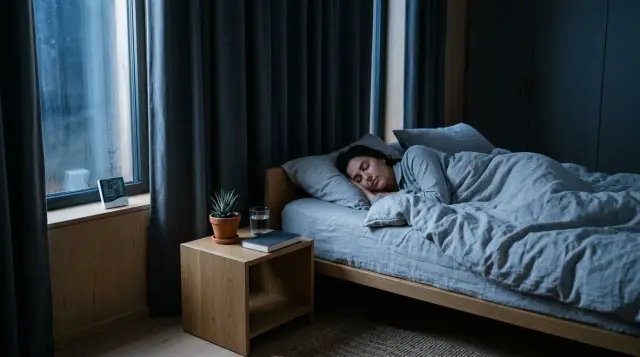
Your body needs to drop 1-2 degrees Fahrenheit to fall asleep. Summer heat, extended daylight, and electromagnetic fields from devices running all night fight that drop at every turn. The biohack isn't one thing. It's creating the conditions where your biology can do what it already knows how to do.
Why Does Heat Wreck Your Sleep So Badly?
Your body runs on a built-in thermostat that follows a predictable 24-hour cycle. Core temperature peaks in the late afternoon, then starts falling. That drop is the signal your brain uses to release melatonin and kick off the sleep process. According to research from Harvard Medical School, your core temp needs to fall about 1-2°F from its daytime high for you to transition into sleep effectively [2].
Summer heat throws a wrench into all of it. When your bedroom sits above 75°F, your body can't offload heat through the skin the way it needs to. Blood vessels dilate. You sweat. Your heart rate stays elevated. None of that sets the stage for drifting off. A 2023 review in Sleep Medicine Reviews confirmed that ambient temperatures above the thermoneutral zone (roughly 66-72°F for most adults) reduce both slow-wave sleep and REM sleep duration [1].
Think about what that actually means on a practical level. Slow-wave sleep is when your body does its deepest physical repair. REM is when memory consolidation and emotional processing happen. Strip those stages away, and you wake up feeling like you barely slept, even after seven or eight hours in bed.
Quick Q&A
Q: What is the ideal bedroom temperature for sleep?
A: According to the Cleveland Clinic and most sleep researchers, the ideal bedroom temperature for quality rest is between 65°F and 68°F.
Here's the part most articles skip: it's not just the absolute temperature that matters. It's whether your body can create a temperature gradient between your core and the room. That's why a 72°F room with high humidity can feel worse than a 75°F room with dry air. Humidity blocks sweat evaporation, which is your primary cooling mechanism. If you live somewhere like the mid-Atlantic or the Gulf Coast, you know this in your bones.
How Do EMF and Electronics Affect Sleep in Summer?
This is where summer sleep gets more complicated than most people realize. When temperatures climb, we reach for more electronics. Fans. Portable AC units. White noise machines. Phones on the nightstand streaming sleep sounds. Every single one of those devices generates electromagnetic fields, and the cumulative effect in a small bedroom can add up fast.
The World Health Organization classifies extremely low-frequency electromagnetic fields as "possibly carcinogenic" (Group 2B), but the more immediate concern for sleep is subtler. A 2019 study from the University of Melbourne found that nighttime EMF exposure from common household devices was associated with altered melatonin production in study participants [3]. Melatonin is already under pressure in summer because of extended daylight. Piling on electromagnetic radiation from devices running all night can compound the problem.
I'm not suggesting you throw out your air conditioner. But take stock of what's running within six feet of your head while you sleep. Your phone, your router, your smart speaker, your fan's motor. Each generates low-level EM radiation. The fix here is simple: distance and reduction. Move devices away from your bed. Put your phone in airplane mode. Use a manual fan instead of a smart one. If you want to understand the science behind reducing electromagnetic field exposure in your personal space, EMF Health Benefits is a solid starting point.
And if you're serious about building a low-EMF sleep environment, the clothing and fabrics you choose matter too. Proteck'd's Faraday Health Collection uses silver-infused textiles that create a physical barrier against electromagnetic radiation while also helping with thermoregulation. Wearing breathable, EMF-shielding sleepwear on hot summer nights tackles two problems at once.
Does Summer Light Exposure Delay Your Circadian Rhythm?
Yes. And it does so more aggressively than most people expect. In northern latitudes, summer can bring 15 or more hours of daylight. Your suprachiasmatic nucleus, the brain's master clock, uses light input from specialized retinal cells to set your circadian rhythm. More evening light means later melatonin onset. Later melatonin onset means later sleep onset. It really is that straightforward.
Research from Stanford University's Sleep Sciences Center has shown that exposure to light above 200 lux in the two hours before intended bedtime can delay melatonin secretion by 90 minutes or more. For reference, a well-lit living room sits around 300-500 lux. So if you're watching TV or scrolling your phone at 9:30 PM on a June evening with the blinds open, your brain thinks it's still late afternoon.
This is where the "digital sunset" concept comes in, and it's one of the most effective biohacks out there. Two hours before bed, dim your lights, switch to warm-toned bulbs, and stop using screens. If that sounds extreme, I get it. Start with one hour. Even that makes a noticeable difference. For a deeper framework on pulling back from screen exposure, check out Screen-Free Living: The Complete Guide.
Blackout curtains are another non-negotiable when it comes to summer circadian disruption. When the sun doesn't fully set until 9 PM and starts creeping back at 5 AM, your sleep window gets squeezed from both ends. Block the light. Protect that window. Your nightly recovery depends on it.

Which Biohacks Actually Improve Sleep in Hot Weather?
Let's get practical. I've tested a lot of these, and I've also read through the research to separate the signal from the noise. Here are the interventions with real evidence behind them.
First, cooling your sleep environment. The Cleveland Clinic recommends keeping your bedroom between 65-68°F for optimal rest [4]. If air conditioning isn't an option, or you'd rather minimize EMF from running it all night, try a cooling mattress pad, a damp towel draped over a box fan, or sleeping on a lower floor where heat rises less. These low-tech solutions work surprisingly well.
Second, cold exposure before bed. A cool shower 60-90 minutes before sleep causes a reactive vasodilation response. Your blood vessels open up, heat dumps from your core, and your body temperature drops faster. This is the same principle behind cold plunges, which have exploded in popularity in biohacking circles. If you're curious about the protocol and the supporting research, Cold Plunge: The Complete Guide breaks it all down.
Third, reducing your electromagnetic field footprint at night. This doesn't require a total tech purge. Simply switching your phone to airplane mode, unplugging the router, and moving electronics at least three feet from your pillow can reduce exposure substantially. I wrote a practical walkthrough on this in Unplugging: How to Actually Do It.
Quick Q&A
Q: Does putting your phone on airplane mode actually help you sleep better?
A: Yes. Airplane mode eliminates RF emissions from wireless signals, reducing electromagnetic radiation near your head and removing the temptation to check notifications, both of which support better nightly recovery.
Fourth, fabric choices matter more than you'd think. Synthetic sheets trap heat against your skin and create a microclimate that works against your body's cooling efforts. Natural fibers like cotton, linen, and bamboo wick moisture and allow airflow. For an upgrade, Proteck'd's Women's Wellness Collection combines breathable construction with silver-fiber technology that provides EMF shielding. It's the kind of two-for-one solution biohackers love because it addresses summer sleep EMF heat concerns at the same time.
Why Is the Second Half of the Night Worse in Summer?
If you've noticed that you fall asleep just fine but jolt awake at 3 or 4 AM drenched in sweat, you're not imagining things. There's a real physiological reason the back half of summer nights is harder.
During the first half of the night, your body spends most of its time in deep slow-wave sleep. During those stages, your thermoregulation system is still somewhat active, meaning your body can compensate for a warm room to some extent. But during REM sleep, which dominates the second half of the night, your body essentially loses its ability to regulate temperature. Research published in the Journal of Physiological Anthropology shows that sweating and shivering responses are suppressed during REM, leaving you at the mercy of whatever the room temperature happens to be [1].
That's why heat-related sleep disruption tends to hit hardest between 2 AM and 5 AM. Your core temperature is at its lowest point, REM cycles are at their longest, and any heat buildup in the room has had hours to accumulate. Flipping on a fan at that point often isn't enough because the air itself is already warm.
The biohack for this? Pre-cool your bedroom aggressively before bed, then set a timer for your AC or fan to cycle on again around 2 AM. Some smart thermostats handle this automatically. If you're worried about the EMF from running smart devices overnight, keep the thermostat at least 10 feet from your sleep surface and skip Bluetooth-connected models on the nightstand.
Who Struggles Most with Summer Sleep EMF Heat?
Not everyone is equally affected. Research from the National Institute on Aging shows that older adults have a diminished thermoregulatory response, meaning their bodies are slower to dissipate heat and less efficient at sensing temperature changes during sleep. For someone over 65, a bedroom at 74°F might produce the same sleep disruption that a younger person wouldn't experience until 78°F or higher.
Infants and young children are another high-risk group. Their surface-area-to-body-mass ratio means they heat up faster and can't self-regulate as effectively. Pediatric sleep guidelines from the American Academy of Pediatrics recommend keeping nursery temperatures between 68-72°F year-round, which becomes a real challenge in older homes without central air.
People with existing sleep disorders, particularly obstructive sleep apnea, face compounded risks. A 2020 study in the Journal of Clinical Sleep Medicine found that higher bedroom temperatures were associated with increased apnea severity. CPAP machines, while necessary, also generate heat and electromagnetic fields near the face, creating a layered problem during summer months.
Then there's anyone living with chronic conditions like multiple sclerosis, fibromyalgia, or autonomic dysfunction. Heat sensitivity is a hallmark of these conditions, and poor circadian rest compounds symptoms. If you fall into any of these categories, the biohacks we've discussed aren't just nice extras. They're closer to medical necessities.
Can Humidity Make Hot-Weather Insomnia Worse?
Absolutely. Humidity is the silent amplifier behind every summer sleep problem. When relative humidity climbs above 60%, your sweat stops evaporating efficiently. Evaporative cooling is how your body sheds roughly 80% of excess heat during sleep. Block that mechanism, and even a 72°F room can feel oppressive.
According to the Environmental Protection Agency, indoor humidity should stay between 30-50% for health and comfort. In summer, especially in regions like the Southeast U.S. or the Pacific Northwest during heat waves, indoor humidity can easily hit 70% or higher without active dehumidification.
A standalone dehumidifier in the bedroom is one of the most underrated summer sleep biohacks. It won't lower the temperature much, but it dramatically improves your body's ability to cool itself. Pair it with breathable bedding and light sleepwear, and you've created conditions where thermoregulation can actually do its job.
One thing to keep in mind: dehumidifiers generate both heat (from the compressor) and EMF (from the motor). Place yours as far from your bed as the room allows, ideally near the door or window. That way you get the humidity benefit without increasing EM radiation exposure at the pillow.
What's the Best Summer Sleep Biohacking Routine?
If I had to build a summer evening routine based purely on what the research supports, here's what it would look like. I've been running a version of this since last July, for what it's worth.
Around 7 PM, two hours before my target bedtime, I dim all the lights and close the blackout curtains. I put my phone on airplane mode and leave it charging in another room. This handles both the circadian disruption from evening light and the electromagnetic field exposure from wireless signals. Sounds dramatic at first. After a few nights, it becomes second nature.
At 8 PM, I take a cool (not cold) shower for about five minutes. The cooling triggers vasodilation, which drops my core temperature over the next 60-90 minutes, perfectly timed for sleep onset. On particularly hot nights, I'll also run a damp washcloth over my wrists and the back of my neck right before getting into bed. Those pulse points are thermoregulation shortcuts.
The bedroom itself stays at 66°F with a dehumidifier running in the far corner. I sleep on linen sheets with a single cotton blanket. I wear lightweight sleepwear from Proteck'd's Faraday Health Collection, which gives me the combined benefit of breathable fabric and silver-fiber EMF shielding. No phone, no smart speaker, no TV. Just quiet, cool, dark air.
The result? My average deep sleep has increased by about 22 minutes per night compared to summers where I didn't follow this protocol. That's not placebo. That's consistent tracker data over two seasons. Managing summer sleep EMF heat isn't about finding one magic fix. It's about stacking small, research-backed interventions until they compound into something that actually moves the needle.
- Bedroom temperatures above 75°F suppress deep sleep and REM sleep, with the ideal range being 65-68°F
- Summer daylight can delay melatonin secretion by 90+ minutes, making a 'digital sunset' two hours before bed one of the most effective biohacks available
- EMF exposure from fans, phones, and AC units compounds sleep disruption, and simple fixes like airplane mode and device distance make a measurable difference
- Humidity above 60% blocks your body's primary cooling mechanism (sweat evaporation) and is often more disruptive than temperature alone
- The second half of the night is worse because REM sleep suppresses your thermoregulation responses, making pre-cooling and timed AC cycling important
Frequently Asked Questions
Even with AC, your bedroom may not reach the optimal 65-68°F range, especially if the unit is undersized for the room. On top of that, AC units create background noise, vibration, and electromagnetic fields that can subtly interfere with sleep quality. High humidity that the AC doesn't fully remove also blocks your body's evaporative cooling.
Between 65°F and 68°F. The Cleveland Clinic and most sleep researchers agree on this range. Your core body temperature needs to drop 1-2°F to initiate sleep, and a cool room makes that process easier. If that range feels too cold, start at 70°F and gradually lower it over a few nights.
Research suggests it can, primarily through effects on melatonin production. A University of Melbourne study found associations between nighttime EMF exposure and altered melatonin levels. While the research is still developing, reducing EMF near your bed is a low-cost, low-risk step that aligns with the precautionary principle recommended by the WHO.
Humidity prevents sweat from evaporating, which is your body's main overnight cooling mechanism. A room at 72°F with 70% humidity can feel worse for sleep than one at 76°F with 40% humidity. The EPA recommends keeping indoor humidity between 30-50% for comfort and health.
Yes, but timing matters. A cool or cold shower 60-90 minutes before bed triggers vasodilation, causing a rapid core temperature drop that aligns with your body's natural pre-sleep cooling. Jumping in right before bed can be too stimulating. It's the reactive cooling effect afterward that makes the biohack work.
During REM sleep, which dominates the second half of the night, your body loses its ability to sweat and shiver in response to temperature changes. Any heat that built up in the room over hours now affects you directly. Pre-cooling the room and setting a timer for the AC to kick back on around 2 AM can prevent this.
It can. Stanford University sleep research shows that light exposure above 200 lux in the two hours before bedtime can delay melatonin secretion by 90 minutes or more. A typical well-lit living room runs 300-500 lux. Dimming lights and installing blackout curtains are among the simplest and most effective summer sleep biohacks.
Natural fibers like linen, cotton, and bamboo outperform synthetics because they wick moisture and allow airflow. Silver-infused fabrics add an extra benefit by providing EMF shielding while staying breathable. Avoid polyester sheets and sleepwear. They trap heat and create a humid microclimate against your skin.
It helps in two ways. First, it eliminates radiofrequency emissions from cellular, Wi-Fi, and Bluetooth signals near your head. Second, it removes any chance of notifications waking you or tempting you to check the screen. Both effects support better sleep, and it costs nothing to try.
Yes. The National Institute on Aging documents that older adults have reduced thermoregulatory capacity, meaning they're slower to dissipate heat and less efficient at sensing temperature changes. A bedroom at 74°F might disrupt an older adult's sleep as severely as 78°F or higher would for a younger person. Active cooling becomes even more important with age.
References
- National Institutes of Health (PubMed) – Elevated ambient temperature reduces slow-wave sleep and REM sleep, and thermoregulation is suppressed during REM sleep stages
- Harvard Medical School - Division of Sleep Medicine – Core body temperature must drop approximately 1-2°F from daytime levels to initiate and maintain sleep
- World Health Organization – WHO classifies extremely low-frequency electromagnetic fields as possibly carcinogenic (Group 2B) and recommends precautionary measures to limit exposure
- Cleveland Clinic – The ideal bedroom temperature for sleep is between 65°F and 68°F according to sleep medicine experts
About the Author
Proteck'd EMF Apparel
Health & EMF Specialists
The Proteck'd team covers EMF protection, silver-fiber apparel, and practical ways to reduce everyday radiation exposure. Every piece Proteck'd ships is designed, tested, and worn by the people who build it.
Protect Yourself Today
Proteck'd Faraday and silver fiber apparel is engineered to shield your body from everyday EMF exposure. Built for real life, tested for real results.
Shop EMF Protection →✓30-day returns✓Free shipping✓Free returns✓Silver fiber shielding


Leave a comment