


12 Amazing Facts About the History of Electricity: You Won't Believe

Nikola Tesla was born in the middle of a lightning storm. The midwife reportedly called it a bad omen. His mother disagreed: "No, he will be a child of light." That single moment, on July 10, 1856, in the village of Smiljan in what's now Croatia, kicked off one of the most electrifying lives in scientific history. Once you start pulling at the thread of nikola tesla fascinating facts, you realize pretty quickly that the textbooks barely scratched the surface.
But Tesla's story is just one piece of a much larger, much stranger puzzle. The history of electricity itself is full of feuds, broken promises, government secrecy, and a few genuinely bizarre personal habits. I've spent a lot of time reading through primary sources and historical accounts on this subject, and honestly? Some of these details still catch me off guard.
What follows are 12 facts about the history of electricity that go well beyond the usual "Benjamin Franklin flew a kite" summary. We'll cover Tesla's rivalry with Edison, the birth of alternating current, classified government documents, and some personal quirks that would make any reality TV producer salivate.
Whether you're a history buff, an electrical engineering nerd, or just someone who likes a good story, there's something here for you. Let's get into it.
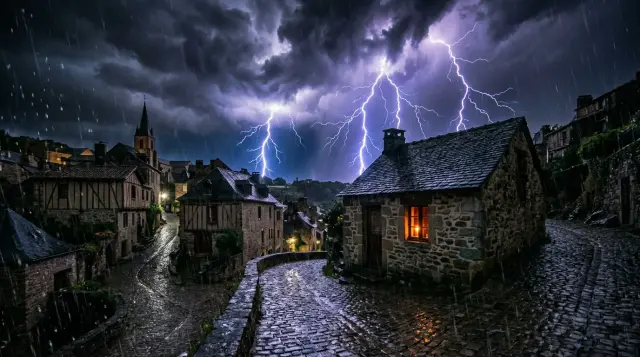
Was Nikola Tesla Really Born During a Lightning Storm?
Yes. And it's one of the most poetic origin stories in science. According to multiple biographical accounts, including those by Tesla biographer W. Bernard Carlson of the University of Virginia, Tesla was born at the stroke of midnight on July 10, 1856, while a fierce lightning storm raged over Smiljan, in the Austrian Empire (now Croatia) [1]. The midwife supposedly took it as a dark sign. Tesla's mother, Đuka Tesla, famously countered that he'd be "a child of light."
Turns out she wasn't wrong. Đuka Tesla herself was an inventor of small household appliances, and Tesla credited her with sparking his interest in mechanical innovation. His father, Milutin Tesla, was a Serbian Orthodox priest who wanted his son to follow him into the clergy. Young Nikola almost did. He came remarkably close to entering the priesthood before a bout of cholera changed his path entirely.
These nikola tesla fascinating facts about his early years matter because they show that genius doesn't emerge from nowhere. It grows from family, circumstance, and sometimes a literal bolt of lightning. If you want to go deeper into Tesla's early life and legacy, check out Nikola Tesla: The Untold Story Of Modern Electricity.
How Did the Tesla vs. Edison Rivalry Actually Start?
Here's where it gets personal. In 1884, a 28-year-old Tesla arrived in New York City with four cents in his pocket and a letter of recommendation to Thomas Edison. He went to work for Edison's company, improving direct current (DC) generators. Edison reportedly promised Tesla around $50,000 if he could successfully redesign the machines. Tesla did the work. Edison didn't pay up.
When Tesla confronted him, Edison allegedly said, "Tesla, you don't understand our American humor." Whether the quote is word-for-word accurate is debated by historians, but the outcome isn't. Tesla quit. That broken promise lit the fuse for the "War of Currents," one of the most consequential rivalries in the history of electrical engineering.
Edison championed direct current. Tesla, backed by industrialist George Westinghouse, pushed alternating current (AC). The stakes were enormous: whoever won would control the electrical infrastructure of the entire United States. Edison went so far as to publicly electrocute animals to "prove" AC was dangerous. It was ugly, manipulative, and ultimately unsuccessful.
AC won. The world is still powered by it today. If that doesn't count among the most compelling facts about Tesla and Edison's feud, I don't know what does. For more on how electricity shaped modern technology, see 7 Fascinating Facts About the History of Electricity: That Nobody Taught You.
Tesla arrived in America with four cents, a few poems, and calculations for a flying machine. He left behind over 300 patents, the modern power grid, and a legacy that still sparks debate, admiration, and wonder more than 80 years after his death.
What Was the First Hydroelectric Power Plant in the U.S.?
The Adams Power Plant at Niagara Falls, completed in 1895, was the first large-scale alternating current hydroelectric station in the United States. Tesla's AC system, licensed through Westinghouse Electric, powered it. The plant transmitted electricity over 20 miles to Buffalo, New York, proving that AC could deliver power over long distances far more efficiently than Edison's DC system.
This was the moment that settled the War of Currents for good. Before Niagara Falls, plenty of people still doubted AC. After it? The argument was over. The International Niagara Commission, which included Lord Kelvin (who initially favored DC), awarded the contract to Westinghouse based on Tesla's patents.
Quick Q&A
Q: Who built the first AC hydroelectric power plant in the United States?
A: The Adams Power Plant at Niagara Falls, completed in 1895, was built using Nikola Tesla's alternating current system licensed through Westinghouse Electric.
Today, we take for granted that the power coming out of our walls is AC. But in 1895, that was a revolutionary, fiercely contested idea. The fact that Tesla's vision won out is one of the reasons we have the modern electrical grid at all.

Did Tesla Really Have a Photographic Memory?
Tesla claimed to possess what he called "eidetic imagery." He could visualize objects and inventions in his mind with extraordinary detail. He reportedly designed entire machines mentally, running them through simulated tests in his imagination before ever putting anything on paper. According to his own autobiography, "My Inventions" (published serially in Electrical Experimenter magazine in 1919), he could picture devices so vividly that he'd know which parts would wear out first.
Modern psychologists at institutions like Harvard University's Department of Psychology generally distinguish between eidetic memory (briefly retained vivid images, more common in children) and true photographic memory (which likely doesn't exist as popularly imagined). Tesla's abilities probably fell somewhere unique on that spectrum. He wasn't just remembering images. He was using spatial reasoning at a level most people can't even conceptualize.
This mental visualization is how Tesla came up with the rotating magnetic field, the principle behind AC motors. He didn't sketch it out on a napkin (though he did use a lot of napkins, more on that later). He saw it spinning in his mind during a walk in a Budapest park in 1882 and reportedly drew the diagram in the dirt with a stick. Among nikola tesla fascinating facts, this one says a lot about how differently his brain worked.

Why Did the U.S. Government Classify Tesla's Documents?
When Tesla died alone in Room 3327 of the New Yorker Hotel on January 7, 1943, the U.S. government moved fast. Within days, the Office of Alien Property (OAP) seized his belongings, including trunks full of papers, notebooks, and technical documents. This was despite the fact that Tesla had been a U.S. citizen since 1891.
Why the rush? It was the middle of World War II, and rumors swirled that Tesla had been working on a directed-energy weapon he called "Teleforce," popularly dubbed a "death ray" by the press. The FBI, under J. Edgar Hoover, wanted to make sure those plans didn't end up in enemy hands. According to declassified FBI records available through the FBI's online vault, physicist John G. Trump (uncle of the 45th U.S. President) was brought in from MIT to evaluate Tesla's papers [2].
Trump concluded that the papers contained nothing of significant practical value or danger. Some of Tesla's documents were eventually released to the Tesla Museum in Belgrade, Serbia, in 1952. But conspiracy theories persist to this day about whether all the papers were returned. Given that Tesla held over 300 patents across 26 countries, it's not hard to see why people wonder.
The concept of electromagnetic field research and its potential applications has only grown since Tesla's time. If you're interested in how modern science approaches electromagnetic radiation and personal protection, you can Learn About EMF Protection or explore the Faraday Collection from Proteck'd EMF Protection.
What Were Tesla's Strangest Personal Habits?
Let's talk about the pigeons. Tesla developed an intense attachment to the pigeons of New York City, particularly one white female pigeon that he described as the love of his life. He reportedly said, "I loved that pigeon as a man loves a woman, and she loved me." He once spent approximately $2,000 (over $35,000 in today's dollars) to fix a pigeon's broken wing and leg, hiring a specialized veterinarian for the job.
Then there were the napkins. Tesla used exactly 18 napkins to clean his dining room before every evening meal. He dined each night at precisely 8:10 PM, usually at Delmonico's and later at the Waldorf-Astoria. His obsessive routines extended to counting his steps and calculating the cubic volume of his food before eating it. Modern psychologists suspect he likely had obsessive-compulsive disorder, though he was never formally diagnosed during his lifetime.
He also had a severe phobia of pearls. Couldn't stand being in the same room with them. He'd reportedly refuse to speak to women who wore pearl jewelry. He was voluntarily celibate his entire life, believing that romantic relationships would interfere with his work. He once told a reporter that chastity was "very helpful to scientific ability."
These personal eccentricities make Tesla more human, not less. They're a reminder that brilliant minds don't always fit into neat categories. For more surprising details about Tesla's life, read Nikola Tesla: Fascinating Facts.
Was Tesla an Environmentalist Ahead of His Time?
Absolutely. Long before climate change entered the public conversation, Tesla was thinking about renewable energy. In a 1905 article for Electrical World and Engineer magazine, he advocated for harnessing natural forces like solar, wind, and geothermal energy. He saw fossil fuels as temporary and wasteful. That viewpoint was practically unheard of among early 20th century industrialists.
His work on the Niagara Falls hydroelectric plant wasn't just a business decision. It was a philosophical one. Tesla believed humanity's future depended on working with nature's energy, not against it. He envisioned a world where electricity could be transmitted wirelessly through the Earth's atmosphere, eliminating the need for power lines and reducing environmental disruption.
Quick Q&A
Q: Did Nikola Tesla support renewable energy?
A: Yes, Tesla advocated for solar, wind, and geothermal energy as early as 1905, decades before the modern environmental movement began.
His Wardenclyffe Tower project on Long Island, New York (1901 to 1906), was supposed to be the first step toward wireless energy transmission. Financier J.P. Morgan pulled funding when he realized he couldn't meter wireless electricity. The tower was demolished in 1917. It remains one of history's great "what ifs."
How Many Patents Did Tesla Actually Hold?
Tesla held at least 300 patents across 26 countries, according to the Nikola Tesla Museum in Belgrade, Serbia. In the United States alone, he was granted 112 patents by the U.S. Patent and Trademark Office. His patents covered everything from the AC induction motor to early radio technology, fluorescent lighting concepts, and remote control devices.
Here's a fact that surprises most people. The U.S. Supreme Court ruled in 1943 (the same year Tesla died) that Tesla's radio patents had priority over Guglielmo Marconi's. Marconi had won the Nobel Prize for radio in 1909, but the Court determined that Tesla's earlier patents covered the fundamental technology. The ruling came too late for Tesla to benefit financially.
Tesla's inventions weren't just theoretical either. The Tesla coil, developed in 1891, is still used today in radio technology, television sets, and other electronic equipment. His AC motor design remains the standard in industrial applications worldwide. These aren't dusty relics. They're the foundation of modern electrical infrastructure.
Understanding how electromagnetic fields work, from Tesla's era to our own, matters more than ever now that we're surrounded by wireless devices. For a broader look at surprising tech history, check out 12 Fascinating Tech Facts That Sound Too Weird to Be True: The Complete List.
Did Tesla Really Believe Women Would Become Superior to Men?
He did. In a 1926 interview with Collier's magazine journalist John B. Kennedy, Tesla predicted that women would eventually become the dominant sex. He believed that as women gained access to education and professional opportunities, they would surpass men in intellectual achievement. He framed it not as a fear but as an inevitability driven by social evolution.
The quote is striking for its era: "The acquisition of new fields of endeavor by women, their gradually increasing tendency to push aside man, is a sign of the beginning of a new order." Coming from a man born in 1856 who chose lifelong celibacy, it's a remarkably forward-thinking perspective on gender dynamics.
However, Tesla's views on human progress had a darker side. He also expressed support for eugenics, which was disturbingly mainstream in early 20th century science. Figures from Alexander Graham Bell to the Carnegie Institution endorsed eugenic principles. Tesla's support for selective breeding doesn't cancel his contributions to electrical engineering, but it's a reminder that historical figures are complicated. Nikola tesla fascinating facts aren't always comfortable ones.
What Happened to Tesla's Famous Sense of Humor?
Most accounts paint Tesla as a brooding genius. But people who actually knew him described a sharp, dry wit. Mark Twain was one of Tesla's close friends. The two met in the late 1880s, and Twain was a frequent visitor to Tesla's laboratory. In one famous incident, Tesla invited Twain to stand on a vibrating platform powered by an oscillator. Twain enjoyed it so much he refused to step off, only to discover (in a very public, very physical way) why Tesla had warned him about the laxative effects of prolonged vibration.
Tesla also used humor in his public demonstrations. He was a showman. At the 1893 World's Columbian Exposition in Chicago, Tesla conducted electricity through his own body to light up lamps, astonishing audiences of thousands. He once quipped to a journalist that the difference between him and Edison was that Edison had merely improved existing ideas, while he had created entirely new ones.
This charisma faded as Tesla aged. By his final decades, he was largely reclusive, living in the New Yorker Hotel and spending most of his time with his beloved pigeons. The contrast between the young showman and the elderly loner is one of the more heartbreaking parts of Tesla's story.
Why Is July 10 Celebrated as Nikola Tesla Day?
The Croatian Parliament officially declared July 10 as Nikola Tesla Day of Science in 2006, commemorating his birthday in 1856. Several U.S. states, including New York, have also issued proclamations recognizing the date. The day is celebrated with educational events, public lectures, and demonstrations of Tesla's inventions, particularly at the Tesla Science Center at Wardenclyffe on Long Island.
In 2003, a group of supporters purchased the Wardenclyffe property to preserve it as a museum and educational center. The Tesla Science Center opened to the public in stages, with significant fundraising help from a 2012 campaign supported by cartoonist Matthew Inman of The Oatmeal, which raised over $1.3 million. The site where Tesla planned to build his wireless energy transmission system is now a place where his legacy is taught to a new generation.
It's fitting that Tesla's birthday falls in the same month the United States celebrates its independence. The man who arrived in America with four cents in his pocket helped build the electrical system that powers the country. Among all the nikola tesla fascinating facts out there, his lasting impact on how we live every single day might be the most remarkable one of all.
How Does Tesla's Legacy Connect to Modern EMF Awareness?
Tesla spent his life working with electromagnetic energy. He understood, perhaps better than anyone of his era, that electrical fields are everywhere and that they have real, measurable effects. The World Health Organization's International Agency for Research on Cancer (IARC) classified radiofrequency electromagnetic fields as "possibly carcinogenic to humans" (Group 2B) in 2011, based on evidence including the large-scale Interphone study [3]. Tesla couldn't have predicted smartphones, but he understood the principle that energy fields interact with the physical world.
Today, we're surrounded by more sources of electromagnetic radiation than Tesla could have imagined: cell phones, Wi-Fi routers, Bluetooth devices, smart meters, and 5G towers. The National Institute of Environmental Health Sciences (NIEHS) continues to fund research on the health effects of non-ionizing radiation, and public interest in EM radiation shielding has grown substantially [4].
That growing awareness is exactly why companies like Proteck'd EMF Protection exist. Their Faraday Collection uses silver-infused fabric based on the same Faraday cage principles that Tesla himself would have recognized. It's a direct line from 19th-century electrical science to 21st-century personal protection. Tesla would probably appreciate the engineering.
Whether you're a Tesla enthusiast, a science teacher, or someone who just wants to understand the invisible forces around you, learning this history gives you context. Electricity changed everything. Understanding it, including its risks and possibilities, is one of the smartest things you can do.
Key Takeaways
Frequently Asked Questions
What are the most surprising nikola tesla fascinating facts?
Some of the most surprising include his birth during a lightning storm, his voluntary lifelong celibacy, and his deep attachment to a white pigeon he called the love of his life. He also spent around $2,000 (over $35,000 in today's money) to repair a pigeon's broken wing, and the U.S. Supreme Court ruled in 1943 that his radio patents predated Marconi's.
Did Thomas Edison really steal from Nikola Tesla?
Edison didn't steal Tesla's work outright, but he did reportedly refuse to pay Tesla a promised $50,000 bonus for improving DC generators. When Tesla confronted him, Edison allegedly brushed it off as a joke about "American humor." Tesla quit shortly after and went on to develop competing AC technology with George Westinghouse.
How many inventions did Nikola Tesla create?
Tesla held over 300 patents across 26 countries, with 112 patents granted in the United States alone. His inventions include the AC induction motor, the Tesla coil, early radio technology, fluorescent lighting concepts, and remote control devices. Many of these remain foundational to modern electrical systems.
Why did the government take Tesla's papers after he died?
The U.S. Office of Alien Property seized Tesla's belongings within days of his death on January 7, 1943. It was wartime, and the government was concerned about Tesla's rumored "death ray" weapon falling into enemy hands. MIT physicist John G. Trump evaluated the papers and concluded they contained nothing of immediate military value.
Was Tesla or Edison more important to the history of electricity?
Both made enormous contributions, but Tesla's alternating current system became the global standard for power transmission. Edison's work on direct current, the phonograph, and the practical light bulb was significant, but AC's ability to transmit power over long distances made it the winner of the "War of Currents." Most historians credit Tesla with the more foundational electrical innovation.
What was Tesla's relationship with Mark Twain?
Tesla and Mark Twain were close friends in the late 1880s and 1890s. Twain frequently visited Tesla's laboratory in New York. In one well-known incident, Twain stood on a vibrating platform in Tesla's lab for so long that it had embarrassing physical effects, something Tesla had tried to warn him about beforehand.
Did Nikola Tesla support eugenics?
Yes, Tesla expressed support for eugenic ideas, which were unfortunately mainstream in early 20th-century science. He believed in selective human breeding for "improvement" of the species. While this is a troubling part of his legacy, he was far from alone. Figures like Alexander Graham Bell and institutions like the Carnegie Institution also endorsed eugenics during that era.
What is a Faraday cage and how does it relate to Tesla?
A Faraday cage is an enclosure made of conductive material that blocks external electromagnetic fields. Michael Faraday invented the concept in 1836, and Tesla used similar shielding principles extensively in his experiments with high-voltage electricity. Today, Faraday cage technology is used in everything from laboratory equipment to EMF-protective clothing like the Proteck'd Faraday Collection.
Why is July 10 called Nikola Tesla Day?
July 10 is Tesla's birthday, and the Croatian Parliament officially declared it Nikola Tesla Day of Science in 2006. Several U.S. states have also issued proclamations recognizing the date. The day is typically celebrated with educational events and demonstrations related to Tesla's inventions and contributions to electrical science.
Was Tesla really afraid of pearls?
Yes, Tesla had a documented and severe aversion to pearls. He reportedly couldn't stand being near them and would refuse to speak to women wearing pearl jewelry. While no formal psychological diagnosis was made during his lifetime, historians and psychologists believe Tesla likely had obsessive-compulsive disorder, which also showed up in his rigid daily routines and counting habits.
References
- W. Bernard Carlson, University of Virginia (via Nature) – Biographical details about Tesla's birth, early life in Smiljan, and his mother's influence on his interest in invention.
- FBI Records: The Vault - Nikola Tesla – The U.S. government seized Tesla's papers after his death in 1943 and had MIT physicist John G. Trump evaluate them for military significance.
- IARC WHO - Radiofrequency Electromagnetic Fields – IARC classified radiofrequency electromagnetic fields as possibly carcinogenic to humans (Group 2B) in 2011.
- National Institute of Environmental Health Sciences (NIEHS) – NIEHS funds ongoing research on the health effects of non-ionizing electromagnetic radiation from common devices.
About the Author
Proteck'd EMF Apparel
Health & EMF Specialists
The Proteck'd team covers EMF protection, silver-fiber apparel, and practical ways to reduce everyday radiation exposure. Every piece Proteck'd ships is designed, tested, and worn by the people who build it.
Protect Yourself Today
Proteck'd Faraday and silver fiber apparel is engineered to shield your body from everyday EMF exposure. Built for real life, tested for real results.
Shop EMF Protection →✓30-day returns✓Free shipping✓Free returns✓Silver fiber shielding


Leave a comment