


Protecting Your Family from 5G Radiation: What Actually Works

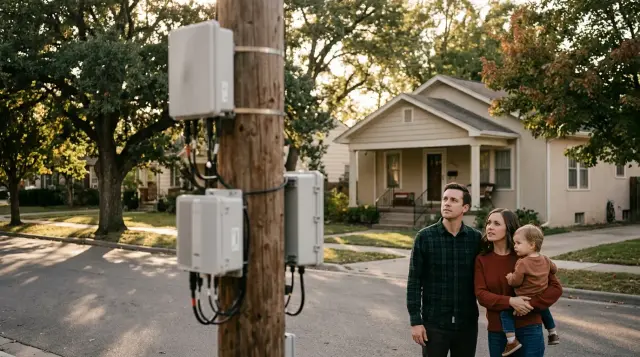
More than 100,000 small-cell 5G antennas have been installed across the United States. That number keeps climbing. If you've spotted new boxes popping up on utility poles in your neighborhood, you're not seeing things. The buildout is massive, and families everywhere are asking the same question: what does all this new electromagnetic radiation mean for our health?
You don't have to be a conspiracy theorist to want answers. The World Health Organization's International Agency for Research on Cancer (IARC) classified radiofrequency electromagnetic fields as Group 2B, meaning "possibly carcinogenic to humans," back in 2011 [1]. That classification hasn't been updated, even though our daily exposure has multiplied many times over. That alone is reason enough to pay attention.
So what actually works to lower your family's exposure? That's what this piece is about. We'll look at real science, separate signal from noise, and talk about practical solutions you can act on today. Shield clothes made with conductive metals like silver are one of the most tangible tools out there. But they're only one part of a bigger picture.
I've spent months reading the research, testing products, and talking to people who take EMF reduction seriously without losing their grip on reality. Whether you're shopping for your first piece of EMF protective clothing or rethinking your entire home setup, there's something here for you.
Let's get into it.
You don't have to choose between modern life and protecting your family. Thoughtful EMF reduction through shield clothes, smart habits, and low-EMF design is the middle ground that actually works, and it doesn't require giving up a single device.
- 5G millimeter waves operate at higher frequencies (24 to 47 GHz) and require denser antenna networks, increasing ambient RF exposure in urban areas.
- Silver-infused shield clothes can block over 99% of electromagnetic radiation when properly constructed and independently tested.
- The 2018 National Toxicology Program study found clear evidence of tumors in rats exposed to RF radiation, though at higher levels than typical human exposure.
- Children may absorb more RF energy per kilogram of body weight than adults, making precautionary measures especially important for families.
- Layering strategies like distance, EMF-blocking apparel, and low-EMF sleep environments provides the most effective overall protection.
What Is 5G Radiation, and How Is It Different from 4G?
Some quick context first. When people say "5G radiation," they're referring to radiofrequency (RF) electromagnetic radiation in a higher frequency band than previous cellular generations. Traditional 4G LTE operates between roughly 700 MHz and 2.5 GHz. 5G uses those same frequencies plus a newer band called millimeter wave (mmWave), which sits between 24 GHz and 47 GHz.
Higher frequency means shorter wavelength. That's basic physics. And shorter wavelengths don't penetrate as deeply into the body. Millimeter waves mostly interact with the skin and surface tissues rather than passing through you the way lower-frequency signals do. Sounds reassuring, right? It does, until you think about a couple of things.
One: because mmWave signals don't travel far, providers need far more antennas placed much closer together, often every 500 feet in urban areas. According to the FCC, small-cell installations are being deployed at unprecedented density to support 5G coverage [2]. So while each individual signal might be weaker, you're surrounded by them constantly. Two: we have very little long-term safety data on chronic, low-level millimeter wave exposure.
Quick Q&A
Q: Does 5G radiation penetrate the body differently than 4G?
A: Yes. 5G millimeter waves are absorbed primarily by the skin and surface tissues, while 4G's lower frequencies can penetrate deeper into the body.
The National Institute of Environmental Health Sciences (NIEHS) continues to fund research into RF exposure, but their most significant completed study, the National Toxicology Program report from 2018, focused on 2G and 3G frequencies [3]. We're rolling out 5G at scale while the safety research is still playing catch-up. That gap deserves serious attention.
Do Shield Clothes Actually Block 5G and EMF?
This is the big question. I'm glad people are asking it with healthy skepticism. The concept behind shield clothes is simple: weave conductive metal fibers, usually silver, into fabric, and the garment acts like a wearable Faraday cage. The metal reflects and absorbs incoming electromagnetic radiation before it reaches your skin. Same principle that keeps your food from sparking in a microwave or an MRI room from leaking signals.
The science is solid. Silver is one of the most electrically conductive elements on the periodic table. When woven into textile at sufficient density, it can attenuate over 99% of RF radiation across a wide frequency spectrum. If you want to understand how this works in practice, Proteck'd has a detailed breakdown in their article on Personal EMF Faraday Shield: How Proteck'd Does It.
But here's where you need to be a sharp consumer. Not all EMF protective clothing is created equal. Effectiveness depends on the silver content, the weave density, the garment's coverage area, and whether it's been independently tested. A flimsy t-shirt with a token amount of silver thread won't do much. You want lab-verified attenuation numbers. Proteck'd's Faraday EMF Collection uses silver-infused fabric with documented shielding effectiveness, which is why I keep coming back to them as a recommendation.
Still not convinced? Fair enough. Check out this deeper look at Personal EMF Faraday Shield: Is It Effective? for testing data and real-world results that go beyond marketing claims.

Why Does the National Toxicology Program Study Matter?
If you want to understand the 5G debate, you need to know about the NTP study. In 2018, the U.S. National Toxicology Program released results from a $30 million, decade-long study on radiofrequency radiation and cancer in rodents. It remains the most comprehensive study of its kind ever conducted [3].
The findings were striking. Researchers found "clear evidence" of malignant heart tumors (schwannomas) in male rats exposed to high levels of RF radiation, specifically 2G and 3G signals. They also found "some evidence" of brain tumors. "Clear evidence" is the highest classification the NTP uses. Not a maybe. Their strongest language.
Critics rightly point out that the exposure levels in the study were significantly higher than what humans typically experience from cell phones. The rats received whole-body radiation at levels of 1.5 to 6 W/kg, while the FCC's SAR limit for consumer devices is 1.6 W/kg averaged over 1 gram of tissue [2]. But the study wasn't designed to replicate normal use. It was designed to identify hazards. And it found them.
What the NTP study didn't cover is millimeter wave frequencies. That's the gap. We have strong evidence of biological effects from older RF frequencies and basically no long-term data on the newer 5G bands. The precautionary principle says that reducing your exposure while we wait for that data is sensible, not paranoid.
What Practical Steps Can You Take to Reduce Your Family's Exposure?
Let's get practical. You're not going to eliminate electromagnetic radiation from your life. It's everywhere, from your Wi-Fi router to your neighbor's smart doorbell. But you can reduce your exposure in meaningful ways by layering a few strategies together.
First: distance. RF exposure drops dramatically with distance, following the inverse square law. Moving your phone just a few inches from your body, say from your pocket to a bag, cuts your exposure significantly. Don't sleep with your phone on the nightstand. Put your Wi-Fi router in a room you don't spend much time in. These changes are free and they make a real difference. For a full walkthrough, check out Low-EMF Home Design: A Complete Guide.
Second: shielding apparel. This is where radio frequency shielding garments earn their place. Wearing a silver-infused hoodie or jacket from Proteck'd's Men's Faraday Collection creates a physical barrier between you and ambient RF signals. Especially useful for people who work near cell towers, spend long hours in high-EMF environments, or simply want an extra layer of protection on their commute.
Third: optimize your sleep environment. You spend roughly a third of your life asleep. Making that time low-EMF gives your body a long, uninterrupted recovery window. Proteck'd has two excellent guides on this: A Low-EMF Bedroom: The Simple Sleep Upgrade and EMF Blocking for Better Sleep: The Complete Guide.
Quick Q&A
Q: What's the single easiest way to reduce EMF exposure at home?
A: Turn off your Wi-Fi router at night. It's free, takes two seconds, and eliminates hours of unnecessary RF exposure while your family sleeps.
How Do You Choose EMF Protective Clothing That Actually Works?
The market for EMF-blocking apparel has exploded in the last few years, and honestly, a lot of it is junk. Some brands throw around terms like "EMF protection" without publishing any lab data. Others use such low concentrations of conductive material that the shielding effect is basically nothing. So how do you tell legitimate shield clothes apart from marketing nonsense?
Look for three things. First, the material composition. Silver is the gold standard (pardon the pun) for RF shielding fabrics because of its superior conductivity. Copper and nickel blends work too, but silver offers the best combination of effectiveness, comfort, and durability. Second, check for independent lab testing. Any brand worth buying from should be able to show you attenuation data measured in decibels (dB) across specific frequency ranges. A garment that blocks 30 dB of radiation is reducing it by 99.9%. Proteck'd publishes this information and explains the science on their EMF Protection Benefits page.
Third, think about coverage area. A hat alone won't protect your torso. A t-shirt won't shield your head. Consider where you want protection most and build from there. Many families start with a shielding hoodie because it covers the head, neck, and upper body in one garment. The Faraday EMF Collection includes multiple styles so you can layer protection based on your daily routine.
One more tip: wash your EMF protective clothing according to the manufacturer's instructions. Silver fibers can degrade if you use bleach or high-heat drying. Proper care extends the garment's shielding lifespan significantly.
Are Children More Vulnerable to 5G and RF Radiation?
This is the question that keeps parents up at night. It deserves a straight answer. Yes, there are reasons to believe children may be more susceptible to RF electromagnetic radiation than adults. Their skulls are thinner. Their brain tissue contains more water, which absorbs RF energy more readily. And their cells are dividing more rapidly, making them potentially more sensitive to any agent that damages DNA.
A 2012 review published in the Journal of Microscopy and Ultrastructure by L. Lloyd Morgan and colleagues found that children absorb more RF energy per kilogram of body weight than adults, particularly in the bone marrow of the skull [4]. The American Academy of Pediatrics has recommended that the FCC update its RF exposure guidelines, noting that current standards were set based on a large adult male and don't account for children's unique physiology.
Now think about how kids actually use devices. A tablet propped on a lap. A phone held against the ear. A laptop balanced on the chest while watching videos in bed. Every one of those scenarios places an RF source in direct contact with a developing body. Teaching kids to use speakerphone, keeping devices on airplane mode when they're not actively needed, and outfitting them in EMF-blocking apparel in high-exposure environments are all reasonable, low-effort protective measures.
I'm not trying to scare you. I'm trying to help you make informed decisions. The data we have suggests caution is warranted, especially for the youngest members of your household.
Can You Reduce EMF Exposure Without Giving Up Technology?
Absolutely. And this is an important point, because the conversation around 5G protection can sometimes veer into "throw away all your devices and go live in a cabin" territory. That's not realistic for most families. It's also not necessary.
The goal isn't zero exposure. It's thoughtful reduction. Here's what that looks like in a real household. A family of four in Denver that I've corresponded with made a handful of changes: they hardwired their home computers with ethernet cables instead of relying on Wi-Fi, switched their phones to airplane mode at night, and started wearing silver-infused shield clothes during their daily commutes past several small-cell 5G installations. They didn't ditch their smartphones or cancel their internet. They just got smarter about how and when they're exposed.
Think of it like wearing sunscreen. You don't avoid the sun entirely. You protect yourself during the times of highest exposure. EMF-blocking garments from Proteck'd work the same way. Throw on a Faraday hoodie when you're walking through a dense urban area or sitting in an office surrounded by wireless devices. Take it off when you're relaxing in a low-EMF space at home.
Small changes add up. Turning off Bluetooth when you're not using it. Swapping AirPods for wired headphones. Positioning your bed away from the wall where your smart meter is mounted. None of this requires sacrifice. It just requires awareness.
What Does the Future of 5G Safety Research Look Like?
This is where things get both frustrating and hopeful. The WHO announced in 2022 that it's conducting a systematic review of RF radiation health effects, the first comprehensive update since the 2011 Group 2B classification [1]. This review will incorporate studies on 5G-specific frequencies, including millimeter waves, and is expected to inform updated guidelines for international exposure limits.
Meanwhile, the NIEHS has signaled that further research is needed, though the National Toxicology Program's RF program has faced funding challenges. In Europe, the STOA (Science and Technology Options Assessment) panel of the European Parliament published a review in 2021 recommending lower exposure limits and more independent research, citing potential effects on fertility, neurodevelopment, and cancer risk.
The reality? We're likely 5 to 10 years away from definitive, large-scale human studies on 5G millimeter wave exposure. In the meantime, a precautionary approach makes sense. You don't have to be afraid. You just have to be thoughtful. Wearing EMF protective clothing, managing your home's electromagnetic environment, and staying informed as new research comes out is a balanced, rational response to a still-evolving situation.
If you want to start somewhere tangible today, browse the Faraday EMF Collection and see which pieces fit your lifestyle. Protection shouldn't feel like a chore. It should feel like putting on a really comfortable hoodie that happens to block 99% of the RF radiation floating through your neighborhood.
Frequently Asked Questions
Yes, when they're made with enough silver or other conductive metal content. Silver-infused fabrics can attenuate over 99% of electromagnetic radiation, including 5G millimeter wave frequencies. The key is choosing garments with independent lab testing and high metal fiber density, not just vague marketing claims.
The honest answer is we don't have definitive long-term data yet. The WHO classifies all radiofrequency electromagnetic fields as Group 2B (possibly carcinogenic), and the NTP's 2018 study found clear evidence of tumors in rats exposed to RF radiation. Reducing your exposure while the research catches up seems like common sense.
Silver is one of the most electrically conductive elements. When woven into fabric at sufficient density, it creates a mesh that reflects and absorbs incoming electromagnetic waves, working like a flexible Faraday cage. Effectiveness depends on silver concentration, weave tightness, and the frequency range being targeted.
Research suggests they may be. Children's thinner skulls, higher tissue water content, and rapidly dividing cells can lead to greater RF energy absorption per kilogram of body weight. The American Academy of Pediatrics has recommended updated FCC guidelines that account for children's unique physiology.
The FCC limits specific absorption rate (SAR) to 1.6 watts per kilogram averaged over 1 gram of tissue. This standard was established in 1996 based on a large adult male model and hasn't been updated since, despite huge changes in how we use wireless devices.
Yes, but follow the manufacturer's care instructions carefully. Most silver-infused garments should be washed in cold water without bleach and air-dried or tumble-dried on low heat. Harsh chemicals and high temperatures can degrade the silver fibers and reduce shielding effectiveness over time.
Ionizing radiation (like X-rays and gamma rays) has enough energy to break chemical bonds and damage DNA directly. Non-ionizing radiation, which includes 5G and all RF signals, has lower energy and doesn't break bonds directly. That said, the NTP study did show biological effects from non-ionizing RF radiation at high exposure levels.
It does. Your Wi-Fi router broadcasts RF radiation continuously, even when no devices are actively connected. Turning it off at night eliminates 7 to 8 hours of unnecessary exposure during your body's most restorative period. It's one of the simplest and most impactful changes you can make.
There's no universally agreed-upon "safe" distance because it depends on tower power output, antenna direction, and environmental factors. RF exposure decreases significantly with distance following the inverse square law. Most precaution-focused experts suggest maintaining at least 200 to 400 meters from small-cell antennas when possible.
No. There is no credible scientific evidence that stickers, pendants, crystals, or similar products reduce electromagnetic radiation exposure. Real EMF shielding requires a physical barrier made of conductive material like silver, copper, or nickel. That's why properly constructed shield clothes work but stickers don't.
References
- International Agency for Research on Cancer (IARC), World Health Organization – The WHO's IARC classifies radiofrequency electromagnetic fields as Group 2B, possibly carcinogenic to humans (classified in 2011).
- U.S. Food and Drug Administration – The FCC sets the specific absorption rate (SAR) limit at 1.6 W/kg averaged over 1 gram of tissue for cell phones.
- National Institute of Environmental Health Sciences, National Toxicology Program – The NTP's 2018 study found clear evidence of malignant heart tumors (schwannomas) in male rats exposed to high levels of RF radiation.
- National Institutes of Health, National Library of Medicine – Children absorb more RF energy per kilogram of body weight than adults, particularly in the bone marrow of the skull.
About the Author
Proteck'd EMF Apparel
Health & EMF Specialists
The Proteck'd team covers EMF protection, silver-fiber apparel, and practical ways to reduce everyday radiation exposure. Every piece Proteck'd ships is designed, tested, and worn by the people who build it.
Protect Yourself Today
Proteck'd Faraday and silver fiber apparel is engineered to shield your body from everyday EMF exposure. Built for real life, tested for real results.
Shop EMF Protection →✓30-day returns✓Free shipping✓Free returns✓Silver fiber shielding


Dejar un comentario