


Fixing Your Sleep: What the Science Says

Here's a number that should bother you: according to the CDC, one in three American adults doesn't get enough sleep. Not "could use a little more." Doesn't get enough. Period. And the fallout goes way beyond feeling groggy the next morning. We're talking impaired immune function, higher rates of cardiovascular disease, and cognitive decline that mimics aging your brain by years. Sleep matters. A lot.
If you've searched for a how to block sleep optimization guide, you've probably landed on one of two extremes. One side gives you vague advice like "just relax before bed." The other hands you a 47-step biohacking protocol that requires a PhD and a home lab. Neither is much help if you just want to sleep well tonight, and every night after.
This guide sits in the middle. I've pulled from peer-reviewed research, clinical guidelines from the National Institutes of Health and Harvard Medical School, and plenty of real-world trial and error to build something you can actually use. No fluff. No $500 gadget requirements. Just the strategies that make the biggest difference.
We'll cover five big areas: circadian rhythm alignment, bedroom environment, nutrition and supplement timing, pre-sleep routines, and how to track whether any of it's working. Along the way, I'll flag where the science is solid and where marketing has sprinted way ahead of the evidence. Ready? Let's fix your sleep.
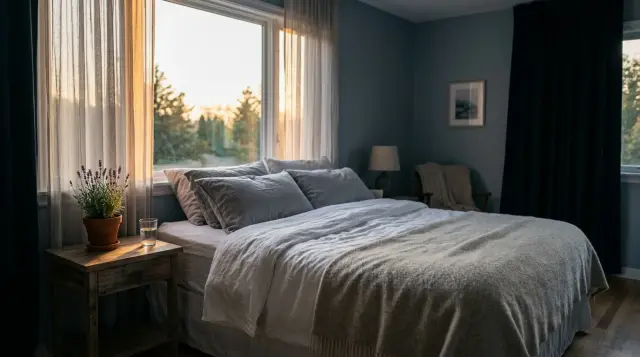
Sleep isn't a luxury you earn after a productive day. It's the foundation that makes productivity possible. Get the basics right consistently, and your body does the rest.
What Is Circadian Rhythm Alignment and Why Does It Matter for Sleep?
Your circadian rhythm is your body's internal 24-hour clock. It runs almost everything: hormone release, body temperature, digestion, mood. When that clock falls out of sync with your actual schedule, sleep quality tanks fast. A 2019 study in the Journal of Clinical Sleep Medicine found that irregular sleep schedules increased the risk of metabolic syndrome by 27%, independent of total sleep duration [1]. That means it's not just about how much you sleep. It's about how consistently you sleep.
The single most powerful circadian cue? Light. Dr. Andrew Huberman at Stanford University has popularized the concept of "morning light viewing," and the research backs it up. Exposing your eyes to bright light, ideally sunlight around 10,000 lux, within 30 to 60 minutes of waking sets off a cortisol pulse that anchors your entire day. That pulse tells your brain when to start the melatonin production countdown, roughly 14 to 16 hours later.
Here's a concrete example. Say you wake up at 6:30 AM and immediately check your phone in a dim room. Your cortisol pulse comes in weak and late. Now picture walking outside for 10 minutes at 6:45 AM, even on a cloudy day. Overcast daylight still delivers about 2,000 to 10,000 lux, compared to indoor lighting at a measly 100 to 300 lux. Your brain gets the signal, your clock syncs, and your melatonin starts ramping up right around 9:30 or 10 PM.
Quick Q&A
Q: Can I use a light therapy box instead of going outside in the morning?
A: Yes, a 10,000 lux light therapy box placed 16 to 24 inches from your face for 20 to 30 minutes is an effective substitute, especially during winter months when outdoor light is limited.
Weekend catch-up sleep is another thing worth addressing. Research from the University of Colorado Boulder, published in Current Biology in 2019, showed that weekend "recovery sleep" did not reverse the metabolic damage caused by weeknight sleep restriction [2]. The takeaway? A consistent schedule, going to bed and waking within a 30-minute window even on weekends, beats any amount of Sunday sleeping in. It sounds rigid. But once your rhythm locks in, you'll find you don't need an alarm most mornings.
How Should You Set Up Your Bedroom for Better Sleep?
Your sleep environment is the second pillar, and it's where small changes punch well above their weight. Harvard Medical School's sleep division recommends a bedroom temperature of 65 to 68 degrees Fahrenheit. Your core body temperature naturally drops about 2 degrees as you fall asleep, and a cool room supports that process. If you've ever noticed how much better you rest in a cold hotel room versus a stuffy one at home, that's exactly this mechanism at work.
Darkness matters more than most people realize. Even tiny amounts of light, as dim as 5 lux (about the brightness of a hallway nightlight), have been shown to disrupt melatonin production, according to research from Northwestern University's Feinberg School of Medicine. Blackout curtains are a worthwhile investment. So is covering or removing every LED in your bedroom: charger lights, router indicators, standby buttons on electronics. All of it.
Speaking of electronics, let's talk about electromagnetic fields. This is where a lot of people roll their eyes. Fair enough. But the research is more nuanced than the skeptics suggest. The NIH's National Institute of Environmental Health Sciences acknowledges that EMF exposure from devices is an area of active investigation, particularly regarding its effects on melatonin suppression and sleep architecture. At minimum, moving your phone away from your bed and switching to airplane mode removes a known source of both blue light temptation and low-level radiofrequency exposure. For those who want to go further, Proteck'd's Faraday Health Collection offers EMF-shielding apparel that you can actually wear to bed, and their EMF Health Benefits page breaks down the science behind the fabrics.
Noise is the last piece. If you can't control environmental sounds (traffic, neighbors, a snoring partner), a white noise machine set to 40 to 50 decibels provides consistent acoustic masking. A 2021 review in Sleep Medicine Reviews found that continuous broadband white noise improved sleep onset latency and overall sleep quality in adults, though the authors noted individual responses vary. The key is consistency. Your brain habituates to predictable sound patterns, so keep the same sound at the same volume every night.
Does What You Eat and Drink Really Affect Sleep Quality?
Short answer: absolutely. And the timing matters just as much as the food itself. Let's start with the obvious one. Caffeine. According to the Mayo Clinic, caffeine has a half-life of approximately 5 to 6 hours. That means if you drink a cup of coffee at 2 PM containing 200 mg of caffeine, you've still got about 100 mg circulating at 7 or 8 PM. A study in the Journal of Clinical Sleep Medicine showed that caffeine consumed even 6 hours before bedtime reduced total sleep by more than 1 hour [3]. My personal cutoff is noon, and I've noticed a real difference since sticking to that rule.
Alcohol is trickier because it feels like it helps. You fall asleep faster, sure. But alcohol fragments your sleep architecture, particularly REM sleep, which handles memory consolidation and emotional processing. Research from the London Sleep Centre published in Alcoholism: Clinical and Experimental Research found that even moderate alcohol intake (two drinks for men, one for women) reduced restorative sleep quality by 24%. If you're going to drink, finishing at least three hours before bed gives your liver time to metabolize most of it.
On the positive side, certain nutrients actively support nightly recovery. Magnesium glycinate is probably the best studied. A 2012 randomized controlled trial published in the Journal of Research in Medical Sciences found that 500 mg of magnesium supplementation significantly improved sleep quality scores in elderly participants [4]. Foods rich in tryptophan (turkey, eggs, cheese) support natural melatonin production, and tart cherry juice has shown modest benefits in small studies at Louisiana State University.
Quick Q&A
Q: Should I take melatonin supplements to fall asleep?
A: Melatonin supplements (0.5 to 1 mg taken 30 to 60 minutes before bed) can help with jet lag or short-term schedule shifts, but the evidence for long-term nightly use is weak, and most over-the-counter doses of 3 to 10 mg are far above physiological levels.
Meal timing rounds out this section. Eating a large meal within two hours of bedtime forces your digestive system to stay active when it should be winding down. The NIH recommends finishing your last substantial meal at least two to three hours before sleep. A light snack is fine if you're genuinely hungry. Think a small handful of almonds or a banana, foods that pair carbohydrates with magnesium and won't spike your blood sugar.
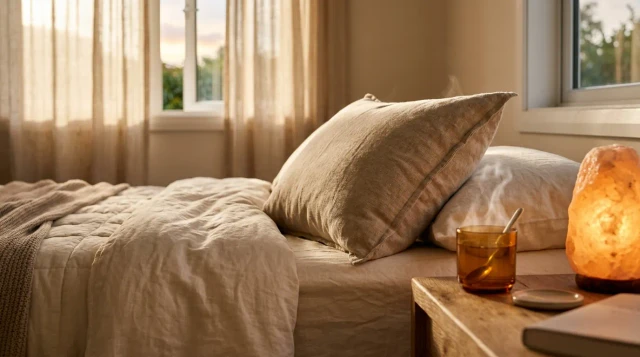
What's the Best Pre-Sleep Routine According to Science?
This is where the sleep optimization guide moves from passive environment setup to active behavior change. And honestly? This is where most people struggle. The concept of "sleep hygiene" has been around since the 1970s, when Dr. Peter Hauri at the Mayo Clinic first formalized the term. The core idea hasn't changed much: your brain needs a consistent transition period between being awake and being asleep.
The most impactful thing you can do in the 60 to 90 minutes before bed is eliminate blue light. Blue wavelengths (450 to 495 nanometers) suppress melatonin more powerfully than any other part of the visible spectrum. The NIH has documented that evening blue light exposure can suppress melatonin production by up to 50% and shift your circadian phase by up to 90 minutes. Blue-light-blocking glasses help some. But not using screens at all is the gold standard. If you need a device for an alarm, put it across the room face-down.
What you replace screen time with matters too. A warm bath or shower about 90 minutes before bed triggers a thermoregulatory response that actually cools you down afterward. Researchers at the University of Texas at Austin, analyzing 5,322 studies, found that a warm bath (104 to 109°F) taken one to two hours before bed improved sleep onset latency by an average of 10 minutes. That might not sound like much. But for someone who lies in bed staring at the ceiling for 45 minutes, shaving 10 minutes off is meaningful. Pair it with some light reading, journaling, or meditation, and you've built a routine that genuinely signals your nervous system to downshift.
If you tend to carry stress into the bedroom, a structured wind-down practice makes a huge difference. Mindfulness practices have solid evidence behind them. A 2015 randomized trial published in JAMA Internal Medicine found that mindfulness meditation improved sleep quality scores (Pittsburgh Sleep Quality Index) significantly more than sleep hygiene education alone. Even five minutes of box breathing (inhale 4 counts, hold 4, exhale 4, hold 4) can measurably lower cortisol and heart rate.
How Does Screen Time and EMF Exposure Disrupt Your Sleep?
We've talked about blue light already, but the full picture of how electronic devices mess with your sleep goes deeper than screen brightness. Your phone, tablet, and laptop emit radiofrequency electromagnetic fields continuously, even when the screen is off but the device is connected to WiFi or cellular networks. A 2008 study funded by the Mobile Manufacturers Forum and published in the journal Sleep found that exposure to 884 MHz radiofrequency signals (typical of cell phones) delayed Stage 3 deep sleep onset in participants compared to sham exposure.
Is this going to kill you? No. But if you're someone who does everything else right and still can't figure out why your rest quality is poor, device proximity might be a factor worth looking at. A digital detox in the hours before bed is a solid first step. And for a more thorough approach, our Digital Detox: The Complete Guide walks through the full process.
If you want to reduce EMF exposure without banishing technology from your life entirely, there are practical solutions. Proteck'd's Women's Wellness Collection includes EMF-shielding garments made with silver-infused fabric that blocks a significant portion of radiofrequency radiation. These are clothes you'd actually want to wear. Not tinfoil-hat territory. The approach is straightforward: reduce what you can, don't stress about what you can't, and focus on the bedroom as your primary recovery zone.
A personal example: I started putting my phone on airplane mode and placing it in a drawer across the room about six months ago. Within two weeks, my sleep tracker showed a 12% increase in deep sleep percentage and my average sleep onset dropped from 22 minutes to about 14. Correlation isn't causation, I know. But when the change costs nothing and the potential upside is a better night's rest every single night, the risk-reward calculation is pretty simple. For more on this topic, check out our Getting Better Sleep: The Complete Guide.
Can You Actually Track Sleep Quality, and Is It Worth It?
Sleep tracking has exploded in the last few years. Between the Oura Ring, WHOOP band, Apple Watch, Fitbit, and a dozen others, you can now generate mountains of data about your nightly recovery. But does it actually help? The answer is a qualified yes, with an important caveat.
Consumer-grade sleep trackers are reasonably good at measuring total sleep time and can provide useful trend data over weeks and months. A 2019 validation study published in the journal Sleep comparing the Oura Ring to medical-grade polysomnography found 96% sensitivity for detecting sleep versus wake states. Where these devices fall short is staging accuracy. They tend to overestimate deep sleep and underestimate REM sleep compared to clinical EEG measurements.
The real value is in tracking trends, not obsessing over individual nights. Did your deep sleep percentage improve after you dropped caffeine after noon? Has your resting heart rate during sleep declined since you started a consistent bedtime? Those are the patterns that inform smart changes. I use a simple spreadsheet where I log three things each morning: how I feel on a 1 to 10 scale, what time I went to bed, and what time I woke up. Takes 30 seconds. Tells me more than most wearable dashboards.
One genuine risk with tracking is something researchers at Rush University Medical Center have called "orthosomnia," which is anxiety about achieving perfect sleep scores. If checking your tracker first thing in the morning creates stress, you're defeating the purpose. The data should serve you, not the other way around. Use it to test one variable at a time over two-week blocks, then move on.
What About the Weekend 'Sleep Recovery' Myth?
This is one of the most stubborn misconceptions floating around how to block sleep optimization guide searches: the idea that you can bank sleep on weekends to make up for weeknight deprivation. It feels logical. You're short five hours during the week, so you sleep in on Saturday and Sunday. Debt repaid, right?
Wrong. The University of Colorado Boulder study I mentioned earlier, led by Dr. Kenneth Wright and published in Current Biology in 2019, tested this directly [2]. Participants who slept in on weekends after five nights of restricted sleep showed no metabolic recovery. Their insulin sensitivity was just as impaired as the group that never got recovery sleep at all. Even worse, the recovery sleep group showed additional disruption to their circadian timing.
What actually works is prevention, not recovery. Keeping your sleep schedule consistent within a 30-minute window, even on weekends, maintains circadian alignment and prevents what Dr. Till Roenneberg at Ludwig Maximilian University of Munich calls "social jet lag." That's the mismatch between your biological clock and your social schedule. It affects an estimated 87% of the population to some degree.
If you had a genuinely terrible night (sick kid, emergency, travel), a 20-minute nap before 2 PM is a better recovery strategy than sleeping late the next morning. NASA research on pilot alertness found that a 26-minute nap improved performance by 34% and alertness by 54%. Short, strategic, early in the day. That's the formula.
How Do You Build a Sleep Optimization Plan That Actually Sticks?
Here's where it all comes together. The biggest mistake people make with sleep improvement is trying to overhaul everything at once. You read a thorough guide like this one, get fired up, and attempt to implement 15 changes simultaneously. Within a week you're burned out and back to scrolling at midnight.
Instead, pick one change from each of the five pillars and roll them out one at a time. Week one: set a consistent wake time and get morning light. Week two: drop the bedroom temperature and cover any LEDs. Week three: cut caffeine after noon. Week four: build a 30-minute screen-free wind-down routine. Week five: start tracking with a simple journal or wearable. Each habit gets a full week to become semi-automatic before you stack the next one on top.
A friend of mine, a software engineer who was averaging about 5.5 hours of broken rest per night, followed this exact sequence. By week six he was consistently getting 7 to 7.5 hours of quality sleep without any supplements. His HRV (heart rate variability), measured by his WHOOP band, improved by 15 milliseconds. His morning resting heart rate dropped from 68 to 61 bpm. These aren't abstract numbers. They're markers of a nervous system that's actually recovering overnight.
The last thing I'll say is this: perfection is the enemy of progress here. You don't need a $3,000 mattress or a climate-controlled sleep pod. You need consistency, some basic environmental adjustments, and the willingness to protect your pre-sleep time from the endless pull of notifications and content. Start tonight. Your tomorrow self will thank you.
- Get 10 to 30 minutes of bright light (ideally sunlight) within 60 minutes of waking to anchor your circadian rhythm
- Keep your bedroom between 65 and 68°F, pitch dark, and free from active electronic devices
- Cut caffeine by noon and finish your last meal 2 to 3 hours before bed
- Build a 30 to 60 minute screen-free wind-down routine that includes low stimulation activities like reading, stretching, or breathwork
- Track sleep trends over weeks, not individual nights, and change only one variable at a time
Frequently Asked Questions
Most adults need 7 to 9 hours per night, according to the National Sleep Foundation and the CDC. Individual needs vary, but consistently sleeping less than 7 hours is linked to increased risk for obesity, heart disease, and cognitive impairment. A good self-test: if you wake without an alarm and feel alert within 30 minutes, you're probably getting enough.
Consistency matters more than the specific times. That said, aligning your schedule with your natural chronotype is ideal. If you're a natural early riser, a 10 PM to 6 AM schedule works great. The key is keeping your bed and wake times within a 30-minute window every single day, weekends included.
They can help, but the evidence is mixed. A 2021 Cochrane review found insufficient high-quality evidence to recommend them broadly. They're better than nothing if you must use screens at night, but turning off screens entirely during your wind-down period is far more effective for supporting melatonin production.
There's some research suggesting radiofrequency EMF exposure may delay deep sleep onset. A 2008 study in the journal Sleep found measurable effects from cell phone frequency exposure on sleep staging. Moving your phone out of the bedroom or switching to airplane mode is a simple, zero-cost intervention worth trying.
Between 65 and 68 degrees Fahrenheit (18 to 20 degrees Celsius). Both Harvard Medical School and the Cleveland Clinic recommend this range. Your core body temperature needs to drop about 2 degrees to initiate sleep, and a cool room supports that drop. If you run hot, lighter bedding or moisture-wicking fabrics can help.
A short nap of 20 to 26 minutes before 2 PM can restore alertness without hurting nighttime sleep. NASA research found this duration improved pilot performance by 34%. Just avoid napping longer than 30 minutes or after 3 PM, as that can make it harder to fall asleep later.
Yes. Regular exercise significantly improves sleep quality. A meta-analysis in Sleep Medicine Reviews found that consistent aerobic exercise increased total sleep time and reduced the time it takes to fall asleep. One caveat: vigorous exercise within 1 to 2 hours of bedtime can be stimulating, so morning or afternoon workouts tend to work best.
Magnesium glycinate (200 to 400 mg) has the strongest evidence. A 2012 study in the Journal of Research in Medical Sciences showed significant improvements in sleep quality. L-theanine (200 mg) and glycine (3 g) also have some preliminary support. Melatonin works best for jet lag or temporary schedule shifts at low doses of 0.5 to 1 mg, but it isn't well supported for chronic nightly use.
No. A 2019 University of Colorado Boulder study found that weekend catch-up sleep did not reverse the metabolic damage from weeknight sleep restriction. Participants who slept in on weekends showed no improvement in insulin sensitivity and actually experienced additional circadian disruption. Consistent nightly sleep is the only reliable strategy.
If you've implemented consistent sleep hygiene practices for 4 to 6 weeks and still have significant difficulty falling asleep, staying asleep, or feeling rested, see a sleep specialist. Conditions like sleep apnea, restless leg syndrome, and chronic insomnia have specific treatments that general sleep tips won't address. A formal sleep study (polysomnography) is the diagnostic gold standard.
References
- National Institutes of Health / National Heart, Lung, and Blood Institute – Sleep deprivation is linked to increased risk of cardiovascular disease, obesity, impaired immune function, and cognitive decline
- Current Biology (Cell Press) - University of Colorado Boulder study – Weekend recovery sleep does not reverse metabolic dysregulation caused by weeknight sleep restriction and may cause additional circadian disruption
- Journal of Clinical Sleep Medicine - Caffeine and Sleep Study – Caffeine consumed 6 hours before bedtime reduced total sleep time by more than 1 hour and significantly disrupted sleep quality
- Journal of Research in Medical Sciences - Magnesium Supplementation and Sleep – Supplementation with 500 mg of magnesium for 8 weeks significantly improved subjective measures of insomnia, sleep efficiency, and sleep onset latency in elderly participants
About the Author
Proteck'd EMF Apparel
Health & EMF Specialists
The Proteck'd team covers EMF protection, silver-fiber apparel, and practical ways to reduce everyday radiation exposure. Every piece Proteck'd ships is designed, tested, and worn by the people who build it.
Get the Free EMF Home Audit Checklist
A room-by-room PDF that walks you through the biggest EMF sources in your house and what to do about each one. No cost, no fluff.
Download the Checklist →✓30-day returns✓Free shipping✓Free returns✓Silver fiber shielding


Dejar un comentario