


How to Make Mindfulness Stick: Without the Woo

Here's a question you probably weren't expecting in a mindfulness article: what is sleep standby optimization? Sounds like something from an IT help desk. And honestly, it kind of is. But the concept connects directly to how you sleep, how your devices mess with your rest, and how a little more awareness in your nightly routine can change everything. Bear with me here.
Mindfulness has an image problem. Say the word and people picture yoga retreats and singing bowls. That's great if it's your thing. For the rest of us, though, mindfulness is really just paying attention on purpose. Noticing what you're doing, why you're doing it, and whether it's actually helping you.
And nothing needs that kind of honest attention more than the hours between when you put your phone down (or don't) and when your alarm goes off. The quality of your rest, your nightly recovery, gets shaped by dozens of tiny choices you barely register. Your device settings. Your screen time. Your bedroom environment.
So let's talk about making mindfulness practical. No woo, no crystals, no guilt trips. Just strategies backed by real research, starting with the surprisingly important question of what your gadgets are doing while you think they're sleeping.
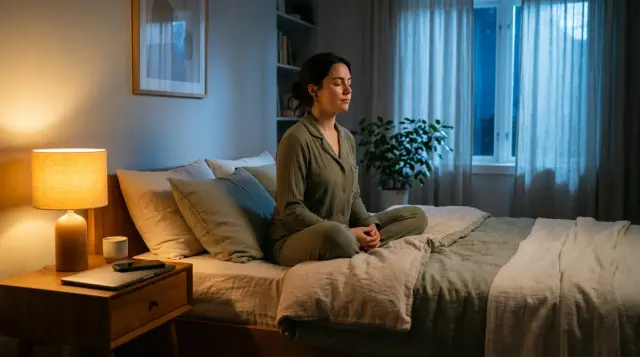
What Is Sleep Standby Optimization, and Why Should You Care?
Let's get the basics out of the way. What is sleep standby optimization? In plain English, it's the practice of setting up your electronic devices so they use minimal energy and produce minimal emissions when you're not using them, especially overnight. Laptops, phones, tablets, smart speakers, that random gadget humming away on your nightstand.
There's a real difference between "sleep mode" and "standby mode" on most devices. Traditional sleep (called S3 in Windows systems) suspends most activity and stores your session in RAM. Modern Standby (S0ix), which Microsoft introduced as a replacement, keeps a low-level network connection alive so your device can pull in emails, notifications, and updates even while the screen is dark. Convenient? Sure. But it also means your device is never truly off.
The International Energy Agency has estimated that standby power consumption accounts for 5 to 10 percent of total residential electricity use in developed nations [1]. That's not nothing. Multiply it across every device in your home, especially the ones in your bedroom, and you're dealing with constant low-level energy use and electromagnetic field emissions that most people never think about.
This is where mindfulness enters the picture. You can't fix what you don't notice. Most of us have never opened our laptop's power settings or wondered why our phone feels warm on the nightstand at 3 a.m. A little awareness here goes a long way, for your electric bill and for your sleep environment. If you're curious about how electromagnetic radiation from devices might affect you, Proteck'd has a solid breakdown of EMF Health Benefits worth reading.
How Does Modern Standby Differ from Traditional Sleep Mode?
This gets a bit technical, but it matters. The older S3 sleep state basically freezes your computer. The CPU stops. The display goes dark. Only your RAM stays powered to hold your session. Simple. Effective. The downside is that waking up takes a few seconds, and you miss any incoming data while the machine is asleep.
Modern Standby, sometimes called Connected Standby, changed things completely. According to Microsoft's documentation on Modern Standby vs S3, this newer model lets the system cycle between low-power and active states, checking for updates, syncing email, and processing background tasks in short bursts. Your laptop or tablet behaves more like a smartphone. Always partially awake. Always listening.
The tradeoff is energy. A device in Modern Standby can drain battery faster than one in traditional S3 sleep, and it maintains wireless radio activity, which means ongoing EMF output. For someone trying to optimize their sleep environment, that's a meaningful detail. A laptop in Modern Standby on your bedside table is not the same as one that's fully powered down.
Quick Q&A
Q: Does Modern Standby use more power than traditional S3 sleep?
A: Yes, Modern Standby typically uses more battery because the device periodically wakes to sync data and maintain network connections, unlike S3 which fully suspends the CPU.
Practically speaking, if you're serious about reducing nighttime device activity, you can adjust your power plan settings on Windows to limit background tasks during sleep hours. On a Mac, disabling "Power Nap" in System Settings accomplishes something similar. These small adjustments are a form of sleep standby optimization that most people skip entirely.
Mindfulness isn't about emptying your mind or reaching some higher state of consciousness. It's about paying enough attention to your own habits, including how your devices behave while you sleep, to make choices that actually serve your health and rest.
Can Mindfulness Actually Improve Your Sleep Quality?
Yes. And this isn't a soft claim. A 2015 randomized clinical trial published in JAMA Internal Medicine compared mindfulness meditation to a structured sleep hygiene education program in 49 older adults with moderate sleep disturbance. The mindfulness group showed significantly greater improvement on the Pittsburgh Sleep Quality Index (PSQI), a widely used clinical measure [2]. These weren't monks. They were regular people who learned basic mindfulness techniques over six weeks.
A broader 2019 review in JAMA Internal Medicine examined 18 randomized controlled trials and found consistent evidence that mindfulness meditation programs improve sleep quality across diverse populations [2]. The effect sizes were modest but meaningful, comparable to what you'd see from some prescription sleep aids, without the side effects or dependency risk.
So what does "mindfulness for sleep" actually look like? It's not about emptying your mind. It's about noticing your thoughts without getting pulled into them. Body scan meditation, where you slowly move your attention from your toes to your head, is one of the most studied techniques. According to researchers at Harvard Medical School, this practice activates the parasympathetic nervous system, lowering heart rate and blood pressure in ways that prime the body for circadian rest [3].
If you want to go deeper on the evidence, I'd recommend checking out The Evidence Behind Meditation: What the Studies Actually Show. It's one of the most balanced breakdowns I've come across on what meditation can and can't do.
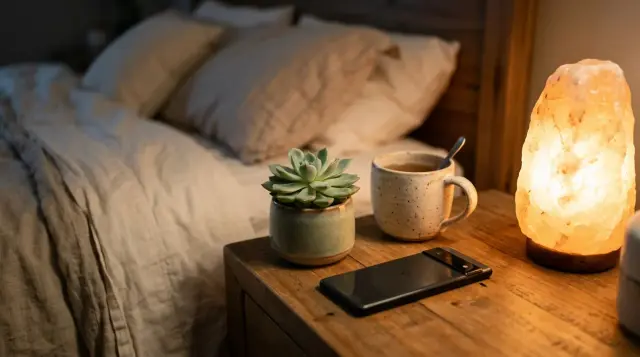
Why Does Your Device Environment Matter for Nightly Recovery?
Think about the last time you fell asleep with your phone next to your pillow. Maybe you were scrolling Instagram. Maybe you set an alarm and put it face down. Either way, that device was doing more than you realized. Notifications pinging in the background. Radios scanning for Wi-Fi and Bluetooth connections. The screen ready to light up at the slightest movement.
According to Harvard Health Publishing, the blue light emitted by screens suppresses melatonin production significantly more than other light wavelengths, shifting your circadian rhythm by as much as 90 minutes in some studies [3]. That's not just "feeling less sleepy." That's your body clock getting yanked sideways every single night.
But it's not only about the screen. It's also about what your devices emit when you're not looking at them. This is where sleep standby optimization overlaps with EMF awareness. Even in standby, your phone's cellular, Wi-Fi, and Bluetooth antennas can remain active. If you're trying to create a genuinely restful sleep environment, you have options beyond just tapping Do Not Disturb.
Proteck'd's Faraday Health Collection offers products designed to reduce your exposure to electromagnetic radiation, which can be especially useful in the bedroom. For women looking for options that blend function with style, the Women's Wellness Collection is worth a look. You don't have to become paranoid about your devices. You just have to be intentional about where they live while you sleep.

How Do You Build a Mindful Pre-Sleep Routine That Actually Sticks?
Here's where most advice falls apart. Everyone tells you to "create a bedtime routine" as if that's simple. You're tired, you're stressed, and the last thing you want is another checklist. So let's skip the 14-step ritual and focus on the two or three things that research actually supports.
First, pick a device cutoff time. Not because screens are evil, but because your brain needs a transition period. A 2014 study from Brigham and Women's Hospital (published in PNAS) found that reading on a light-emitting device before bed delayed sleep onset, reduced evening melatonin levels, and impaired next-morning alertness compared to reading a printed book [4]. Thirty minutes of no screens before bed is a good starting point. Sixty is better.
Second, do something that tells your nervous system it's time to wind down. This could be a body scan meditation, a few minutes of journaling, or even just sitting quietly with a cup of herbal tea. The specific activity matters less than the consistency. Your brain is a pattern-matching machine. Give it the same cue enough times, and it starts flipping the "sleep is coming" switch on its own.
Third, deal with your device environment. Power down your laptop fully (not Modern Standby, actually off). Put your phone in airplane mode or, better yet, in another room. If you use your phone as an alarm, buy a $10 alarm clock. Seriously. This is device sleep mode energy management at its simplest. For more ideas on building these habits into your life, Getting Better Sleep: The Complete Guide is packed with strategies you can actually use.
Quick Q&A
Q: Is airplane mode enough to reduce nighttime EMF exposure from a phone?
A: Airplane mode disables cellular, Wi-Fi, and Bluetooth radios, which significantly reduces EMF output, but some residual emissions can occur depending on the device model and settings.
What Role Do Software Updates Play in Standby Power Efficiency?
Here's something most people don't realize: your device's standby behavior changes every time it gets a software update. Microsoft's SleepStudy diagnostic tool, documented on Microsoft Learn, lets Windows users see exactly what happened during a Modern Standby session, including which processes woke the CPU, how long they ran, and how much battery they consumed. It's genuinely eye-opening.
Firmware and OS updates frequently adjust how aggressively a device enters low-power states. A poorly optimized driver can keep your laptop's Wi-Fi radio active all night, draining battery and emitting electromagnetic radiation for no good reason. Keeping your devices updated is one of the simplest forms of standby power optimization, even if it doesn't feel like a "mindfulness" practice.
But here's the mindful part: actually checking. Running SleepStudy on your laptop (open Command Prompt as admin, type "powercfg /SleepStudy") generates an HTML report showing exactly what's happening. I ran it on my own machine last month and discovered that a background sync process was waking my laptop every 12 minutes throughout the night. Twelve minutes. That's not rest for the device, and it's not great for the person sleeping three feet away from it either.
If you're interested in the broader concept of managing technology's impact on your health, Digital Detox: The Complete Guide covers a lot of ground. And for the biohacking-minded, The Top Biohacks: What the Research Shows connects device management to a broader performance optimization framework.
Does Reducing EMF Exposure at Night Actually Help You Sleep Better?
This is where the conversation gets interesting and, honestly, a bit controversial. The scientific consensus from organizations like the World Health Organization is that low-level EMF from consumer electronics hasn't been definitively proven to cause health harm. But "not definitively proven" isn't the same as "definitely safe." A growing number of people report real, subjective improvements in sleep quality when they reduce their nighttime EMF exposure.
A 2013 study published in the International Journal of Environmental Research and Public Health examined sleep quality in relation to radiofrequency electromagnetic field exposure from mobile phone base stations and found associations between higher exposure and poorer sleep quality, though the researchers noted that more controlled studies are needed. The WHO's International Agency for Research on Cancer (IARC) has classified radiofrequency electromagnetic fields as "possibly carcinogenic to humans" (Group 2B). That's a precautionary classification, not a definitive warning.
What I think is most useful here is the precautionary principle combined with common sense. Turning off your Wi-Fi router at night, putting your phone in airplane mode, powering down your laptop. These things cost you nothing. If they help, great. If they don't, you've at least saved some electricity and practiced a form of sleep standby optimization.
For those who want to go further, Proteck'd's Faraday clothing offers a physical layer of EMF shielding you can wear. It's one of the more practical approaches to EMF reduction I've seen, and it doesn't require rewiring your house. Biohacking Techniques That Actually Work: What the Research Shows covers the broader evidence base for this kind of approach.
What Will Sleep Standby Optimization Look Like in the Future?
The trend is clear: devices are getting smarter about managing their own power states. Intel's Low Power Idle states continue to evolve, and both Microsoft and Apple are investing in AI-driven power management that adapts to your usage patterns. Imagine a laptop that learns you never use it between 11 p.m. and 6 a.m. and automatically drops into its deepest low-power state during those hours. That's not science fiction. It's already partially here.
The Energy Star program, managed by the U.S. Environmental Protection Agency, has been tightening standby power requirements for consumer electronics for years. Their most recent specifications push manufacturers to limit standby power to under 0.5 watts for many product categories. As these standards get stricter, the default behavior of your devices will become more sleep-friendly without you having to lift a finger.
But technology alone won't solve the problem. The human element, your awareness, your habits, your willingness to actually close the laptop, will always matter. That's the whole point of mindfulness without the woo. It's not about transcendence. It's about paying enough attention to your own life to make choices that serve you.
And sometimes that starts with something as simple as asking: what is my phone actually doing right now? You might be surprised by the answer.
Key Takeaways
Frequently Asked Questions
What is sleep standby optimization?
Sleep standby optimization is the process of configuring your electronic devices to use minimal power and emit minimal electromagnetic radiation when you're not using them, especially overnight. It involves adjusting power settings, turning off unnecessary background syncing, and choosing the right sleep state for your device. The goal is to cut both energy waste and potential disruption to your sleep environment.
What is the difference between Modern Standby and S3 sleep mode?
S3 sleep mode suspends the CPU entirely and only keeps RAM powered to preserve your session. Modern Standby (S0ix) lets the device cycle between low-power and active states, maintaining network connections for email and notifications. Modern Standby uses more power but offers faster wake times and always-on connectivity.
Does putting my phone in airplane mode at night improve sleep?
Airplane mode disables your phone's cellular, Wi-Fi, and Bluetooth radios, which eliminates most RF emissions. While definitive large-scale studies on this are still limited, many people report noticeable improvements in sleep quality. At the very least, it stops notifications from waking you up and reduces your device's power consumption.
How much energy do devices use in standby mode?
The International Energy Agency estimates standby power accounts for 5 to 10 percent of residential electricity consumption in developed countries. A single device might only use a few watts in standby, but add up every charger, smart speaker, laptop, and TV in a home and the total becomes significant.
Can mindfulness meditation really help with insomnia?
Yes. Multiple randomized controlled trials support this. A 2015 study published in JAMA Internal Medicine found that mindfulness meditation significantly improved sleep quality in older adults compared to sleep hygiene education alone. The effects were clinically meaningful and comparable to some pharmaceutical interventions.
How do I check what my laptop does during sleep?
On Windows, you can run Microsoft's SleepStudy tool. Open Command Prompt as administrator and type 'powercfg /SleepStudy' to generate an HTML report. It shows every process that woke your CPU during a Modern Standby session, including how long it ran and how much battery it used. It's free and built right into the operating system.
What is a good pre-sleep routine based on research?
Research supports three main elements: stopping screen use 30 to 60 minutes before bed to reduce blue light exposure, doing a consistent wind-down activity like body scan meditation or reading a physical book, and managing your device environment by powering down or switching to airplane mode. Consistency matters more than complexity.
Does EMF from devices affect sleep quality?
The WHO's IARC classifies radiofrequency EMF as 'possibly carcinogenic' (Group 2B), and some studies have found links between RF exposure and poorer sleep quality. Definitive causal proof is still lacking, though. Many health-conscious people choose to reduce nighttime EMF exposure as a precaution, using tools like Faraday shielding clothing or simply turning off devices.
Are Energy Star standby requirements getting stricter?
Yes. The Energy Star program, managed by the U.S. EPA, has been tightening standby power limits for years. Current specs for many product categories require standby power under 0.5 watts. Newer devices are generally more efficient in standby than older ones, but your settings still play a big role.
How does blue light from screens affect melatonin?
Research from Brigham and Women's Hospital published in PNAS found that reading on a light-emitting device before bed suppressed melatonin levels, delayed sleep onset, and reduced next-morning alertness compared to reading a printed book. Blue-spectrum light is especially effective at suppressing melatonin because it activates melanopsin receptors in the retina.
References
- JAMA Internal Medicine – A 2015 randomized clinical trial found mindfulness meditation significantly improved sleep quality compared to sleep hygiene education in older adults.
- Harvard Medical School, Harvard Health Publishing – Blue light from screens suppresses melatonin production and can shift circadian rhythm significantly.
- Proceedings of the National Academy of Sciences (PNAS) – Reading on a light-emitting device before bed delayed sleep onset, reduced melatonin levels, and impaired next-morning alertness compared to reading a printed book.
About the Author
Proteck'd EMF Apparel
Health & EMF Specialists
The Proteck'd team covers EMF protection, silver-fiber apparel, and practical ways to reduce everyday radiation exposure. Every piece Proteck'd ships is designed, tested, and worn by the people who build it.
Get the Free EMF Home Audit Checklist
A room-by-room PDF that walks you through the biggest EMF sources in your house and what to do about each one. No cost, no fluff.
Download the Checklist →✓30-day returns✓Free shipping✓Free returns✓Silver fiber shielding


Dejar un comentario