


Sleep: What Actually Works

Here's a number that should bother you: according to the CDC, roughly 70 million Americans suffer from chronic sleep problems [1]. That's not a fringe issue. A third of the adult population is walking around under-rested, over-caffeinated, and wondering why their brain feels like wet cement by 2 p.m.
So what does sleep optimization meaning actually boil down to? It's not buying a $4,000 mattress or downloading an app that plays whale sounds. It's the deliberate, research-backed process of improving when you sleep, how well you sleep, and what your body and brain actually do during those hours. Less of a hack. More of a system.
I've spent months reading through the research on this, from Stanford's Sleep Medicine Center to meta-analyses in peer-reviewed journals. And honestly? Most of what gets repeated in wellness circles is either outdated, oversimplified, or flat-out wrong. The stuff that actually works tends to be simpler than you'd expect. But it requires consistency. Not supplements. Not gadgets. Consistency.
This guide covers what the evidence actually supports, what falls flat, and how to build a protocol that fits your real life. No fluff, no miracle cures. Just what works and why.
Sleep optimization isn't about hacking your way to fewer hours. It's about making every hour of rest count, starting with the basics that decades of research have proven actually work.
- A consistent wake time is the single highest-impact change for circadian alignment and better sleep quality.
- Bedroom temperature between 60 and 67°F is optimal because your core body temperature must drop 2 to 3°F to initiate deep sleep.
- Caffeine has a 5 to 6 hour half-life, so afternoon coffee can still be disrupting your sleep at midnight.
- Alcohol, blue-light glasses, and high-dose melatonin have weaker evidence than most people assume.
- CBT-I (cognitive behavioral therapy for insomnia) outperforms sleeping pills for long-term results according to Stanford's Sleep Medicine Center.
What Does Sleep Optimization Actually Mean?
Let's start with the basics, because there's a lot of confusion floating around. Sleep optimization doesn't just mean sleeping more. You can log nine hours and still wake up feeling like garbage if the quality is poor or the timing is off. The real meaning centers on improving the architecture of your sleep: how much deep sleep you get, how efficiently you cycle through sleep stages, and whether your body's internal clock is running on schedule.
Researchers at Harvard Medical School's Division of Sleep Medicine break this into several components: circadian alignment (your body clock), sleep pressure (the chemical buildup that makes you sleepy), environment, and mental state [2]. These aren't trendy pillars someone invented for a blog post. They come from decades of sleep science.
Think of it like fitness. You wouldn't say "exercise optimization" just means spending more time at the gym. It means choosing the right exercises, managing intensity, recovering properly, and being consistent. Sleep works the same way. It's a system with inputs you can actually control.
Quick Q&A
Q: Is sleep optimization the same as sleep hygiene?
A: Sleep hygiene is one component of sleep optimization, but optimization goes further by including circadian timing, sleep pressure management, and personalized adjustments based on your sleep data.
One more thing. When I talk about improving rest quality, I'm not talking about the biohacking version where you sleep four hours and claim you feel amazing. According to the National Sleep Foundation, adults need 7 to 9 hours, and the research on that hasn't budged. What has changed is our understanding of how to make those hours count.
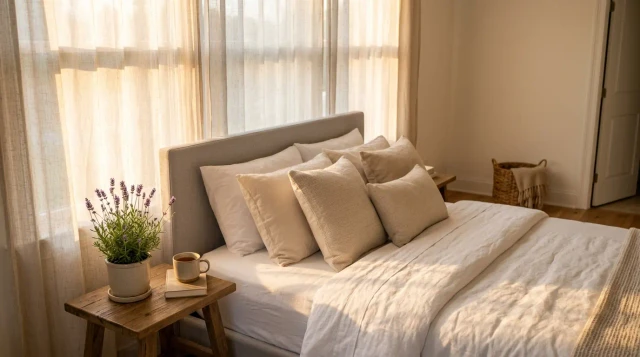
Why Does Sleep Quality Matter More Than Duration?
This might be the single most important finding that most people skip right past. A 2017 study published in Nature, led by researchers at the University of Western Ontario, tested over 10,000 participants and found that sleeping too little OR too much hurt cognitive performance equally. The sweet spot was 7 to 8 hours, but only when sleep quality was high [3].
So what does quality actually mean? It means you're spending enough time in deep sleep (also called slow-wave sleep) and REM sleep. Deep sleep is when your body handles physical repair, hormone regulation, and immune function. REM handles memory consolidation and emotional processing. If you're waking up multiple times, tossing and turning, or spending too long in lighter sleep stages, the hours barely matter.
Here's a real example. Someone I know tracked their sleep with an Oura ring for six months. They consistently hit 8 hours but only got about 45 minutes of deep sleep per night, well below the 1.5 to 2 hour range most sleep researchers consider ideal. They were exhausted constantly. After adjusting their sleep timing and bedroom environment, deep sleep jumped to over 90 minutes. Same hours. Wildly different results.
That's really the core of what nightly recovery optimization is about. Not more time unconscious. Better time unconscious. And the interventions that improve quality are surprisingly straightforward, as we'll get into next. If you want a practical starting point, we put together How to Sleep Better Tonight: The Complete Checklist that covers the fundamentals.
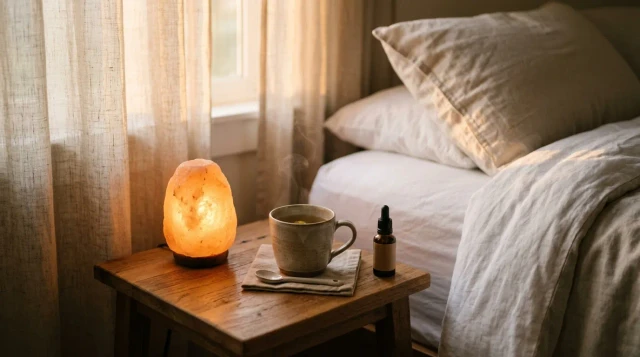
How Does Circadian Rhythm Affect Sleep Quality?
Your circadian rhythm is a 24-hour internal clock governed by a cluster of neurons called the suprachiasmatic nucleus (SCN) in your hypothalamus. It tells your body when to produce melatonin, when to raise cortisol, and when to initiate sleep. Disrupting it is one of the fastest ways to wreck your rest.
According to research from Stanford University's Sleep Medicine Center, the single highest-impact intervention for circadian alignment is a consistent wake time. Not bedtime. Wake time. That surprised me too, but it makes sense. Your wake time anchors the entire cycle: when cortisol peaks, when melatonin starts rising roughly 14 to 16 hours later, and when your body temperature dips to initiate sleep.
Morning light exposure is the second big lever. Harvard Medical School research shows that 30 minutes of bright light (ideally sunlight, at least 10,000 lux) within the first hour of waking can shift your circadian clock by up to 2 hours [2]. That's significant. If you've ever traveled across time zones and felt completely off for days, you already know how powerful this clock is. A 2019 study from the Journal of Clinical Sleep Medicine found that outdoor morning light exposure reduced sleep onset latency (the time it takes to fall asleep) by an average of 20 minutes.
On the flip side, light at the wrong time, especially blue-spectrum light from screens, suppresses melatonin and delays your clock. We've written about strategies for reducing screen exposure in our Screen-Free Living: The Complete Guide, and it's one of the more practical things you can do for your circadian rest cycle.
What's the Best Bedroom Environment for Deep Sleep?
Your sleep environment is where small changes produce outsized results. Temperature is the big one. The National Sleep Foundation recommends 60 to 67°F (15.5 to 19.4°C) for your bedroom. Why? Your core body temperature needs to drop by about 2 to 3 degrees Fahrenheit to initiate and maintain deep sleep. A warm room fights that process every single night.
Darkness matters more than most people realize. Even dim light exposure during sleep, as low as 100 lux (roughly a nightlight), has been shown to increase insulin resistance and heart rate while you sleep. A 2022 study from Northwestern University's Feinberg School of Medicine published in PNAS found that a single night of moderate light exposure during sleep impaired glucose and cardiovascular regulation [4].
Noise is the third environmental factor. White noise machines work for some people because they mask inconsistent sounds like a partner snoring or traffic. But total silence, where achievable, consistently outperforms it in studies. If you're in a noisy urban environment, a white noise machine is a reasonable compromise.
Then there's the less obvious factor: electromagnetic field (EMF) exposure. Some people report improved sleep quality when they reduce wireless signals in the bedroom. This is an area where the research is still developing, but if you're curious about the potential connection, Proteck'd's Faraday Health Collection is designed with EMF shielding in mind. You can also learn more about how EMF may relate to well-being on their EMF Health Benefits page.
How Does Sleep Pressure Work, and Can You Control It?
Sleep pressure is the biological drive to sleep that builds the longer you're awake. It's primarily driven by a neurotransmitter called adenosine, which accumulates in your brain throughout the day. The more adenosine builds up, the sleepier you feel. When you finally sleep, your brain clears it out, and you wake up refreshed. Simple system. Very easy to mess up.
Caffeine is the biggest wrench people throw into this process. It works by blocking adenosine receptors, so you don't feel the sleep pressure that's actually building. The problem? Caffeine has a half-life of about 5 to 6 hours, meaning if you drink coffee at 3 p.m., roughly half the caffeine is still active in your brain at 9 p.m. A study published in the Journal of Clinical Sleep Medicine found that caffeine consumed even 6 hours before bed reduced total sleep time by more than an hour.
Napping is another factor worth paying attention to. A 20-minute nap before 2 p.m. can improve alertness without significantly draining sleep pressure. But a 90-minute nap at 4 p.m.? That clears a lot of adenosine and can make falling asleep at your normal bedtime genuinely difficult. The timing and length of naps matter more than whether you nap at all.
Quick Q&A
Q: What time should I stop drinking coffee for better sleep?
A: Based on caffeine's 5 to 6 hour half-life, most sleep researchers recommend cutting off caffeine by early afternoon, ideally by 1 to 2 p.m.
Physical exercise also increases sleep pressure, but timing matters here too. Research from the University of Zurich published in 2018 found that moderate exercise earlier in the day improved deep sleep duration, while vigorous exercise within 2 hours of bedtime often delayed sleep onset. Morning or early afternoon workouts are your safest bet.
Does Your Mental State Before Bed Actually Affect Sleep?
Yes. And this is the part most people underestimate. Your autonomic nervous system runs in two modes: sympathetic (fight or flight) and parasympathetic (rest and digest). If your nervous system is still in sympathetic mode when you climb into bed, you're going to lie there staring at the ceiling regardless of how tired you are. Your body won't let you sleep if it thinks you're in danger, even if the "danger" is just an email you forgot to send.
Andrew Huberman's lab at Stanford has published extensively on how the nervous system transitions from wakefulness to sleep. The research points to a 30 to 60 minute wind-down period as being strongly associated with faster sleep onset and more stable sleep architecture. This isn't just "relax before bed." It's about deliberately downshifting your nervous system.
What actually works for that downshift? Controlled breathing has the strongest evidence. A 2019 study from the University of Arizona found that 4-7-8 breathing (four seconds in, seven seconds hold, eight seconds out) reduced the time to fall asleep by an average of 12 minutes in participants with mild insomnia. Progressive muscle relaxation, where you tense and release muscle groups from toes to head, also has solid research behind it.
We covered the evidence behind mindfulness practices in The Science Behind Mindfulness: The Honest Assessment, and it connects directly here. The relationship between chronic stress, inflammation, and poor sleep is well-documented. We've also explored that link in Inflammation: Why It's the Root of So Much Disease. Calming your mind before bed isn't just a nice idea. It's physiologically necessary.
What Doesn't Work for Better Sleep?
Let's be honest about what the evidence doesn't support, because there's a lot of money being made selling sleep solutions that don't actually help.
Alcohol is probably the worst offender. Yes, a glass of wine makes you feel sleepy. But a 2018 review in JMIR Mental Health analyzing 4,098 participants found that even moderate alcohol consumption reduced restorative sleep quality by 24%. It suppresses REM sleep, increases nighttime awakenings, and fragments sleep architecture. That nightcap is doing you no favors.
Blue-light blocking glasses are another popular recommendation that hasn't held up well under scrutiny. A 2021 meta-analysis in the Cochrane Database of Systematic Reviews found insufficient evidence that blue-light filtering lenses improve sleep quality or reduce eye strain. The real issue with screens before bed isn't primarily the light spectrum. It's the mental stimulation and arousal they create.
Melatonin supplements fall into a middle category. They have moderate evidence for jet lag and delayed sleep phase syndrome, according to the National Institutes of Health. But for general insomnia in people without a circadian timing disorder? The evidence is weak. And dosing matters. Most over-the-counter melatonin tablets contain 5 to 10 mg, while the physiologically relevant dose is closer to 0.3 to 0.5 mg. More isn't better here.
Sleep trackers can be helpful or harmful depending on how you use them. Researchers at Rush University coined the term "orthosomnia" in 2017 to describe people who become so obsessed with their sleep data that it actually worsens their sleep anxiety. Use trackers for trends over weeks, not for judging individual nights.
How Do You Build a Personal Sleep Protocol?
This is where it all comes together. Understanding sleep optimization meaning is one thing. Actually building a system you'll follow is another. The best approach, based on everything the research shows, is to start with the highest-impact changes and layer in adjustments over time.
Start with wake time consistency. Pick a time and stick with it every day, including weekends, for at least two weeks. This alone anchors your circadian rhythm and starts improving sleep quality. Then add morning light: 20 to 30 minutes of outdoor light within the first hour of waking. These two changes cost nothing, and they have the strongest evidence behind them.
Next, address your environment. Drop your bedroom temperature to 65 to 68°F. Block all light sources. Remove or silence your phone. If reducing EMF exposure in your bedroom is something you want to explore, clothing from Proteck'd's Women's Wellness Collection integrates silver-fiber shielding that some people find supports their nighttime rest quality. For a more detailed walkthrough, check out our Getting Better Sleep: The Honest Guide.
Finally, build a wind-down routine. Stop caffeine by early afternoon. Dim lights an hour before bed. Try one breathing technique or progressive muscle relaxation. If you have persistent sleep issues that don't respond to these changes within 4 to 6 weeks, cognitive behavioral therapy for insomnia (CBT-I) is the gold standard treatment. Stanford's Sleep Medicine Center reports that CBT-I is more effective than sleeping pills for long-term insomnia, with benefits lasting well beyond the end of treatment.
The whole point of circadian rest optimization is that it's personal. What works for a night-shift nurse won't work for a 9-to-5 office worker. But the underlying principles, consistent timing, controlled environment, managed sleep pressure, and a calm nervous system, are universal. Start there. Measure what changes. Adjust.
Frequently Asked Questions
Sleep optimization means systematically improving both the quality and timing of your sleep using evidence-based strategies. It goes beyond simply sleeping more hours. The focus is on circadian alignment, sleep environment, sleep pressure management, and your pre-sleep mental state. The goal is to maximize restorative sleep stages so you wake up genuinely refreshed.
Most adults need 7 to 9 hours, according to the National Sleep Foundation. But sleep quality matters just as much as duration. You can sleep 9 hours and still feel terrible if you're not getting enough deep sleep and REM sleep. Focus on both quantity and quality.
Melatonin has moderate evidence for jet lag and delayed sleep phase disorder, but weak evidence for general insomnia. Most over-the-counter doses (5 to 10 mg) are way higher than the physiologically relevant dose of 0.3 to 0.5 mg. If you try it, start low and use it for timing, not sedation.
Consistent wake time wins. Your wake time anchors your circadian rhythm and determines when melatonin production begins, roughly 14 to 16 hours later. Keep your wake time the same every day, including weekends, and let your bedtime adjust naturally based on how sleepy you feel.
It hurts, despite making you feel drowsy. A 2018 review in JMIR Mental Health found that even moderate alcohol consumption reduced restorative sleep quality by 24%. It suppresses REM sleep, increases nighttime awakenings, and fragments your sleep architecture. If you drink, finish at least 3 to 4 hours before bed.
Between 60 and 67°F (15.5 to 19.4°C) according to the National Sleep Foundation. Your core body temperature needs to drop 2 to 3 degrees Fahrenheit to kick off deep sleep, and a cool room helps that happen. If you tend to sleep hot, this is one of the easiest fixes you can make.
The evidence is weak. A 2021 Cochrane meta-analysis found insufficient evidence that blue-light filtering lenses improve sleep quality. The bigger problem with screens before bed is probably the mental stimulation, not the light spectrum alone. Reducing screen use entirely in the last hour before bed is more effective.
CBT-I stands for cognitive behavioral therapy for insomnia. It's a structured program, typically 6 to 8 weeks, that addresses the thoughts and behaviors preventing good sleep. Research from Stanford's Sleep Medicine Center shows it outperforms sleeping pills for long-term outcomes, with benefits that last well beyond treatment. It's the gold standard for chronic insomnia.
Research in this area is still developing. Some studies suggest that electromagnetic field exposure from wireless devices may affect melatonin production or nervous system activity during sleep, though findings are mixed. Reducing wireless signals in the bedroom is a low-risk approach that some people report makes a noticeable difference.
At least 8 to 10 hours before your target bedtime, though many sleep researchers suggest a cutoff around 1 to 2 p.m. Caffeine's half-life is 5 to 6 hours, so half the caffeine from your 3 p.m. coffee is still active at 9 p.m. Even if you can fall asleep, caffeine reduces your deep sleep stages.
References
- Centers for Disease Control and Prevention – Roughly 70 million Americans suffer from chronic sleep problems, and 1 in 3 adults regularly gets less than 7 hours of sleep.
- Harvard Medical School Division of Sleep Medicine – Morning bright light exposure for 30 minutes within the first hour of waking can shift circadian rhythm by up to 2 hours, and the components of sleep optimization include circadian alignment, sleep pressure, environment,
- Nature (University of Western Ontario study, 2017) – Sleeping too little or too much hurt cognitive performance equally, with the sweet spot being 7 to 8 hours of high-quality sleep.
- Proceedings of the National Academy of Sciences (Northwestern University, 2022) – A single night of moderate light exposure during sleep impaired glucose and cardiovascular regulation.
About the Author
Proteck'd EMF Apparel
Health & EMF Specialists
The Proteck'd team covers EMF protection, silver-fiber apparel, and practical ways to reduce everyday radiation exposure. Every piece Proteck'd ships is designed, tested, and worn by the people who build it.
Protect Yourself Today
Proteck'd Faraday and silver fiber apparel is engineered to shield your body from everyday EMF exposure. Built for real life, tested for real results.
Shop EMF Protection →✓30-day returns✓Free shipping✓Free returns✓Silver fiber shielding


Dejar un comentario