


The Future of Technology: What to Expect

Here's a number worth paying attention to: the generative AI market is on track to hit $1.3 trillion by 2032. That's not science fiction. It's already underway, and the pace is picking up. So when people ask how to reduce future technology trends from steamrolling their health, privacy, and daily routines, I completely understand. This isn't a theoretical question anymore.
We're surrounded by more wireless signals, more AI-powered systems, and more connected devices than ever before. Your refrigerator talks to your phone. Your car is learning your habits. Your watch is broadcasting biometric data. And honestly? We're still just getting started.
Here's the thing, though. You don't have to be anti-technology to want some boundaries. I love what tech can do. But I also think it's smart to pay attention to what's coming and make intentional choices about how much of it gets access to your body and your data.
This post covers the biggest technology trends heading our way, from quantum computing to autonomous vehicles, and then gets practical about what you can actually do to protect yourself. Not paranoia. Just preparation.
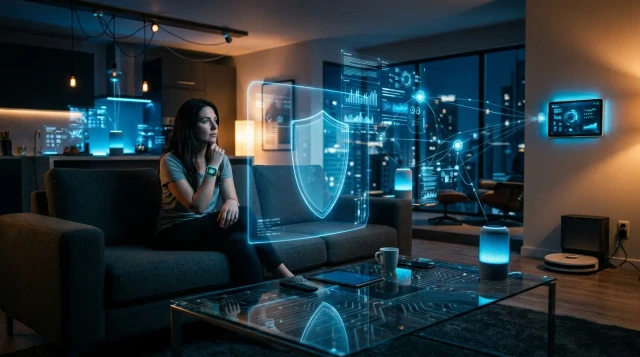
You don't have to be anti-technology to want boundaries. The smartest approach is to embrace innovation while building real, practical defenses around your health and your data before the next wave of tech makes the choice for you.
What Are the Biggest Technology Trends Shaping the Next Decade?
Let's start with what's actually on the way. According to multiple industry analyses, the top technology shifts between now and 2035 include quantum computing, neuromorphic chips, AI agents, hyperautomation, autonomous vehicles, and next-generation battery technology. These aren't isolated breakthroughs. They feed into each other, creating a compounding effect that will reshape how we work, travel, and even sleep.
Quantum computing crossed the $1 billion market threshold in 2024. Companies like IBM and Google are racing to build machines that can crack problems classical computers can't touch. Sounds exciting, right? Until you realize it also means current encryption methods could become obsolete. Your banking passwords, your medical records, your private messages. All of it runs on encryption that quantum machines may eventually break.
Then there's neuromorphic computing. These are chips modeled after the human brain, and data centers are chasing them because they promise roughly 10x the energy efficiency of traditional processors [1]. More efficiency means more devices, more sensors, and more ambient electromagnetic radiation floating around your environment. If you want to understand how these artificial intelligence systems actually function under the hood, check out How AI Works: Without the Jargon.
Hyperautomation is another one worth watching closely. McKinsey estimated that AI-driven workflow automation could affect up to 30% of hours worked globally by 2030. We're talking about machine intelligence making decisions that used to require human judgment, from approving loans to diagnosing medical images.
How Does Expanding AI and IoT Increase Personal Health Risks?
Every smart device in your home is a tiny radio transmitter. Your Wi-Fi router, your smart speaker, your fitness tracker, your baby monitor. They all emit radiofrequency electromagnetic fields. One device? Probably fine. But the average American home now has over 20 connected devices, and that number keeps climbing.
The World Health Organization's International Agency for Research on Cancer classified radiofrequency electromagnetic fields as "possibly carcinogenic to humans" (Group 2B) back in 2011 [2]. That classification hasn't been downgraded. If anything, the spread of 5G small cells, IoT sensors, and always-on wearables has made the conversation more pressing.
Quick Q&A
Q: Does more AI and IoT in my home actually increase my EMF exposure?
A: Yes, each connected device adds another source of radiofrequency radiation, and as homes add dozens of smart devices, cumulative exposure rises significantly compared to even five years ago.
Research from the National Institutes of Health, particularly the National Toxicology Program's landmark 2018 study, found "clear evidence" of tumors in the hearts of male rats exposed to high levels of radiofrequency radiation similar to what 2G and 3G cell phones emit [3]. Rat studies don't translate directly to humans, and the exposure levels were extreme. But the study prompted the NIH to recommend further research, not dismissal.
What worries me is the gap between how fast these technologies roll out and how slowly we study their long-term health effects. We didn't fully understand the risks of asbestos for decades. I'm not saying AI-connected devices are asbestos. I'm saying the precautionary principle exists for a reason. You can learn more about the specific shielding science at Proteck'd's EMF Protection Benefits page.
How Can You Reduce Future Technology Trends' Impact on Your Privacy?
Privacy is the other half of this equation. And honestly, it might be the more immediate threat. Generative AI systems like ChatGPT, Google Gemini, and Meta's LLaMA are trained on massive datasets that include publicly available personal information. Every time you interact with a free AI tool, there's a good chance your inputs are being logged, analyzed, and potentially used to train future models.
According to a 2023 report from Stanford University's Human-Centered AI Institute, over 60% of foundation model training data comes from web scraping, which includes forums, social media posts, and public records [4]. That means your Reddit comment from 2019 might literally be teaching a machine intelligence system how to mimic human thought. For a deeper look at the mechanics, How AI Thinks: A Clear Guide breaks it down really well.
So what do you actually do? Start with data hygiene. Use a password manager. Enable two-factor authentication everywhere. Audit the permissions on your phone apps, because that flashlight app definitely doesn't need access to your contacts. Review and delete old accounts you've forgotten about. These basics matter more now that AI-powered social engineering attacks are getting frighteningly good at impersonating people you trust.
Beyond software, think about hardware. Faraday bags and shielded clothing can prevent your devices from transmitting when you don't want them to. If you carry a phone, it's constantly pinging cell towers and broadcasting your location. A quality Faraday sleeve stops that cold. Proteck'd's Faraday Protection Collection is designed for exactly this purpose. For a full breakdown of data security strategies, see Data Protection: The Complete Guide.
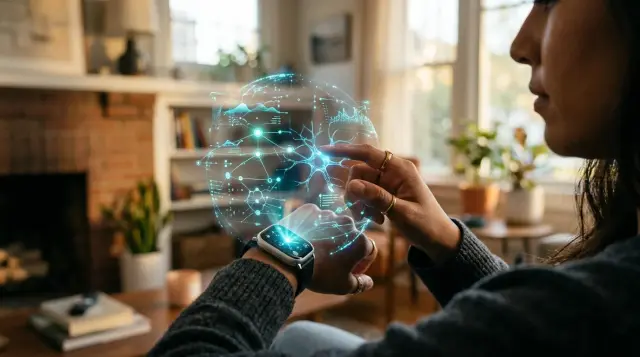
What Role Does EMF Shielding Play as Wireless Tech Expands?
Let's talk about something practical. As we add more wireless infrastructure, from 5G towers to satellite internet constellations like SpaceX's Starlink (which plans over 12,000 satellites), the ambient electromagnetic radiation in our environment keeps climbing. You can't see it. You can't smell it. But it's measurably there, and it increases year over year.
EMF shielding works on a straightforward principle: conductive materials like silver, copper, and nickel reflect or absorb EM radiation before it reaches your body. Same physics that makes a Faraday cage work. Michael Faraday demonstrated this in 1836, and the science hasn't changed. What has changed is that we now need it in everyday life, not just in physics labs.
Quick Q&A
Q: Can clothing really block electromagnetic radiation from everyday devices?
A: Yes, fabrics woven with silver or other conductive fibers can attenuate radiofrequency signals by 30 dB or more, reducing exposure by over 99% in the shielded area.
This is where the gear matters. Proteck'd makes clothing with silver-fiber technology woven directly into the fabric. It looks like normal apparel, but it functions as a wearable Faraday shield. Their Men's Faraday Tech Wear line, for example, provides real attenuation against common wireless frequencies without making you look like you're wearing a tinfoil hat.
If you're someone who wears a smartwatch, carries a phone in your pocket, and works near a router all day, the cumulative exposure adds up. Shielding isn't about fear. It's about reducing unnecessary exposure where you can. Same way you'd wear sunscreen even if you're not afraid of the sun. For more on how wearable tech and health tracking intersect, take a look at The Best Health Wearables: The Complete Guide.
Will Autonomous Vehicles and Robotaxis Add More Radiation to Our Cities?
This one doesn't get talked about enough. Autonomous vehicles rely on a dense web of sensors: LiDAR, radar, ultrasonic transmitters, and constant 5G connectivity for vehicle-to-everything (V2X) communication. A single Waymo robotaxi carries over 29 cameras, 6 radar units, and 4 LiDAR sensors, all actively transmitting and receiving data.
Now multiply that by thousands of autonomous vehicles running simultaneously in a city like San Francisco or Phoenix, where Waymo and Cruise have already been operating commercial services. Every one of those cars is basically a mobile radio tower. City-level electromagnetic radiation isn't staying flat. It's compounding.
According to research published in Nature in 2020, urban RF exposure levels had already increased by approximately 10 to 20 times compared to rural environments, even before widespread autonomous vehicle deployment [1]. Add robotaxis, delivery drones, and smart traffic infrastructure, and you can see where this heads.
Understanding how to reduce future technology trends' effect on your daily exposure means thinking about environments, not just individual devices. You might control what's inside your home, but you can't control the street outside your window. That's another strong argument for wearable shielding. It travels with you. And for understanding the artificial intelligence systems powering these vehicles, How AI Works: A Clear Guide offers a solid foundation.
How Do You Build a Practical Protection Strategy for the Next 10 Years?
Okay, so you've read about quantum computing, AI agents, autonomous vehicles, and rising EMF exposure. The question is: what do you actually do with all of this? Here's my take. You build a layered approach, same as you would for home security or financial planning.
Layer one is awareness. Understand what's in your environment. Audit your smart devices. Check how many Bluetooth and Wi-Fi signals your phone can detect right now. I just checked mine and counted 14 networks and 8 Bluetooth devices. That's in a quiet residential neighborhood. In a dense urban area, you might see 50 or more.
Layer two is digital hygiene. Lock down your data. Use encrypted messaging apps like Signal. Limit what you share with AI tools. Read privacy policies. I know, nobody actually does this, but at least skim the data-sharing sections. As generative AI and machine learning systems get better at profiling individuals from small data fragments, every piece of information you put out there becomes fuel.
Layer three is physical protection. This is where products like Proteck'd's Faraday shielding come in. Wearing a silver-fiber shirt under your clothes, carrying your phone in a Faraday sleeve, or using a shielded laptop pad are all concrete steps that measurably reduce your exposure. They're not magic. They're physics. And as how to reduce future technology trends' health impacts becomes a bigger conversation, expect to see this category grow significantly.
Layer four is staying informed. Technology moves fast, and what's true today might be outdated in 18 months. Follow trusted sources. Revisit your protection strategy annually. The people who'll handle the next decade of tech best are the ones who treat it like an ongoing practice, not a one-time decision.
- The AI and generative AI market is projected to reach $1.3 trillion by 2032, making proactive personal protection more important than ever.
- Every connected device in your home adds another source of radiofrequency electromagnetic radiation, and cumulative exposure is rising fast.
- Faraday-shielding clothing woven with silver fiber can attenuate wireless signals by 30 dB or more, reducing exposure by over 99% in shielded areas.
- Data hygiene practices like encrypted messaging, two-factor authentication, and app permission audits are your first line of defense against AI-powered privacy threats.
- A layered protection strategy combining awareness, digital hygiene, physical shielding, and ongoing education is the most effective way to manage emerging tech risks.
Frequently Asked Questions
Start by managing your EMF exposure. Audit the smart devices in your home, use shielding products like silver-fiber clothing or Faraday bags, and limit unnecessary wireless connections. The goal isn't to get rid of technology altogether. It's to reduce cumulative exposure, especially from devices you carry on your body all day.
The WHO classified radiofrequency electromagnetic fields as possibly carcinogenic (Group 2B) in 2011, and the NIH's National Toxicology Program found evidence of biological effects in animal studies. No definitive human harm has been proven at typical consumer exposure levels, but the precautionary principle suggests minimizing unnecessary exposure, especially as the number of devices in homes keeps rising.
A Faraday cage is an enclosure made from conductive material that blocks electromagnetic fields. It works by distributing electrical charge across its surface, preventing EM radiation from passing through. This same principle is used in Faraday bags and shielding clothing, which use conductive fibers like silver to reduce wireless signals.
In theory, yes. Quantum computers using algorithms like Shor's algorithm could factor large prime numbers exponentially faster than classical computers, which would undermine RSA and similar encryption standards. This isn't happening today, but the quantum computing market surpassed $1 billion in 2024, and experts warn that sensitive data encrypted now could be decrypted later once quantum machines mature.
Generative AI models are trained on vast datasets scraped from the public internet, which often includes personal information posted on forums, social media, and public records. According to Stanford's 2023 AI Index Report, over 60% of foundation model training data comes from web scraping. Your digital footprint directly feeds these systems, making data hygiene more important than ever.
Yes. Fabrics woven with silver threads are conductive and act as a flexible Faraday shield. Quality silver-fiber garments can reduce radiofrequency signals by 30 dB or more, which translates to blocking over 99% of incoming RF energy in the shielded area. How well it works depends on the density of the silver weave and the frequency of the radiation.
Almost certainly. 5G requires denser networks of small-cell antennas compared to 4G, and autonomous vehicles add mobile radar, LiDAR, and constant V2X connectivity to city streets. Research published in Nature has shown urban RF exposure is already 10 to 20 times higher than in rural areas, and these new technologies will only add to that baseline.
Three things you can do today: enable two-factor authentication on all your accounts, audit and revoke unnecessary app permissions on your phone, and start carrying your phone in a Faraday sleeve when you don't need connectivity. These are small habits that add up to meaningfully better protection against both data and EMF exposure risks.
It depends on your field, but McKinsey estimates AI-driven automation could affect up to 30% of hours worked globally by 2030. Jobs involving repetitive data processing, routine decision-making, and pattern recognition are most at risk. Roles requiring creativity, complex problem-solving, and human empathy are expected to hold up better.
At least once a year. Technology moves fast, and new devices, network standards, and AI capabilities pop up constantly. An annual review of your smart device inventory, privacy settings, shielding equipment, and data security practices keeps you from falling behind as the tech environment around you shifts.
References
- Nature – Urban RF exposure levels have increased significantly compared to rural environments, with measurements showing 10 to 20 times higher exposure in cities.
- World Health Organization / IARC – The WHO's International Agency for Research on Cancer classified radiofrequency electromagnetic fields as possibly carcinogenic to humans (Group 2B) in 2011.
- National Institutes of Health / National Toxicology Program – The NIH's National Toxicology Program found clear evidence of tumors in male rats exposed to high levels of radiofrequency radiation in its 2018 study.
- Stanford University Human-Centered AI Institute – Over 60% of foundation model training data comes from web scraping of publicly available internet content.
About the Author
Proteck'd EMF Apparel
Health & EMF Specialists
The Proteck'd team covers EMF protection, silver-fiber apparel, and practical ways to reduce everyday radiation exposure. Every piece Proteck'd ships is designed, tested, and worn by the people who build it.
Get the Free EMF Home Audit Checklist
A room-by-room PDF that walks you through the biggest EMF sources in your house and what to do about each one. No cost, no fluff.
Download the Checklist →✓30-day returns✓Free shipping✓Free returns✓Silver fiber shielding


