


EMF and Your Sleep Cycle: Protecting Your Circadian Rhythm

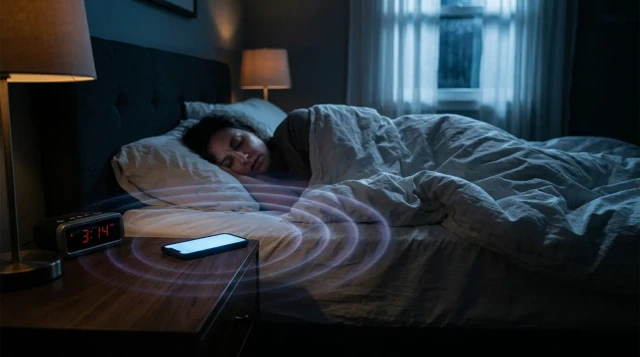
Here's something that might literally keep you up at night. That phone on your nightstand? The one you use as an alarm clock? It's pinging the nearest cell tower every few minutes, even while you sleep. And a growing body of research suggests those signals may be quietly messing with the hormone that runs your entire sleep cycle.
If you've ever looked into a cell shield for your phone or wondered whether EMF exposure actually matters at bedtime, you're asking the right questions. The connection between electromagnetic fields and sleep quality isn't just theoretical. Researchers at the Karolinska Institute in Sweden and the National Institute of Environmental Health Sciences (NIEHS) in the U.S. have studied it for decades. The findings are more concerning than most people realize.
I'm not here to tell you to throw your phone in a lake. That's not realistic. Honestly, it's not necessary either. But understanding how electromagnetic radiation interacts with your circadian rhythm lets you make small changes that lead to dramatically better rest.
This guide covers the biology behind EMF sleep disruption, the evidence for and against various protection strategies, and practical steps you can take tonight to start sleeping more soundly. Whether you're dealing with insomnia, light sleep, or you just can't figure out why you never feel fully rested, this one's for you.
Your body evolved to respond to sunlight and darkness. Now it's trying to interpret signals from Wi-Fi routers, cell towers, Bluetooth devices, and smart home sensors, all while you're supposed to be in your deepest, most restorative sleep. A cell shield approach isn't paranoia. It's giving your biology a fighting chance.
- RF electromagnetic radiation from phones and Wi-Fi can suppress melatonin production, disrupting your circadian rhythm and reducing sleep quality.
- Moving your phone to airplane mode and out of the bedroom is the single highest-impact step you can take tonight.
- Stick-on phone EMF shields lack scientific evidence, but Faraday-fabric shielding and quality RF-blocking cases have measurable, lab-tested effectiveness.
- Children absorb more microwave radiation than adults, making bedroom EMF reduction especially important for kids.
- Blue light and EMF affect melatonin through different biological pathways, so addressing both is necessary for optimal circadian protection.
How Does EMF Actually Affect Your Circadian Rhythm?
Your circadian rhythm is basically a 24-hour internal clock run by the suprachiasmatic nucleus (SCN) in your brain's hypothalamus. This tiny cluster of neurons picks up light signals from your retina, then coordinates hormone release throughout your body. The most important of those hormones for sleep? Melatonin, produced by the pineal gland.
Here's where electromagnetic radiation enters the picture. A 2013 review from researchers at the University of Melbourne found that RF-EMF exposure can influence the pineal gland's melatonin output, both in animal models and in limited human studies [1]. When melatonin secretion drops or shifts timing, you get what sleep researchers call "circadian desynchronization." That means your body's internal clock falls out of step with the actual day-night cycle.
Think about it this way. Your body evolved over millions of years to respond to exactly two electromagnetic signals: sunlight and darkness. Now it's trying to interpret signals from Wi-Fi routers at 2.4 GHz, cell phones pulsing at 700 to 2100 MHz, Bluetooth at 2.45 GHz, and smart home devices constantly pinging. That's a lot of noise for a system built for simplicity.
Quick Q&A
Q: Can my phone's EMF really suppress melatonin while I sleep?
A: Research suggests yes. RF electromagnetic fields from phones can reduce pineal gland melatonin output, especially during the 2 a.m. to 4 a.m. peak secretion window when your body relies on melatonin most.
The practical result? People who sleep near active devices often report trouble falling asleep, frequent waking during the night, and that frustrating feeling of being tired even after a full eight hours. It's not all in your head. Your pineal gland may literally be getting mixed signals. For a deeper look at the cellular-level science, check out RF Radiation and Cell Damage: What the Research Shows.
What Does the Research Say About EMF and Sleep Quality?
Let's look at actual studies, because vague claims don't help anyone. One of the most cited pieces of evidence comes from a 2008 study funded by the Mobile Manufacturers Forum (yes, funded by the phone industry itself) and conducted by researchers at the Karolinska Institute in Stockholm and Wayne State University in Detroit. Participants were exposed to 884 MHz RF signals similar to GSM cell phone emissions before sleep. The results? They took longer to reach deep sleep stages, and their overall sleep architecture was measurably altered [2].
On the other hand, some studies haven't been able to replicate these findings under different conditions. A 2012 study from the Swiss Federal Institute of Technology (ETH Zurich) found no significant effect on sleep EEG patterns from UMTS-type EMF exposure. This is where intellectual honesty matters. The science isn't perfectly settled. Results depend heavily on frequency, duration, intensity, and how close the source is to your body.
What IS increasingly accepted is the biological plausibility. The World Health Organization's International Agency for Research on Cancer (IARC) classified radiofrequency electromagnetic fields as Group 2B, "possibly carcinogenic," back in 2011 [3]. That classification was primarily about cancer risk, not sleep. But the underlying mechanism of cellular stress response applies to both. If RF radiation can stress cells enough to raise cancer concerns, it's reasonable to investigate subtler effects on hormone regulation too.
The NIEHS has also acknowledged the need for more research on non-thermal biological effects of EMF, which includes melatonin disruption [4]. So while no doctor is prescribing a cell shield alongside melatonin supplements just yet, the direction of the evidence is clear enough to warrant precaution. Especially during the 7 to 9 hours you spend sleeping.
Why Is Your Bedroom the Highest-Risk Room for EMF Exposure?
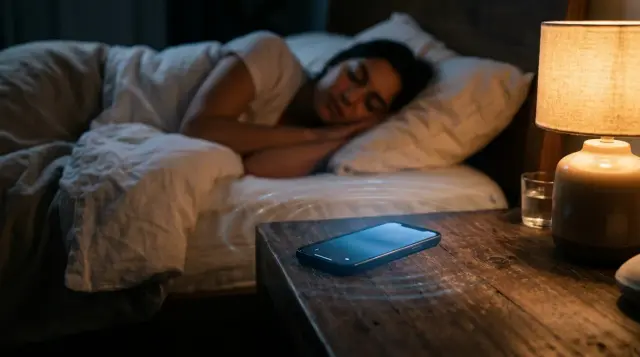
Think about where you spend the most time right next to electronic devices. For most people, it's the bedroom. Your phone sits on the nightstand, maybe 18 inches from your head. A Wi-Fi router might be in the next room or mounted on the wall behind your headboard. Bluetooth earbuds charge on the bedside table. A smart speaker waits for a wake word, its microphone constantly listening.
According to a 2023 survey by the National Sleep Foundation, roughly 72% of Americans keep their phone within arm's reach while sleeping. That means for the longest sustained period of each day, the majority of us maintain close, continuous RF radiation exposure. And unlike daytime exposure, which is intermittent and varied, nighttime exposure is steady and prolonged.
Here's a real-world example. A friend of mine, an electrical engineer, measured the RF power density in his bedroom with a Trifield TF2 meter. With his phone on the nightstand in normal mode, he recorded spikes of 0.2 to 1.5 mW/m² every time the phone communicated with the tower. When he moved it to another room and put it in airplane mode, the reading dropped to 0.001 mW/m². That's a reduction of over 99%. No fancy equipment needed. Just distance and airplane mode.
Your bedroom should be your lowest-EMF environment because that's where circadian rest happens. It's where melatonin peaks. It's where your brain cycles through restorative deep and REM sleep. If you're going to apply a cell shield philosophy anywhere in your life, start with the room where you're most vulnerable. For a room-by-room approach, Low-EMF Home Design: A Complete Guide is a great starting point.
Do EMF Phone Shields and Cases Actually Work?
This is the million-dollar question. And the answer is: it depends entirely on the product. The market for cell phone EMF shields is crowded, and frankly, a lot of it is junk. Small sticker-type "shields" that claim to neutralize or harmonize electromagnetic radiation? There's no peer-reviewed evidence supporting those claims. An adhesive dot cannot alter the physics of radio wave propagation.
Legitimate EMF-reducing phone cases work on a different principle. They use conductive materials (often woven metals or carbon-based layers) on one side of the case to deflect RF radiation away from your body. DefenderShield and SafeSleeve, for example, use FCC-accredited lab testing to validate their shielding effectiveness at specific frequencies. The key detail: they only shield the side facing your body, because completely encasing the phone would block the signal entirely and the phone would just crank up its transmit power to compensate.
A proper cell shield strategy goes beyond a phone case, though. It's about creating layers of protection. That might mean an RF-blocking phone pouch for nighttime, a Faraday canopy over your bed, or wearing EMF-shielding clothing during the day to reduce cumulative exposure. Proteck'd takes this approach with their Faraday EMF Collection, which uses silver-fiber fabrics tested to block over 99% of RF radiation. You can learn more about their testing methods at Personal EMF Faraday Shield: Is It Effective?.
Quick Q&A
Q: Do stick-on cell phone EMF shields actually reduce radiation exposure?
A: No. Small adhesive stickers lack the material coverage to meaningfully reduce RF emissions. Effective shielding requires conductive fabric or metal layers covering a significant surface area between you and the radiation source.
What Practical Steps Can You Take Tonight to Reduce Bedroom EMF?
Let's get concrete. You don't need to rewire your house or buy a $3,000 Faraday cage to dramatically cut your nighttime electromagnetic field exposure. Start with the highest-impact, lowest-cost changes and work your way up.
First, move your phone. Seriously, that single change is the biggest one you can make. Put it on airplane mode and place it across the room, or better yet, in another room entirely. Use a battery-powered alarm clock instead. This one move eliminates the largest source of close-range RF radiation for most sleepers. A 2015 paper in the journal Environmental Health Perspectives noted that RF exposure decreases by the inverse square law, meaning doubling your distance from the source cuts exposure to roughly one-quarter.
Second, address your Wi-Fi router. If it's in or near your bedroom, put it on a timer so it shuts off at bedtime and comes back on in the morning. Many modern routers have scheduling features built in. If yours doesn't, a simple outlet timer costs about $10 at any hardware store. This one step eliminates a constant source of 2.4 GHz and 5 GHz electromagnetic radiation during your most important circadian hours.
Third, look at wearable EMF shielding. If you live in an apartment building or can't control all the RF sources around you (neighbors' routers, nearby cell towers), wearing EMF-blocking sleepwear or using an EMF-shielding blanket becomes a meaningful cell shield for your body. Proteck'd EMF Protection makes apparel with silver-fiber Faraday fabric that you can actually sleep in comfortably. It puts a layer of protection between you and the electromagnetic radiation you can't control. For the full sleep-optimization approach, read EMF Blocking for Better Sleep: The Complete Guide.
How Does Melatonin Suppression From EMF Compare to Blue Light?
You've probably heard plenty about blue light from screens suppressing melatonin. That's well-established science. Harvard Medical School researchers found that blue light shifts circadian timing by about 1.5 hours compared to green light of similar brightness. But EMF-related melatonin suppression operates through a completely different pathway, and the two effects can stack on top of each other.
Blue light works through your retina. Specialized photosensitive retinal ganglion cells detect short-wavelength light and send signals directly to the SCN, telling your brain it's daytime. Your pineal gland gets the message and delays melatonin release. This is a well-understood, light-dependent mechanism.
EMF-related melatonin disruption appears to act directly on the pineal gland itself. According to research by Dr. Rüdiger Hardell at Örebro University in Sweden and earlier work by Dr. Neil Cherry at Lincoln University in New Zealand, RF electromagnetic fields may interfere with the calcium ion signaling that triggers melatonin synthesis. So you could be wearing blue-light-blocking glasses, sleeping in a pitch-dark room, and still experiencing suppressed melatonin if your RF exposure remains high.
The takeaway? Addressing blue light is only half the equation. A thorough cell shield strategy accounts for both visible light and invisible electromagnetic radiation. If you're already using blue-light filters and blackout curtains but still struggling with sleep quality, RF exposure is the logical next variable to look at. Learn how Faraday-fabric technology works as a personal shield at Personal EMF Faraday Shield: How Proteck'd Does It.
Can EMF-Blocking Clothing Really Help You Sleep Better?
I'll be honest. I was skeptical about this one when I first heard about it. Clothing that blocks electromagnetic radiation? Sounds like something from a sci-fi movie. But the physics behind it is straightforward and well-proven. Faraday cages have been around since Michael Faraday demonstrated the principle in 1836. A conductive mesh blocks electromagnetic waves from passing through. EMF-shielding clothing is just a wearable version of that same concept, using silver or copper fibers woven into the fabric.
The question isn't whether the fabric works. Lab testing consistently shows 99%+ RF attenuation for quality silver-fiber materials. The real question is whether wearing it during sleep makes a practical difference. Based on both the research and reports from people who've tried it, the answer seems to be yes, particularly for people with high ambient EMF environments they can't easily modify.
Think about someone living in a downtown apartment with dozens of Wi-Fi networks visible on their phone, a cell tower on the building across the street, and smart meters on every unit. That person can't turn off their neighbors' routers. They can't relocate the cell tower. But they can put on an EMF-shielding shirt and sleep under a shielding blanket, effectively creating a personal Faraday shield around their torso and head.
Proteck'd's Faraday EMF Collection is designed exactly for this use case. The garments look and feel like normal clothing, which matters because nobody wants to sleep in chain mail. For answers to common questions about how this technology works day to day, check out the EMF Protection Benefits page.
What About Children and EMF Sleep Disruption?
If EMF exposure matters for adults during sleep, it arguably matters even more for children. Kids' skulls are thinner. Their brain tissue has higher water content. Their developing nervous systems are more susceptible to environmental stressors. A 2014 review published in the Journal of Microscopy and Ultrastructure by researchers at the University of Utah found that children absorb proportionally more microwave radiation than adults due to these anatomical differences.
Now consider the typical teenager's bedroom. A smartphone under the pillow (yes, many teens do this). A tablet on the bed. A gaming console in standby mode with Wi-Fi active. A Bluetooth speaker. That's four to five active RF sources within a few feet of a developing brain for eight or more hours every night.
The American Academy of Pediatrics (AAP) has recommended since 2013 that the FCC reassess its RF exposure guidelines, specifically noting that children's exposure patterns differ significantly from adults'. While the AAP stopped short of recommending specific cell shield products, their guidance emphasizes distance, duration reduction, and using speakerphone or texting instead of holding phones to the head.
If you're a parent, the bedroom EMF audit is even more important for your kids' rooms than for yours. Remove or power down devices at bedtime. Don't let phones charge on the bed. Consider a hard-wired internet connection for their room instead of Wi-Fi. These aren't extreme measures. They're common-sense precautions that line up with what major pediatric organizations are already suggesting.
Frequently Asked Questions
Research suggests it can. A study at the Karolinska Institute found that exposure to cell phone RF signals before sleep delayed participants' entry into deep sleep stages. On top of the radiation, phones also produce blue light, notification vibrations, and psychological alertness that compound the problem. Moving your phone to another room or switching to airplane mode at bedtime is the simplest fix.
A cell shield refers to any product or strategy designed to block or reduce radiofrequency radiation from cell phones and other wireless devices. This can range from RF-blocking phone pouches and EMF-shielding clothing to Faraday-fabric blankets. The shielding works by using conductive materials like silver or copper fiber to reflect or absorb electromagnetic waves before they reach your body.
Research points in that direction. A review by University of Melbourne researchers found evidence that RF-EMF can influence pineal gland melatonin output. The proposed mechanism involves disruption of calcium ion signaling needed for melatonin synthesis. More human studies are needed, but the biological plausibility is strong enough that taking precautionary measures during sleep is reasonable.
Airplane mode eliminates RF transmissions (cellular, Wi-Fi, and Bluetooth), which are the primary sources of electromagnetic radiation from your phone. However, the phone still produces small extremely-low-frequency (ELF) fields from its battery and circuitry. For maximum protection, combine airplane mode with placing the phone at least 6 feet from your bed.
At least 6 feet is a good minimum, but across the room or in another room entirely is ideal. RF radiation intensity follows the inverse square law, so doubling distance from the source cuts exposure to roughly one-quarter. Even moving your phone from the nightstand to a dresser across the room makes a real difference.
Quality Faraday-fabric blankets made with silver or copper fiber can block over 99% of RF radiation at typical wireless frequencies (300 MHz to 10 GHz). The key is verified lab testing and sufficient thread density. Cheap imitations with minimal metal content won't provide meaningful shielding. Always look for products backed by independent lab test results.
Yes. Research from the University of Utah published in the Journal of Microscopy and Ultrastructure found that children absorb proportionally more microwave radiation due to thinner skulls, higher brain tissue water content, and smaller head size. The American Academy of Pediatrics has called on the FCC to reassess exposure limits with children's vulnerability in mind.
It removes a constant source of 2.4 GHz and 5 GHz electromagnetic radiation from your sleeping environment, which aligns with precautionary guidance supported by research on RF and melatonin. Many people who've tried it report noticeable improvements in sleep quality. Combined with phone management, it's one of the easiest and cheapest steps you can take.
Blue light suppresses melatonin through your eyes, via photosensitive retinal ganglion cells that signal the brain's suprachiasmatic nucleus. EMF-related melatonin disruption appears to act directly on the pineal gland through calcium ion signaling interference. These are two separate biological pathways, which means both types of exposure need to be addressed independently for the best sleep protection.
Yes. Modern EMF-shielding apparel from brands like Proteck'd uses silver fiber woven into soft, breathable fabrics that feel like regular clothing. Unlike rigid metal mesh or heavy shielding materials, these garments are designed for all-day and all-night comfort. The silver fiber also has natural antimicrobial properties, which is a nice bonus for sleepwear.
References
- National Institute of Environmental Health Sciences (NIEHS) – NIEHS acknowledges the need for more research on non-thermal biological effects of EMF, including potential effects on melatonin and circadian disruption.
- National Institutes of Health (PubMed) – A 2008 study by Karolinska Institute and Wayne State University researchers found that exposure to 884 MHz RF signals altered sleep architecture and delayed entry into deep sleep stages.
- IARC / World Health Organization – IARC classified radiofrequency electromagnetic fields as Group 2B (possibly carcinogenic to humans) in 2011.
- National Institutes of Health (PubMed) – A 2014 review in the Journal of Microscopy and Ultrastructure found that children absorb proportionally more microwave radiation than adults due to anatomical differences.
About the Author
Proteck'd EMF Apparel
Health & EMF Specialists
The Proteck'd team covers EMF protection, silver-fiber apparel, and practical ways to reduce everyday radiation exposure. Every piece Proteck'd ships is designed, tested, and worn by the people who build it.
Protect Yourself Today
Proteck'd Faraday and silver fiber apparel is engineered to shield your body from everyday EMF exposure. Built for real life, tested for real results.
Shop EMF Protection →✓30-day returns✓Free shipping✓Free returns✓Silver fiber shielding


Dejar un comentario